

YETI Natural Selection Revelstoke Returns with Live Competition, Dozens of Community Events, and the NST Snaked Banked Slalom
Events run March 7–15 with comp weather window from March 10-15 |








With the Olympic Winter Games in Milano–Cortina approaching, snowboarding’s Olympic picture is finally coming into focus, and as always, the story is less about who won the most medals this winter and more about who survived the quota system.
Based on the final FIS Olympic Quota Allocation Lists and the official Snowboard Qualification System, the field is now largely set. But behind every confirmed Olympic starter sits a list of riders who did everything right: earned the points, made finals, stayed healthy… and still won’t be going to the Games.
This is the reality of Olympic snowboarding in 2026.
For both halfpipe and slopestyle/big air, Olympic spots are allocated via an Olympic Quota Allocation List compiled from World Cup results and the 2025 World Championships.
And these are the key constraints that define everything:
This creates the most brutal category in the Olympic sport: athletes who are good enough, but blocked by the depth of field.
The women’s halfpipe field is one of the most competitive it has ever been. Japan, China, and the USA all filled their four spots early, shutting the door on several world-class riders.
The Olympic field includes riders such as: Gaon Choi (KOR), Maddie Mastro (USA), Sena Tomita, Mitsuki Ono, Rise Kudo (JPN), Cai Xuetong (CHN) and Chloe Kim (USA). Here is the full list of qualified riders.
These riders secured quota positions before national limits kicked in.
These riders had sufficient FIS points to appear on the Olympic quota list, but lost out because their country had already filled its four spots:
This is where the Olympic bubble actually lives. Should a quota spot be freed for their countries, it would go to one of these riders.
Men’s halfpipe is even more unforgiving. Japan and the USA in particular, produced more Olympic-level riders than the quota system can absorb.
The field includes: Scotty James (AUS), Ayumu Hirano, Yuto Totsuka (JPN), Valentino Guseli (AUS), Campbell Melville Ives (NZL). Here is the full list of qualified riders.
These riders ranked high enough to qualify on points, but were blocked by enough riders from their country being higher up in the ranking.
With different national caps, several of these riders would be medal contenders, not spectators.
Because SSBA combines two disciplines into one quota pool, the margins are even tighter, especially for powerhouse nations like Japan, the USA, and Canada.
The field includes: Kokomo Murase (JPN), Reira Iwabuchi (JPN), Mia Brookes (GBR), Anna Gasser (AUT), Zoi Sadowski-Synnott (NZL). Here is the full list.
If any event exposes the cruelty of the Olympic quota system, it’s men’s slopestyle and big air.
By the time quotas were finalised, the field was already closed. Japan, the USA and Canada filled their four available slots early, and once those caps were reached, the ranking list became irrelevant. From that point on, even Olympic-level results weren’t enough. Here is the full list of the qualified riders.
According to the FIS unused quota list, the riders missing out are not long shots or late-season outsiders. They are athletes who ranked high enough to sit on the Olympic quota allocation list, but were blocked purely by national limits.
At the top of the exclusion list are:
Behind them is a second layer of next-eligible athletes, riders from nations like the Netherlands, Germany, Finland, Italy, Australia, New Zealand and Norway, all ranked on the Olympic quota list, but left without a place once the numbers ran out. This is the real SSBA bubble.
Men’s slopestyle and big air have reached a point where depth has outgrown the Olympic framework. In 2026, some of the world’s most recognisable contest riders will stay home, not because they weren’t good enough to qualify, but because too many riders from their country were just as good.
At this stage, only reallocations can change the field. That typically happens if an athlete withdraws due to injury, a nation declines a quota or if a rider qualifies in multiple disciplines and frees a spot.
If that happens, the athletes listed above those marked “eligible but unused” are the first in line.
The quota system delivers global representation and competitive balance, but it also guarantees heartbreak. In 2026, some of the world’s best snowboarders will once again stay home, not because they weren’t good enough, but because their countries were too good. And unravels in-team competition drama, especially for the strongest nations like Japan, the US and Canada.
That tension, between excellence and limitation, is now baked into Olympic snowboarding. And it’s never been clearer than it is heading into Milano–Cortina.
Events run March 7–15 with comp weather window from March 10-15 |
Swiss brand adds Midwest rail ripper to growing North American team program.
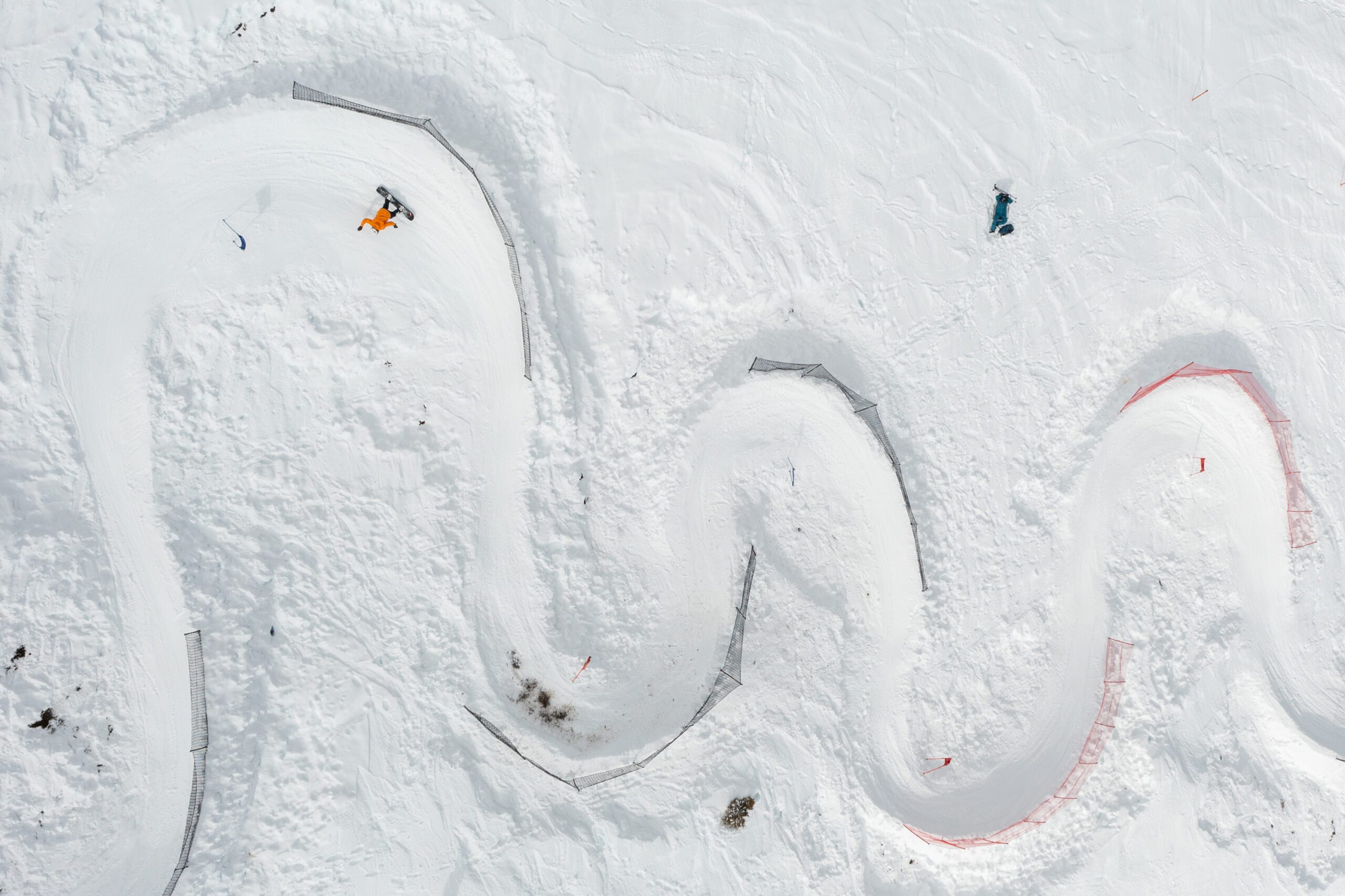
A twisty weekend at the 11th Banked Slalom LAAX: Snowboard cult event
Sign up for the very best in snowboard culture, get notified of prize drops, and receive our weekly essential news hit: The Friday Dump.
| Cookie | Duration | Description |
|---|---|---|
| cookielawinfo-checkbox-advertisement | 1 year | The cookie is set by GDPR cookie consent to record the user consent for the cookies in the category "Advertisement". |
| cookielawinfo-checkbox-analytics | 11 months | This cookie is set by GDPR Cookie Consent plugin. The cookie is used to store the user consent for the cookies in the category "Analytics". |
| cookielawinfo-checkbox-functional | 11 months | The cookie is set by GDPR cookie consent to record the user consent for the cookies in the category "Functional". |
| cookielawinfo-checkbox-necessary | 11 months | This cookie is set by GDPR Cookie Consent plugin. The cookies is used to store the user consent for the cookies in the category "Necessary". |
| cookielawinfo-checkbox-others | 11 months | This cookie is set by GDPR Cookie Consent plugin. The cookie is used to store the user consent for the cookies in the category "Other. |
| cookielawinfo-checkbox-performance | 11 months | This cookie is set by GDPR Cookie Consent plugin. The cookie is used to store the user consent for the cookies in the category "Performance". |
| viewed_cookie_policy | 11 months | The cookie is set by the GDPR Cookie Consent plugin and is used to store whether or not user has consented to the use of cookies. It does not store any personal data. |
| Cookie | Duration | Description |
|---|---|---|
| _ga | 2 years | This cookie is installed by Google Analytics. The cookie is used to calculate visitor, session, campaign data and keep track of site usage for the site's analytics report. The cookies store information anonymously and assign a randomly generated number to identify unique visitors. |
| _gat_gtag_UA_189035576_1 | 1 minute | This cookie is set by Google and is used to distinguish users. |
| _gid | 1 day | This cookie is installed by Google Analytics. The cookie is used to store information of how visitors use a website and helps in creating an analytics report of how the website is doing. The data collected including the number visitors, the source where they have come from, and the pages visted in an anonymous form. |
| CONSENT | 16 years 4 months 12 hours | These cookies are set via embedded youtube-videos. They register anonymous statistical data on for example how many times the video is displayed and what settings are used for playback.No sensitive data is collected unless you log in to your google account, in that case your choices are linked with your account, for example if you click “like” on a video. |
| Cookie | Duration | Description |
|---|---|---|
| IDE | 1 year 24 days | Used by Google DoubleClick and stores information about how the user uses the website and any other advertisement before visiting the website. This is used to present users with ads that are relevant to them according to the user profile. |
| test_cookie | 15 minutes | This cookie is set by doubleclick.net. The purpose of the cookie is to determine if the user's browser supports cookies. |
| VISITOR_INFO1_LIVE | 5 months 27 days | This cookie is set by Youtube. Used to track the information of the embedded YouTube videos on a website. |
| YSC | session | This cookies is set by Youtube and is used to track the views of embedded videos. |
| yt-remote-connected-devices | never | These cookies are set via embedded youtube-videos. |
| yt-remote-device-id | never | These cookies are set via embedded youtube-videos. |
| Cookie | Duration | Description |
|---|---|---|
| _pk_id.43969.7c7f | 1 year 27 days | No description |
| _pk_ses.43969.7c7f | 30 minutes | No description |