




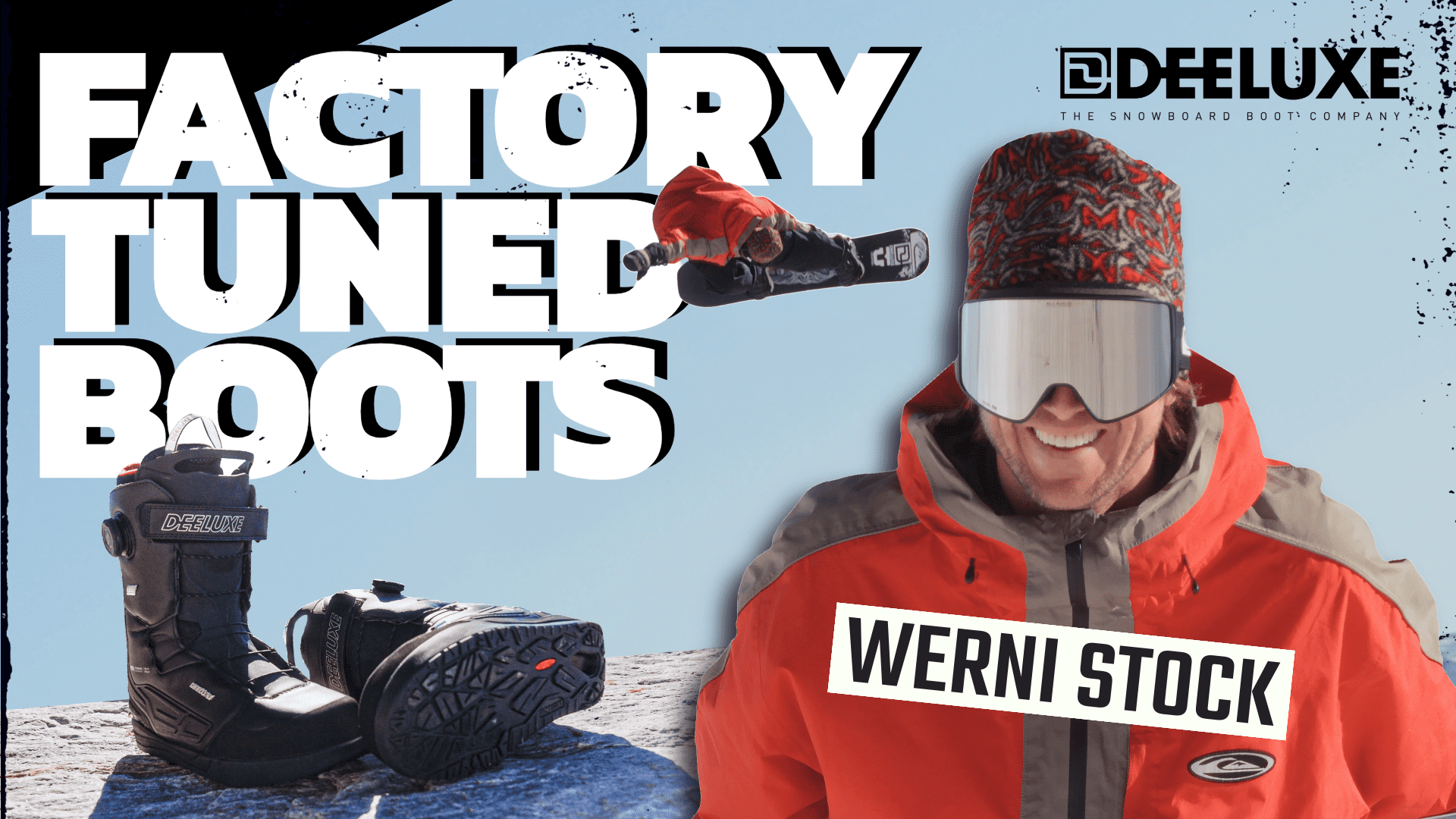
DEELUXE rider Werni Stock gives you a glimpse of the brand’s newest technology
The future of snowboard boot design is here! Breaking in new snowboard




There’s a moment in every sport when a piece of equipment fundamentally changes what’s possible. In snowboarding, according to Peter Bauer, that moment didn’t come with carbon, triple sidecuts or futuristic marketing language.
It came when riders took the fins off.
“Until then, snowboarding only worked in powder,” Bauer says. “With fins, you hit hardpack, and you’d just eat shit. Taking the fins off and putting steel edges on, that freed snowboarding from powder.”
The second revolution? The highback.
No highback meant no proper heelside turn. Steel edges and highbacks were the real game changers. Everything after that has been fine-tuning.
After taking our annual run at Shops 1st Try with Peter, his take on innovation doesn’t come as a surprise. Bauer’s obsession isn’t chasing the next revolution. It’s reducing compromise and gunning it down the mountain whilst he’s at it. But it would be a missed opportunity not to pick his brain on the topic of board development. So let’s jump right in:
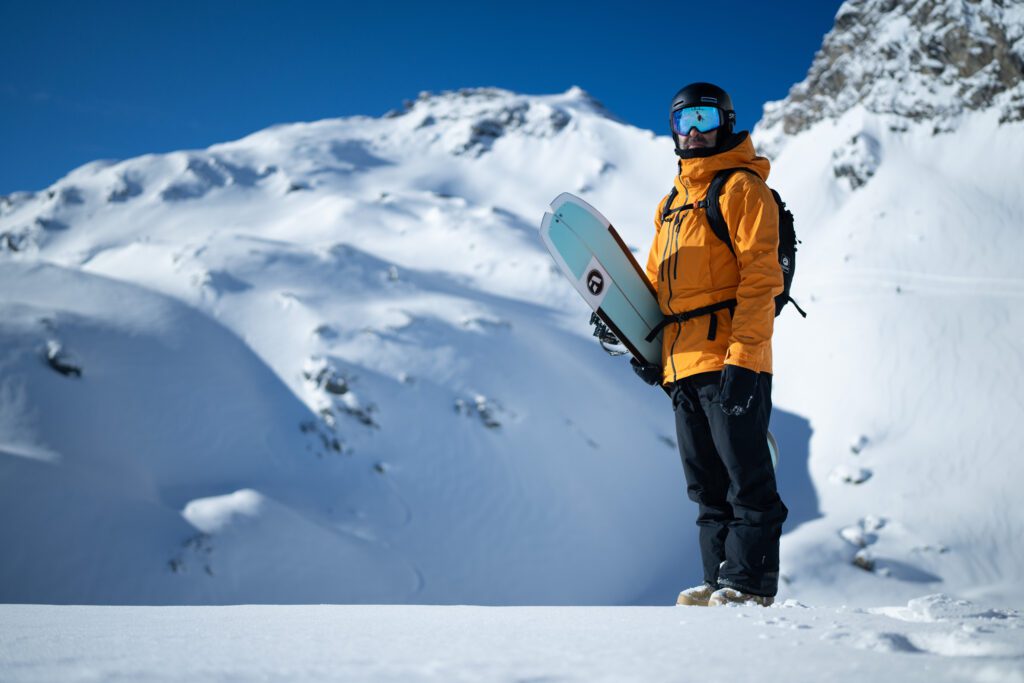
So, are we out of big innovations?
Not out, but the curve is getting flatter.
Replacing fins with edges? That’s a revolution. What we’re doing now is refinement. Materials got better. Speeds increased. Suddenly, vibration absorption mattered. Splitboarding became big, so weight mattered.
If you lift a board from the ’80s, it feels like weight didn’t matter at all. Some of those things were five kilos. Now boards need to grip on artificial snow, stay stable at high speed, and still be light.
Okay, so we’re not reinventing snowboard technology anymore, and fine-tuning might not scream new and flashy, so what’s your approach to innovation as a brand?
Reducing compromise. There is no perfect board. The perfect board would mean: “This is it, we found the Holy Grail, so we can stop R&D.” That’s not how it works.
Innovation today is about making the compromises smaller.
If someone wants the one board to ride it all, that board cannot be the best powder board and the best carving board at the same time. So the question becomes: where is the biggest overlap? How do we minimize what falls off the table? And that’s the real challenge.
So you can’t innovate without taking into account the different types of riders. But how do you define the different rider profiles when it comes to developing boards specific to them?
It’s not just heavy or light, short or tall riders. It’s their mentality and wallet.
Some people can afford or want only one board. That board must do everything. They hate sitting on a chairlift thinking, “The right board is in my trunk.”
Then, on the other hand, some people want a swallowtail for La Grave, a carving board for corduroy, and a jib board for the park.
Designing for those two types of people is completely different.
It’s interesting how you haven’t even talked about skill or ergonomics. But it makes sense, you are listening to their needs and trying to offer a good solution to their pain points. But I’m sure that some people don’t even know where to begin. From a product designer’s perspective, what’s the biggest mistake people make when choosing a board?
Ego.
You still have guys who rode a 168 in 1998 and want a 166 today. But riding changed. Flex changed. Geometries changed. Materials changed. You don’t need those lengths anymore.
Or there are also those who insist on getting a true twin. To them I’d ask: “How often do you ride switch?”. If they are honest, they’d answer: “Maybe I do one 180 per week.”
But they ride hard-packed slopes and want grip, they ride powder, and they want float. Still, they choose the twin because they want to look like a hardcore freestyler.
It’s like surfing. Everyone rides shortboards because Kelly Slater does. When I started surfing, I wasted five years because my board was too short. Nobody told me I should ride a longboard or something with more volume.
Sometimes shops are afraid to tell customers the truth. But if riders are on the wrong boards, they struggle. And if they struggle, they quit. That’s bad for the whole industry. We want to keep people in the sport. And the best we can do is by helping them ride boards that are good for them.
How does a brand like yours help people make the right choice and support them along the way so they get the best board possible for them and stay stoked?
We do all the important demo events between October and January so people can try the boards before committing to buy them, and then by that time, people hopefully have made their decision. Then, on the website have. Very extensive and detailed explanations for the boards; it truly goes really deep. Our spec sheet is so detailed, and it has information that other people don’t even have in their dealer workbook. Like underfoot width or active surface area. So our specs can be considered really nerdy. But if you don’t enjoy that part, you don’t worry about it or even read it. But at least it’s there for those who do.
Then, we also have a board finder on the website which gives you an approximate suggestion of where you are by asking you some questions, but of course, you shouldn’t lie about your skill level or what you do, lying to yourself won’t serve you in this process.
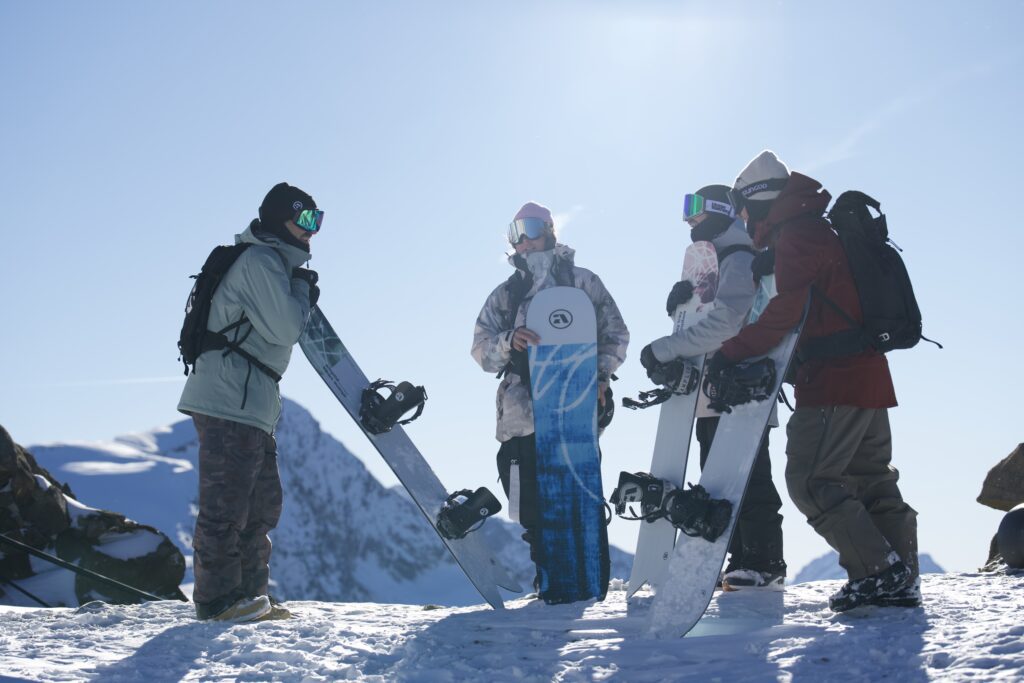
Lastly, we have a dedicated customer service answering within 12 hours. We ask for boot size, height, and weight before recommending anything. Because we’d rather tell someone, “Sorry, we don’t have a board for you,” than sell them the wrong one. Innovation is not just materials; it’s making sure people ride what they actually need.
The best rider on the mountain is the one having the most fun. And that only works if the board fits.
How does a new board design begin for you?
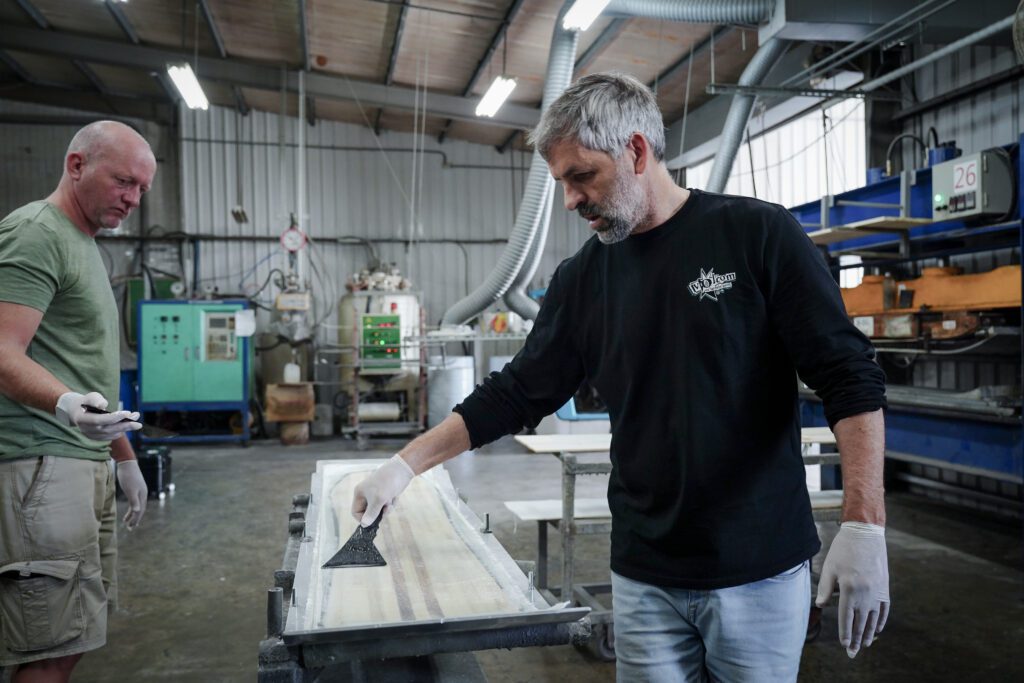
With nothing. Just the shape. The first prototype is always super pure. Basic glass. No carbon. No anti-vibration. No fancy stuff.
I want only the geometry to talk. If you change too many parameters at once, you don’t know what caused what. So you must change one thing at a time.
It’s almost like cooking and creating your own recipes. And then every brand does something similar and calls it differently, and even for the constructions, technologies or materials, there’s no real standard on how to measure them or talk about the, like the flex ratings. How does that even get measured, and does a number always mean the same?
There is a kind of a standard measurement. Some brands use the same flex-testing machine: For a specific length they measure the contact points and load 20 kilos in the center, measure how far down it bends. That’s physics. But there is no standard where it says, for example, 43 mm of deflection is equivalent to flex number seven. There’s no such thing. Maybe it should be done.
But then again, what is flex 7 anyway? Is it deflection? Or is it feel?
Maybe flex 6 should mean “amicable.” Flex 8 should mean “evil.” In theory, a consensus could be made on how to describe the flex, but because there are other technologies at play and different brands do different things, it could end in different takes on the same thing anyway. I’m thinking about cars, you have horsepower, and you can measure acceleration time from 0 to 100. It’s all physics. However, in snowboarding, thank God, there’s a whole bunch of things other than physics. And you’re dealing with wood, resin, and fiber orientation. You can’t reduce that to a number. There’s a certain soul in there.
What’s something you’ve developed that you think is genuinely different from what other brands are doing?
For years, everyone thought in two axes: longitudinal flex and torsion.
But nobody asked what happens from edge to edge under your feet. We did slow-motion videos on ice. You could see the board bending convexly between the edges under pressure.
So we added carbon rovings only between the edges under the bindings, without affecting longitudinal flex. On soft snow, you won’t notice. On ice, you feel it immediately. The board doesn’t collapse. You’re more direct. It’s not flashy. But it makes a huge difference.
You even license your anti-vibration system to other brands. Why?

Because if someone like Nitro comes knocking and says, “This works, we want it,” that’s credibility. Nitro’s founder and head of RnD, Tommy Delago, has an incredible board feel, and they make very good boards. When he says Antiphase makes his board creations even better, this is a huge honour for me. Some people told me we should keep it exclusive. But if others use it, it proves the concept. I’m not afraid of that.
Some boards in the Amplid range feel very personal, like they start from what you want to ride.
Yes. The Time Machine was selfish. I wanted a board to lay trenches and ride fast. But others, like the Singular, were data-driven.
We have the Beta Project. Riders test prototypes and give them back with feedback and details like boot size, weight, and riding style. We see patterns. Average boot sizes. Preferred flex. From that, we can calculate the overlap. That’s how you design something easy for retailers to sell and for riders to understand.
Last, but not least. You’re bringing the Surfari back. Why and what’s new?
Yes, the Surfari actually had a break for a couple of seasons. It was a successful board, but there was too much overlap in the line. If customers start asking, “What’s the difference between this and that?” then the segmentation isn’t clear enough. So we paused it.
Now it’s coming back, but clearly differentiated.
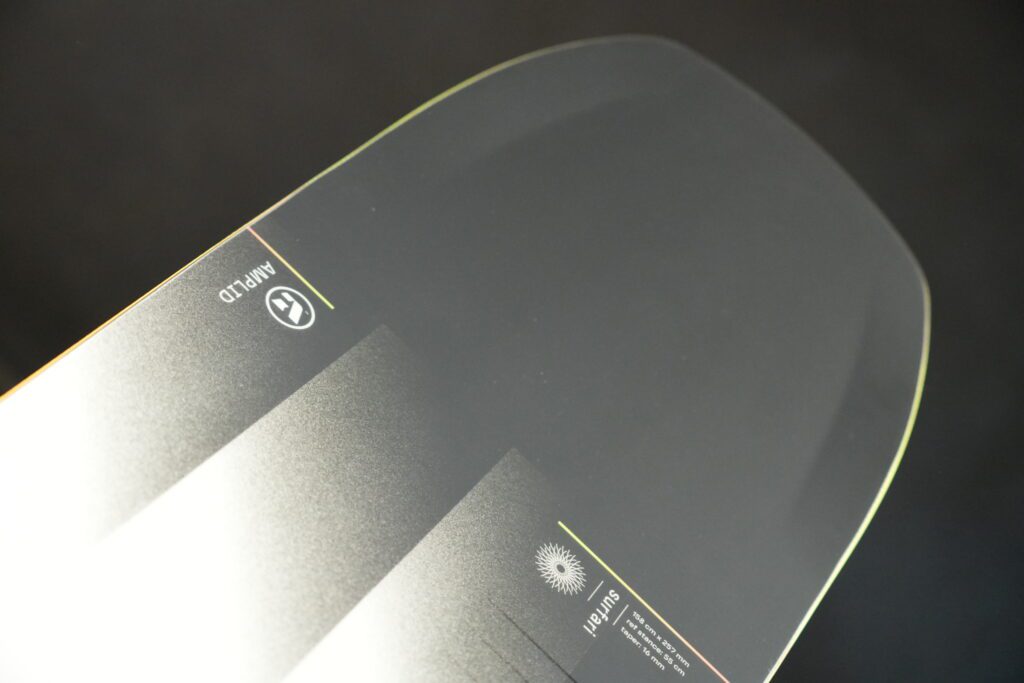
What’s new is the 3D shaping in both the nose and the tail. The nose has more spoon, more lifted lateral area. That increases surface area in powder and helps the board plane more naturally without needing excessive stiffness or setback.
But the more interesting part is the tail.
The Surfari has quite a bit of taper and setback, so the tail is shorter and narrower. Normally, that makes a board very nimble, which is great in trees or tight terrain, but at higher speeds, a short tail can start to break away.
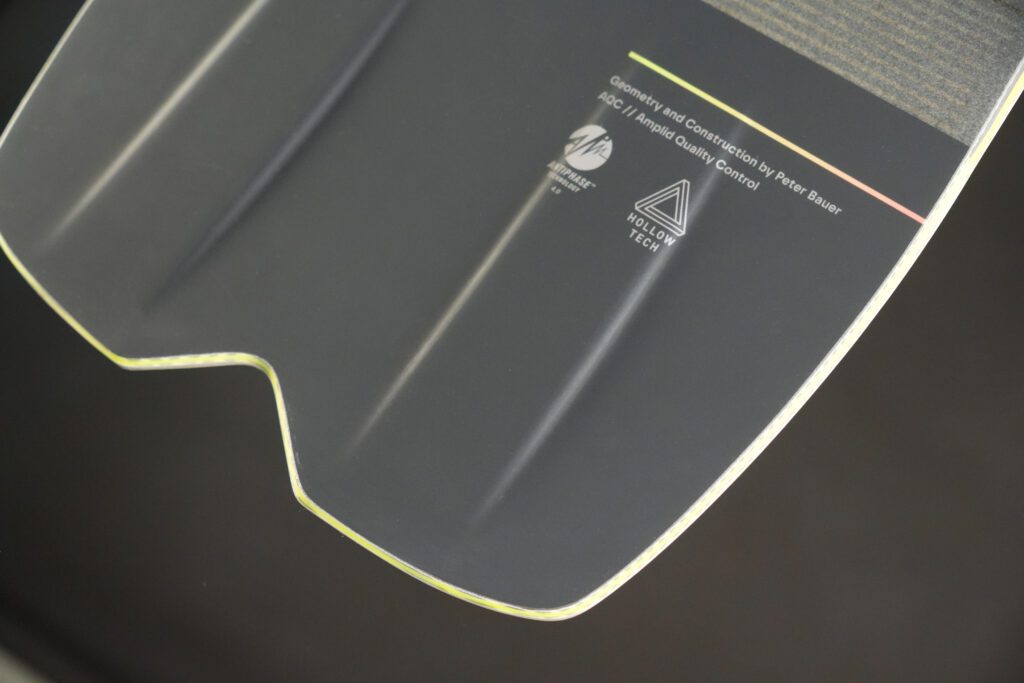
So we added subtle channels in the tail. They create lateral surfaces that work almost like micro-fins. When you’re riding slowly, the board feels loose and maneuverable. But when you increase speed and pressure, those lateral areas compress the snow and stabilize the tail.
It almost feels like the effective edge becomes longer when you go faster.
It’s not something dramatic that you see immediately, but you feel it, especially when you’re opening it up on bigger terrain. The board stays composed without losing that playful character at lower speeds.
So it’s not a revolution. It’s refinement. But it makes the Surfari much more versatile than before.
In an industry that loves to announce the next big thing every season, Bauer’s perspective feels almost rebellious. Innovation, for him, isn’t about louder graphics, new buzzwords, or chasing revolutions that already happened decades ago. It’s about precision. About understanding where compromise is inevitable, and shrinking it anyway.
Because maybe the real progress in snowboarding today isn’t dramatic. Maybe it’s quieter. Found in the details under your feet, in the honesty of a board that does what it promises, and in the simple outcome that still matters most: riding down the mountain with a stupid grin on your face.
The future of snowboard boot design is here! Breaking in new snowboard
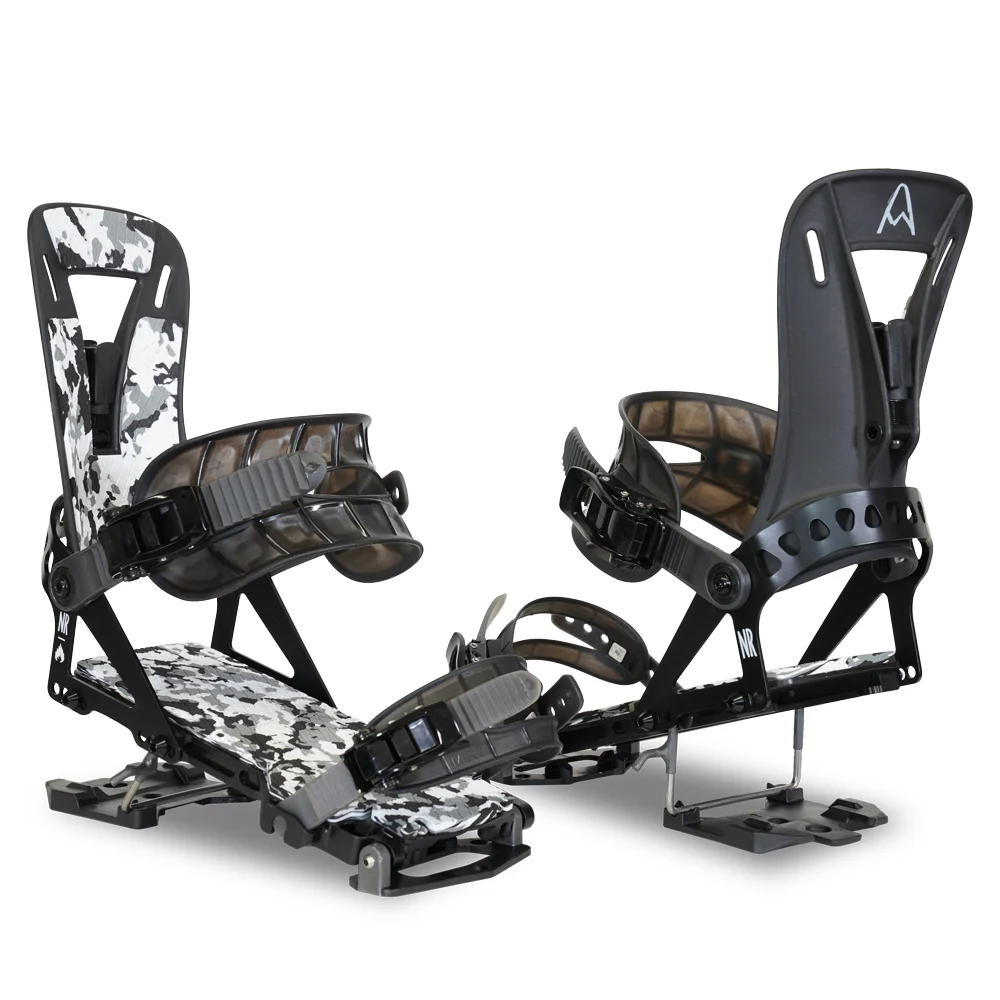
The wait is over. The NR Pro is now shipping to dealers.
Bryan Iguchi has been riding for Volcom since its humble beginnings. Developed, researched