





Local Heroes: Max Glatzl
A new series celebrating the people behind the scenes who keep snowboard



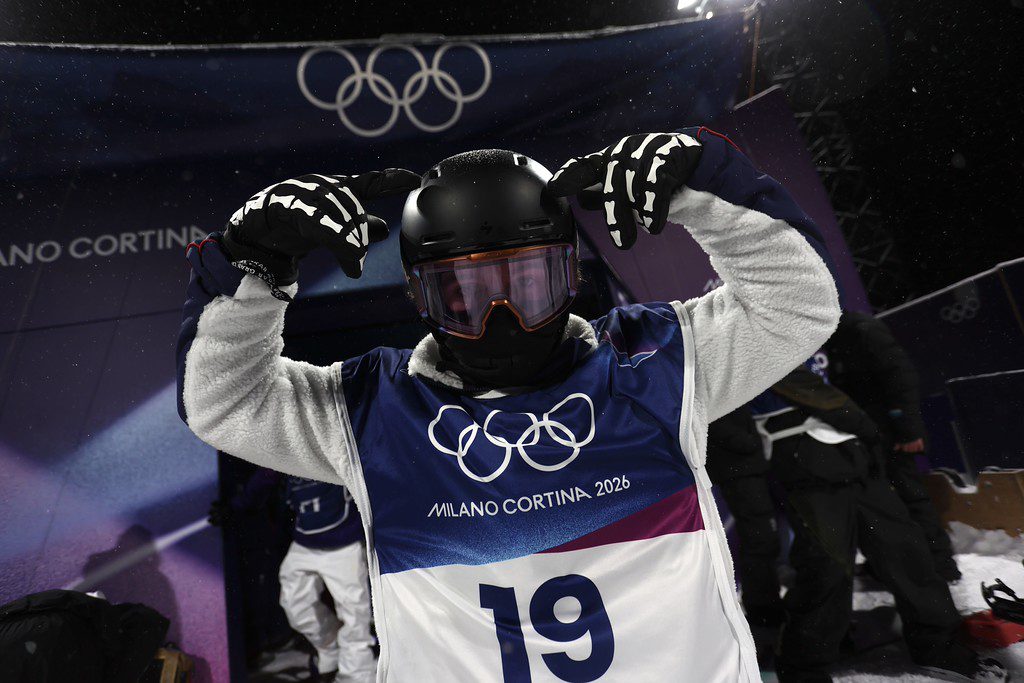
It’s Olympic month. Unless you’ve been living blissfully offline, your feeds must have been overflowing with snowboarding highlights, ice-surface controversies, and the inevitable wave of political tension seeping into sport. The Games have always carried more than just competition. A bit of chaos is part of the package.
But let’s narrow the focus to what actually concerns us: snowboarding. And as usual, it hasn’t disappointed.
The first snowboard discipline to appear was Big Air, kicking off even before the opening ceremony (which I might add was rather underwhelming). Unfortunately, the first headline wasn’t about progression; it was about injury.
Mark McMorris hit his head during practice, ruling him out of the Big Air competition. From his own updates, he seems in good spirits and hopeful for Slopestyle, assuming medical checks clear him in time. And for someone with his history of comebacks, you can never quite rule him out.
His withdrawal opened a spot for first alternate Valentino Guseli, who had come to Italy focused on Halfpipe. But of course, Guseli is no stranger to Big Air or Slopestyle. With minimal preparation specific to this event, he stepped in, and qualified for finals. Predictably, media outlets were quick to frame it as a Cinderella storyline. It was impressive, yes, but whilst to casual audiences, it read like a surprise, to those paying attention over the past few seasons, it was simply confirmation of his range and excellence.

Whenever Big Air runs, the same discussion resurfaces: style versus spin-to-win. Claims that it’s boring. Complaints about judging. Accusations that the soul is being sacrificed at the altar of rotation.
But here’s the uncomfortable truth: Big Air has always been about pushing the hardest trick you can, executed as cleanly as possible. The criteria aren’t a secret. Judges and athletes continuously workshop what progression looks like and how to reward it. You may not like the direction, but it isn’t random.
Of course, acknowledging that doesn’t make for a fiery comment section.
The men’s qualifications brought both camps into view. Riders like Rene Rinnekangas and Eli Bouchard leaned into their signature steeze. Meanwhile, Italy’s Matteoli and the ever-calculated Japanese riders made it clear that rotations still dictate podium mathematics.
By finals, judges themselves were anticipating “something extra.” The contest quickly evolved into a 1980 exchange. American fans were vocal when Oliver Martin, who secretly competed with an injured arm, missed the podium, reigniting the familiar argument that a stylish 180 can feel more satisfying than a 1900.
It can. But satisfaction and scoring aren’t the same currency.
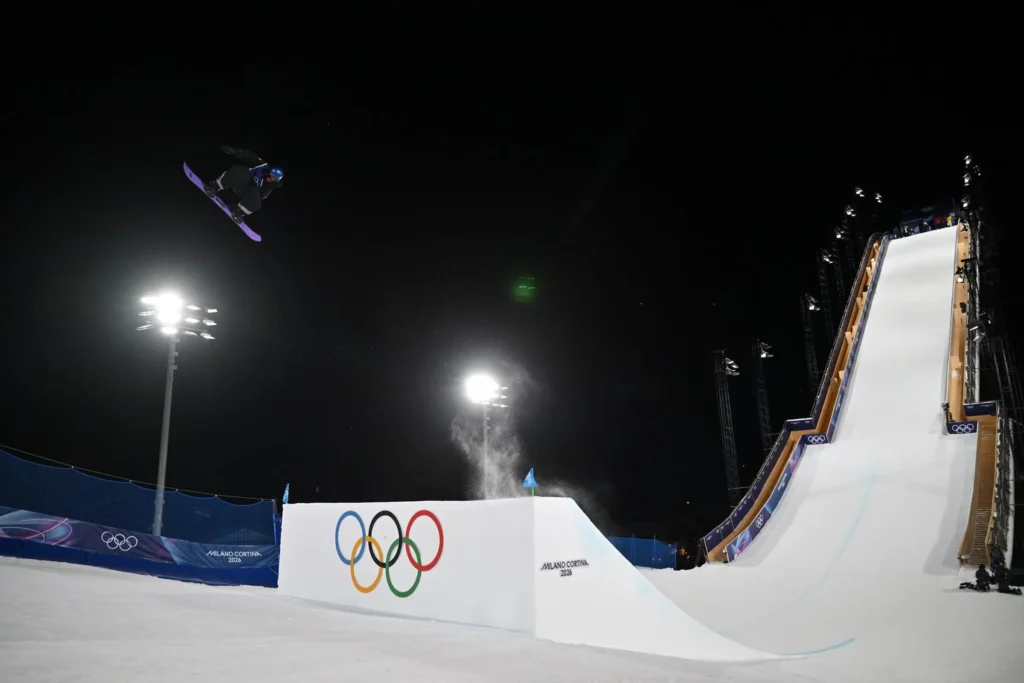
If there’s one area where criticism feels justified, it’s coverage.
Watching the men’s qualifier was, at times, dizzying. Missed take-offs. Cropped landings. The all-too-familiar mid-air freeze frame, rider suspended against sky, stripped of scale and context. Without the in-run and stomp, amplitude becomes theoretical.
To their credit, the OBS broadcast improved noticeably in the subsequent big air events. Adjustments were made. The viewing experience became clearer and more coherent. Can’t quite say the same about pipe yet… they are trying but some angles are hard to digest and that cable cam in the middle cutting the picture in half doesn’t do them any favors.
But the issue doesn’t stop at television.
The still imagery distributed by major news agencies, the photos that end up in newspapers and mainstream media outlets worldwide, often suffers from the same problem. A rider isolated mid-movement, no grab, no visible take-off, no landing, no context. Snowboarding flattened into abstraction (at best).
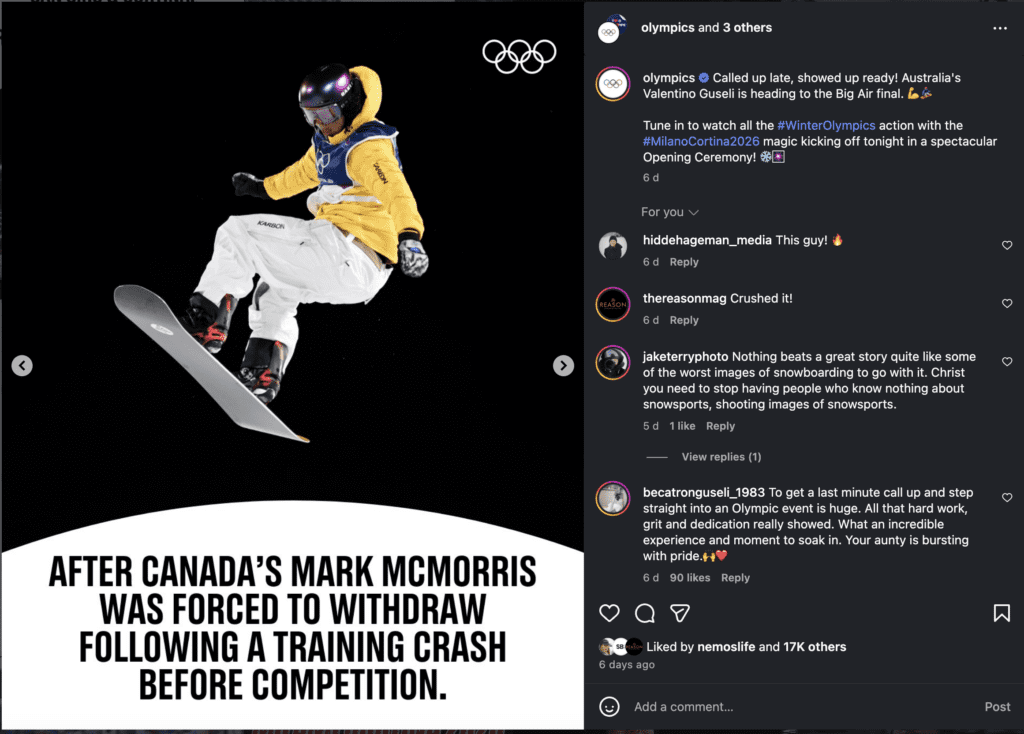
This framing choice isn’t new. Major agencies often favour the clean airborne silhouette. It’s dramatic, graphic, easy to distribute. But does it serve the sport? That’s debatable.
When those concerns are raised, the response often suggests that “this is part of the story.” The question is: which story? If the Olympics are meant to elevate snowboarding, then clarity should matter. Showing the full arc of the right moments is not a niche demand. It’s fundamental.
There are exceptions. FIS Park & Pipe has pushed its agency partners to bring in specialists who understand freestyle sports. Photographer Christian Stadler has been delivering images that capture the full arc as well as all the emotions that we all love, making the sport shine rather than flattening it.
That difference matters. Because for many viewers, those images are snowboarding.
Other familiar photographers that are there capturing the action in the ways we most respect and enjoy are Blotto, timeless perfection always, the behind-the-scenes eye of Canadian coach Chris Witwicki and the blur filters artsy gen-z style of Isamy Kiyooka capturing the US team action.
Still, the conversation lingers: who controls the narrative of how snowboarding is presented to the world?
No Olympic cycle passes without commentary drama.
Todd Richards found himself in the spotlight after a hot-mic moment during the men’s final, saying it felt “boring” compared to qualifications. The clip spread quickly. Most people understood what he likely meant: qualifications can feel unpredictable; finals at the highest rotation ceiling often become calculated. But nuance rarely survives social media.
Richards has long been both a champion of snowboarding’s Olympic inclusion and a lightning rod for controversy. A few days ago, just prior to the competition start, he shared a reel reflecting on the pioneers who helped get the sport to the Games. On paper, it’s respectful. Historically accurate. Yet timing matters.
Snowboarding’s pioneers deserve their recognition — that history matters. But the Olympics are about the athletes competing in that moment. For riders who have spent four years working toward this opportunity, the spotlight is brief and hard-earned. When focus shifts elsewhere, even briefly, it can feel slightly out of step with what the occasion represents. When members of that older guard step forward again, even with good intentions, it can feel like a subtle “we were here first.”
Recognition is important. But so is space. The new wave doesn’t need permission; they need room.
Women’s Big Air: Collective Stoke
If the men’s contest felt like a technical arms race, the women’s competition not only delivered high-level snowboarding but something equally powerful: visible solidarity.
It was an event where the change of guard was visible: As new names emerge and established riders transition into new roles. And when Kokomo Murase landed her final run to move into first place, the emotion was immediate: relief, pride, joy. Around her, competitors celebrated just as fiercely.
Researcher Lesley McKenna has written about “collective stoke” and the risk aesthetic within action sports, the way shared progression amplifies individual performance. That dynamic was fully visible. In a broader climate often defined by division, that unity felt significant.
Pipe is underway
Halfpipe qualifications followed quickly. The slightly elevated camera angle made true amplitude difficult to judge from the sofa, a recurring visual issue, but performance-wise, there were few surprises.
The top women looked like the top women. The bubble line was clearly defined. Solid runs and controlled execution. For the the men’s qualifiers was a similar scenario where the usual suspects quickly ranked to the top, however the bubble line was a lot more blurred in the men’s comp. Which leaves the real question for finals: will we see risk escalation? Or strategic consistency?
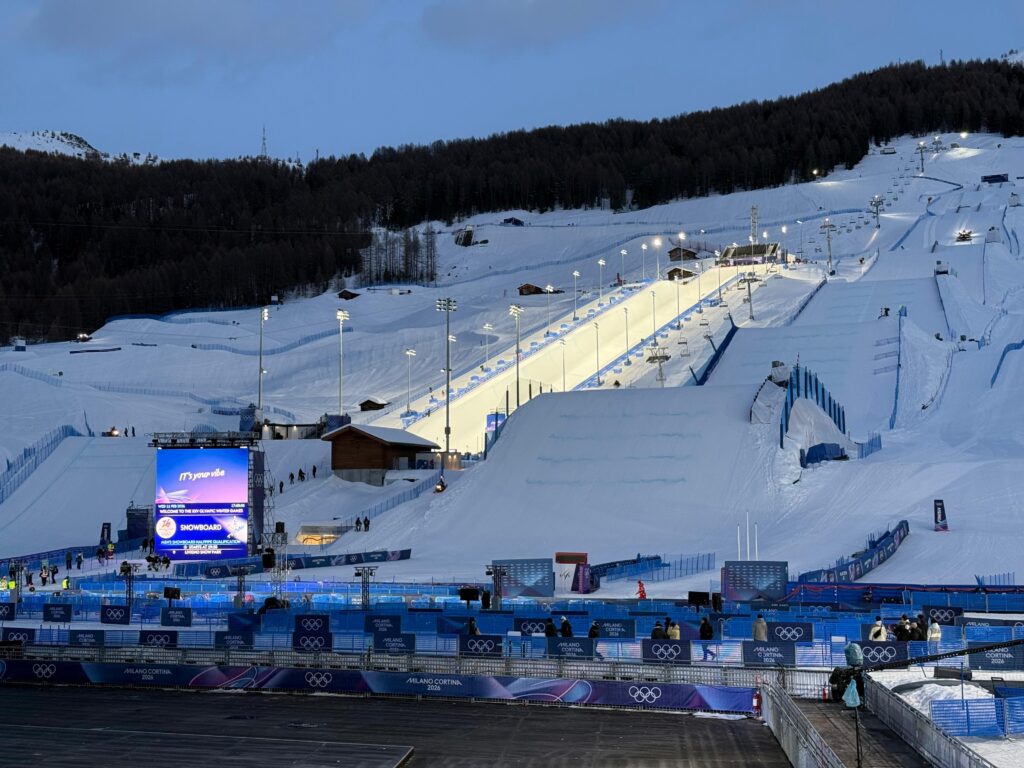
If the first week has taught us anything, it’s this: The Olympics don’t just reveal who can land the hardest trick. They expose how we tell the story of snowboarding: who we amplify, what we reward, what we argue about, and how the sport negotiates its identity on the biggest stage in the world.
And perhaps that’s the real lesson so far. We’re still debating what we want snowboarding to be. And the Games, as always, are holding up the mirror.
Words by Alba Pardo
Cover photo by FIS Park and Pipe
A new series celebrating the people behind the scenes who keep snowboard
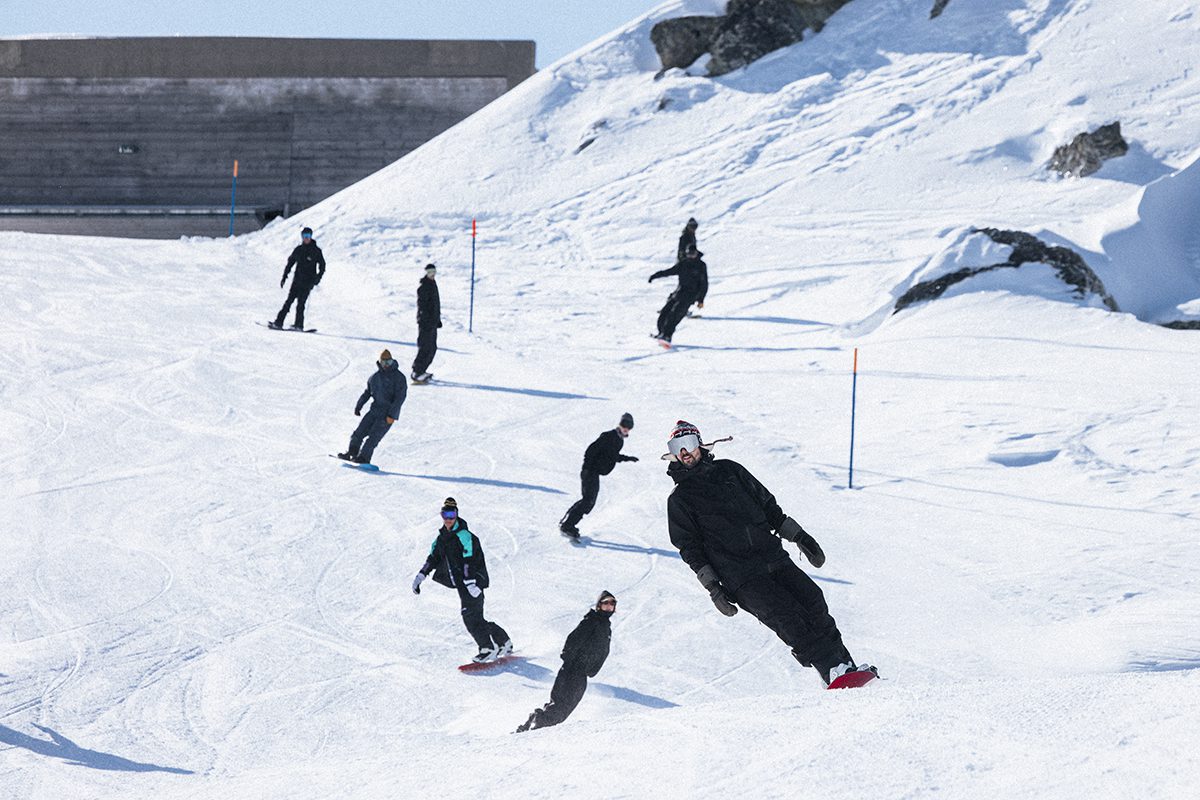
Tidal is a biennial, on-mountain artist residency and exhibition in LAAX, Switzerland,
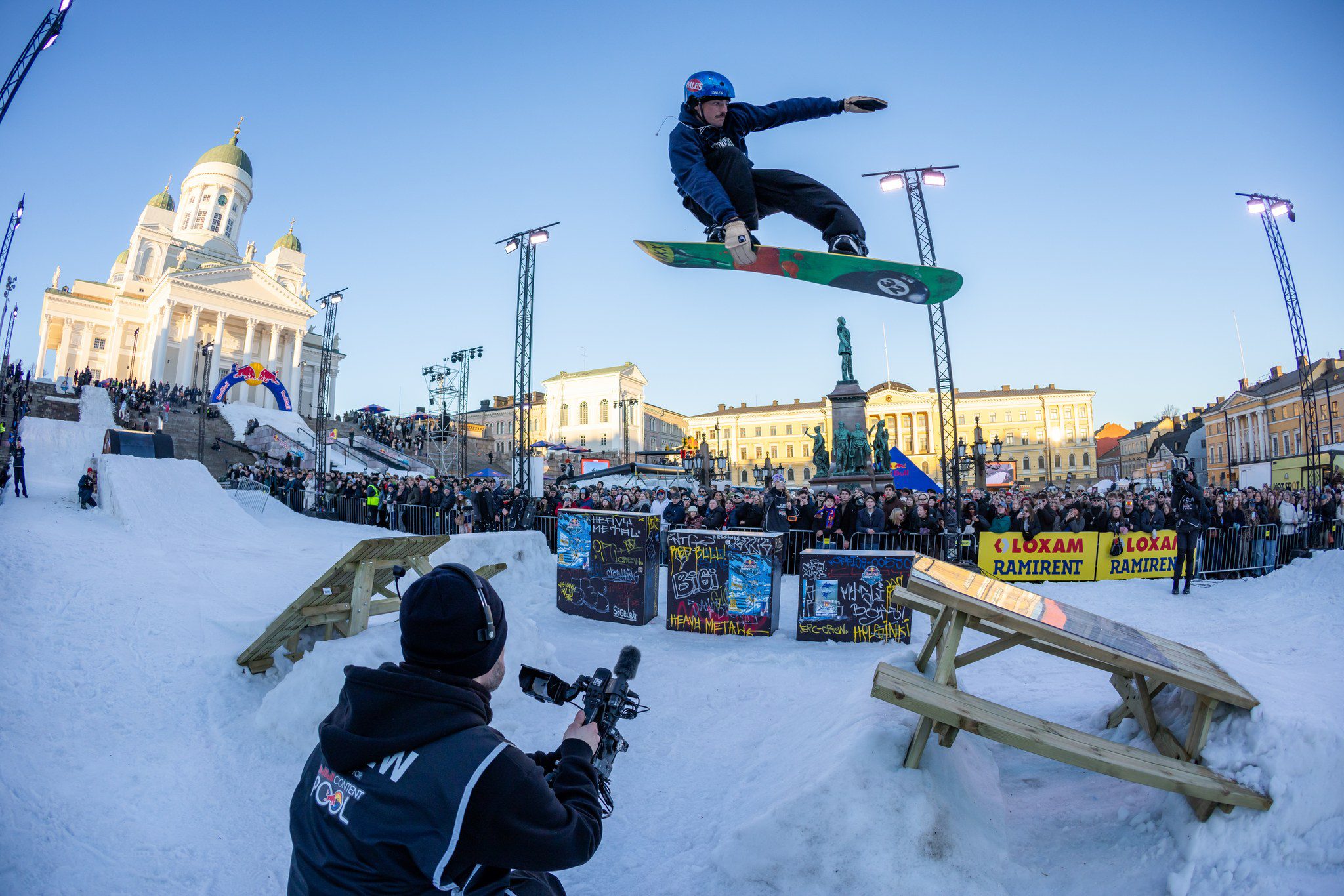
One of snowboarding’s most iconic rail jams filled a void the Finnish