



Rising Up: Riley Sharpe
INTERVIEW: STELLA PENTTI PHOTOS: CRAIG ROBINSON UK-born, Avoriaz-raised, and fueled by endless energy:



A broken bone is visible. A broken brain is not: Why a broken brain is harder to see – and harder to heal.
Words: Stella Pentti
A concussion is an invisible injury – just as real as a broken bone, but harder to see, harder to justify, even to yourself.
According to the ReFORM synthesis of the 6th International Consensus Statement on Sport-Related Concussion, concussions are caused by “a direct blow to the head, neck or body resulting in an impulsive force being transmitted to the brain. Symptoms may present immediately or evolve over minutes to hours and commonly resolve within days.” Reality is rarely as simple.
Around one in five athletes in contact sports sustain a concussion each season (CDC, 2023). “Goodness, I’ve had so many concussions! It’s just part of the sport and territory,” says Jamie Anderson, Olympic gold medalist and one of the most decorated snowboarders of all time.
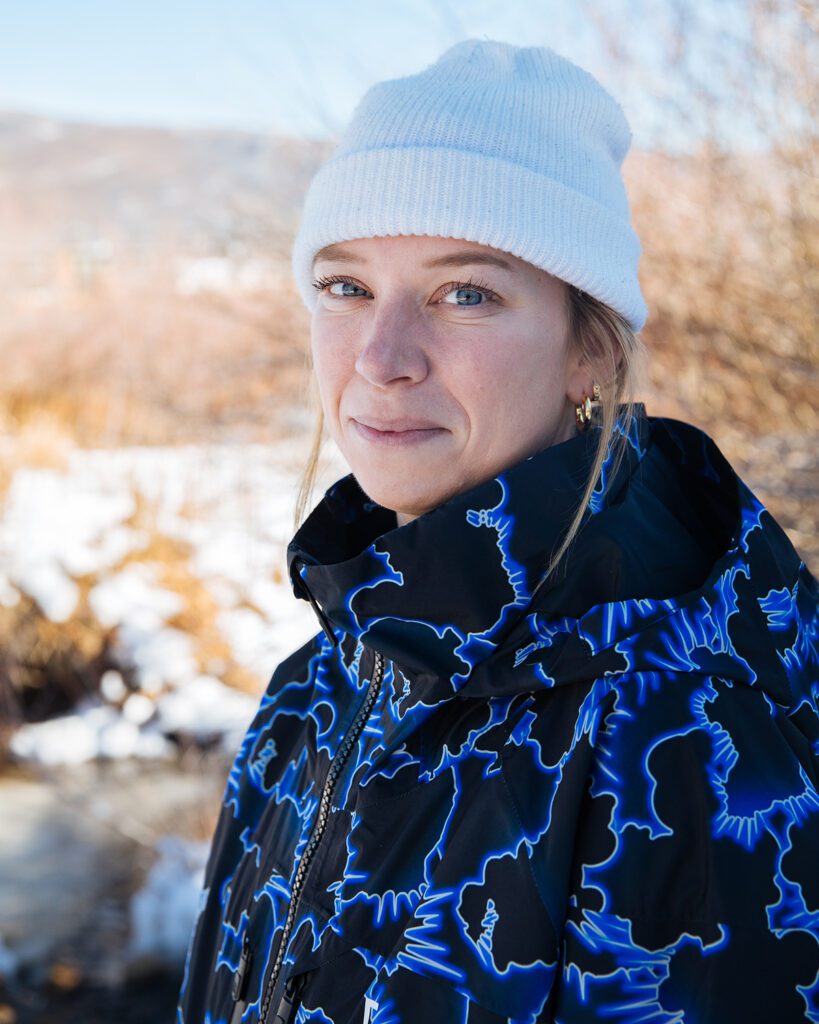
“I’ll never forget what the nurse said. She looked at me and said, ‘You seem fine, but we’ll take a CT scan just to be safe.’ A little while later, she walked back in completely pale and said, ‘You’ve been bleeding in your brain for two weeks. Your brain has shifted 11 millimetres. You have a guardian angel, and you wouldn’t have survived another night. You’re now on your way to emergency brain surgery.” – Kelsey Boyer
Photo by: Melissa Riitano.
It’s estimated that up to 50% of concussions go unreported because athletes either don’t recognise the symptoms or push through them (British Journal of Sports Medicine, 2022). While many concussions resolve in seven to ten days, 20-30% of athletes experience prolonged symptoms lasting weeks or months (CMAJ, 2010). Chris Grenier, winner of X Games Real Snow 2015 and the driving voice behind The Bomb Hole podcast, knows that cycle well: “I started to get more and more frequent concussions. I would not feel like myself, had way bigger mood swings, and started to get some depression symptoms.”
Studies in snowboarding/skiing suggest that head injuries account for 15–20% of all injuries on the slopes, making them one of the most common and most severe categories (American Journal of Sports Medicine, 2012). Behind every one of these numbers is a story. Several professional riders have experienced concussions – some with long-term effects that changed their lives forever. Still, all of them have gone through fear, physical and emotional struggles, and the search for tools that helped them come out on the other side.
But what does it really mean to be concussed? I spoke to six professional snowboarders about their experiences with concussions: the impact, the aftermath, and the recovery. Jamie Anderson, Chris Grenier, Kelsey Boyer, Kevin Pearce, Henna Ikola, and Sven Thorgren take us down memory lane, reliving some of the most painful moments of their lives, navigating head trauma, and finding their way out of some of the darkest holes they’ve ever been in.
This feature is here to humanize the term concussion – to show that it is not just a medical word or a theoretical definition where every case follows the same pattern. This article is here to offer validation: to let anyone going through a similar journey know that they are not alone, broken, or weak. It’s here to highlight the tools that have helped riders heal, but most of all to remind you: you only get one brain.
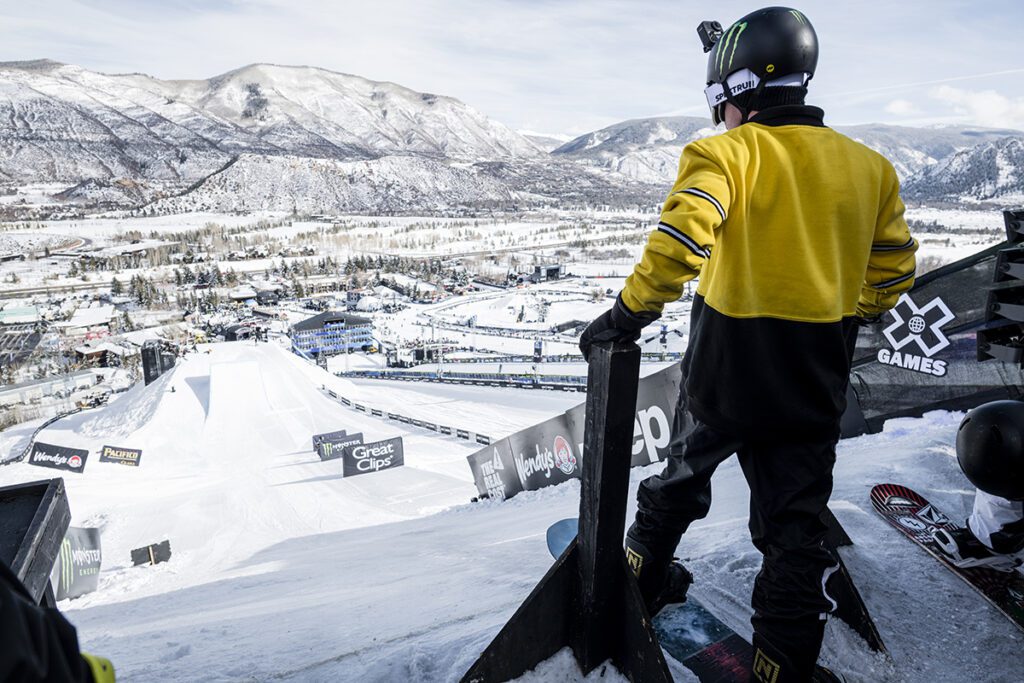
Photo: Daniel Bernstål.
“There was a moment when everything went fully black”
“I was 10 or 11, hitting my first big jump in the alley at Sierra, Tahoe. I went too fast and overshot and got knocked out,” Jamie recalls of her first concussion. “When I was a bit older, I think 17 or 18, I had another bad concussion at the US Open in Vermont. Someone crashed into me at full speed. I was out for at least a minute or two. Luckily, when I came to, I was alright.”
Unfortunately, the first concussion seldom remains the last. Back in 2009, Kevin, a former professional snowboarder turned mentor, health coach, and motivational speaker, had one goal – the 2010 Olympics. At just 22, he was at the top of his game, throwing down some of the craziest double mac twists of his time with every major sponsor behind him. But the crash the public saw on December 31st wasn’t the full story. “I had a really bad concussion at the first Olympic qualifier in Copper, Colorado, and it went undiagnosed,” Kevin says. Two weeks later, he hit his head again. “December 31st, I don’t have any memory of.”
Kelsey, a professional snowboarder and founder of the nonprofit Save A Brain, went through something similar: multiple head injuries stacked up in a short amount of time. What she was unaware of was that one of them had caused her brain to start bleeding. “For two full weeks, I walked around with a brain bleed, completely unaware. I have no memory of that time, but I was fully functioning: snowboarding, driving, even going to work.”
Sven, eight-time X Games medalist and one of Sweden’s most progressive riders, knows that story too: one of them was in 2022 at the X Games final. “In my first run, I was going for a frontside triple on the second jump, landed the first part of the run, and then nosedived in the landing. I slid down, and the only thing I thought in that moment was surprise at how quickly someone came down to me. I thought I was conscious the whole time. I stood up, dropped in, felt completely fine, and landed the whole run, ending up third in the competition. Later, when I came home and watched the slopestyle TV stream, I saw that I had actually been passed out in the landing – something I didn’t realize at the time.”
“You’re so full of adrenaline and focus that you don’t even think it might be dangerous. No doctor checked me after I hit my head. Because I kept riding and felt fine, I even did one of my best runs right after. But that concussion resulted in insomnia. That was the first time I really noticed symptoms afterwards.”
In January 2025, Henna, a professional snowboarder and leading voice in women’s street riding, had one of her worst concussions to date. “During the slam, there was a moment when everything went fully black. I was definitely a bit shocked after and started crying right away. It felt so scary. I didn’t feel too bad physically right away, though. I had a headache, but it got heavier after a couple of weeks, and the worst symptoms, like feeling nauseous and dizzy, started bothering me even later.”
“I was no longer in the driver’s seat of my life”
Why is it easier to step back and rest with a broken bone than it is with a broken brain? You wouldn’t keep riding with a snapped leg, but somehow it feels “alright” to keep going with an injured head. Maybe it’s because we can’t see the damage, or maybe because the brain itself hides it from us.
“The best way I can describe it is: I was no longer in the driver’s seat of my life. The car had been hijacked, and I was locked in the trunk,” says Kelsey. “That’s what makes brain injuries so terrifying – sometimes you don’t even realize you’re disappearing until it’s too late.”
Sometimes dissociation is the only way to cope. “It was like I completely left my body. Looking back, that was how I survived, even if my mind hadn’t caught up yet,” Kelsey recalls.
Henna describes the same disconnect. “I went to see a physiotherapist and a neurologist, had an MRI, and everything was looking fine. When you get told your brain is ‘fine,’ you start to question the symptoms yourself. It’s very confusing to feel so off but get no clear explanation or timeline for recovery.”
“When your identity gets taken away too”
For many who’ve suffered a concussion, the hardest part isn’t the symptoms – it’s the identity crash. “My dreams were shattered,” Kelsey recalls. “Everything I thought I knew about myself and my future was suddenly gone. It felt like someone had ripped the rug out from under me, and once I hit the ground… I didn’t know how to stand up again. I had to relearn everything – not just how to function, but how to exist in a completely new version of myself.”
Kevin mirrors the same feeling: “With TBI, your whole everything is affected – you become clumsy, tired, and everything becomes negative. You’re just in your head all day and all night, and it sucks. Losing snowboarding, my happiest place, was brutal.”
For Kevin, the darkness lasted nearly a decade. “It’s such a dark world to be in. If you hurt something else, it heals, and you move on. But with this, it’s over-consuming. All you do, all day, all night, is think about the injury. That’s why it’s so dark and dirty.”
Henna remembers the inner battle: “At the same time, everything felt way too overwhelming, and I kind of just wanted to isolate myself from everything. But being isolated also sucked and made me even more sad. It was confusing.”

“It felt like my skull was being crushed”
Healing from a concussion means tackling both the physical side – headaches, dizziness, nausea, light and sound sensitivity – and the emotional side those symptoms can trigger.
For Kelsey, the physical symptoms were relentless: “The headaches were unbearable. I was taking 1,000mg of Tylenol just to get through the day. The pressure in my skull felt like someone was trying to crush it with their bare hands, and the ringing in my ears was nonstop. I was also slurring my words, having intense mood swings, and couldn’t sleep.”
Henna echoes the same pain: “Being anywhere in public felt like torture. Once it had been long enough, it started to get way harder mentally.”
When your normal, active lifestyle is stripped away, isolation starts to creep in. “Unless someone has lived through a brain injury, they’ll never fully understand the kind of pain you’re in,” Kelsey says. “And on top of that, it feels like a burden to even ask for help.”
Chris, always seen as the happy guy, was left with the same feelings: “After my injury, my emotions were all over the place. I couldn’t make sense of what I was feeling, which made it even harder to ask for help. It was the first time I experienced deep depression and even suicidal thoughts.”
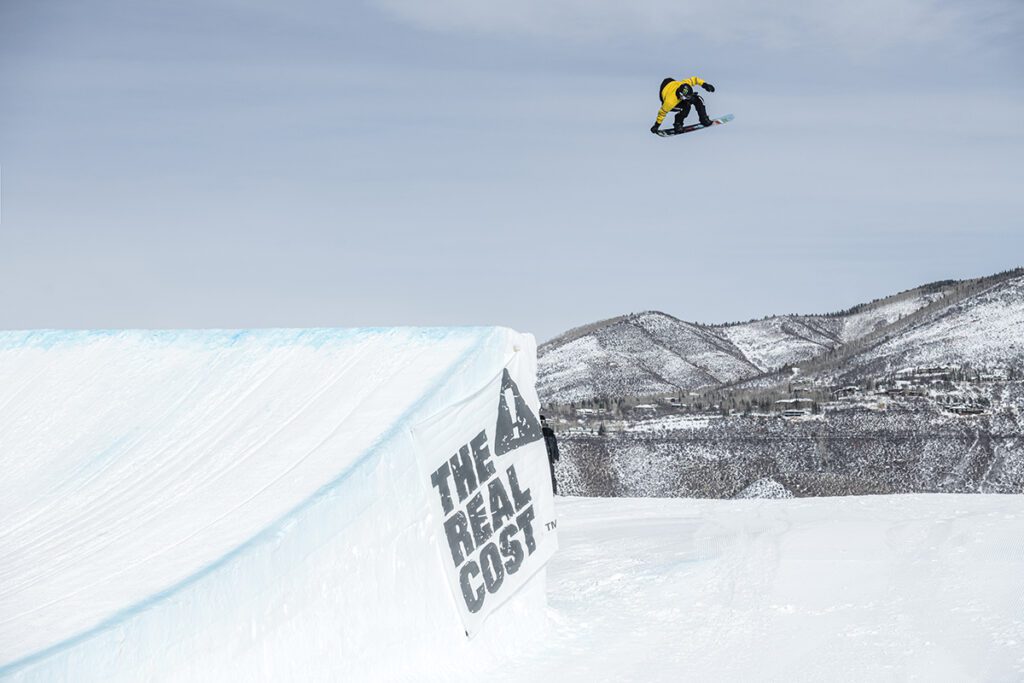
“It made me think about what I want to achieve. I probably took more safety precautions than I needed to, but I’m glad I made that choice because it opened my perspective on what’s most important.” – Sven Thorgren
Photo by: Daniel Bernstål.
“It feels like your whole community disappears”
A concussion can have a strong effect on how you see yourself and your self-worth in a tough industry. “The snowboard community can feel superficial at times, and when you’re in it, you’re in it, and when you’re injured, it feels like your whole community disappears,” Jamie explains.
You want to return to your pre-concussion life, and thus, the pressure to strap back in often comes from within. “Not being able to show up has definitely made me a bit more insecure and worried if people are gonna forget me. I’ve worked so hard to be able to live this life that I have now – to have all these opportunities,” Henna admits.
Kelsey remembers the pressuring voice inside her head: “Before, I was pushing myself to climb the Olympic ladder, constantly trying to prove I was worthy. After the injury, the pressure didn’t go away; it just shifted. Suddenly, I wasn’t just trying to achieve; I was trying to come back. I felt like I had something to prove all over again. I owed it to everyone to bounce back quickly, to show I was still strong, still capable – but deep down I was hurting.”
While still recovering, Kevin wanted to get back on his board only two years after his crash, convincing himself he was fine, only to realize he’d lost everything he had on the board. “As someone who’s dyslexic and always struggled in school, snowboarding was what I loved the most and what I knew how to do. Being outside in the mountains was the ultimate joy of life, and nothing made me happier. The only thing I wanted was to get back on my board.”
Recovering from a concussion and its aftermath isn’t linear. Even if you can’t see the light at the end of the tunnel, it’s there. You can heal your brain. But it requires patience – and patience is hard when you see the rest of your friends out there having fun, throwing down new tricks, and staying present.
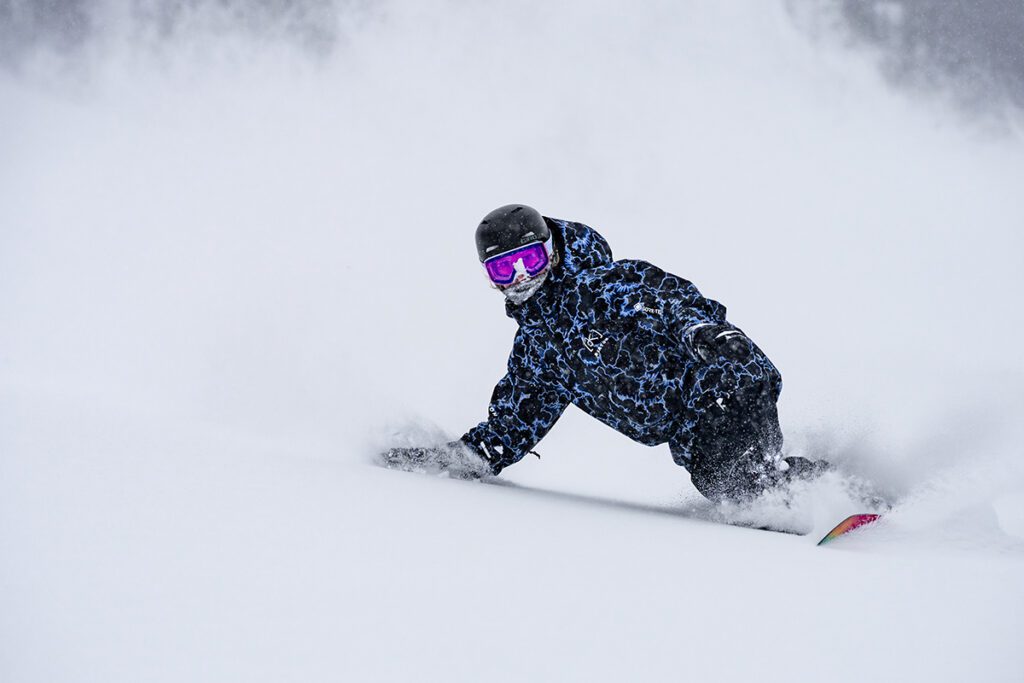
“Every journey is different, but one thing I know for sure is this – you can’t walk this road alone.” – Kelsey Boyer
Photo by: Otto Solberg.
Finding the Right Tools and Treatment:
“Every brain injury is like a fingerprint: completely unique”
The hard truth is that no one can prepare you for what recovery from a brain injury is truly like. “Every brain injury is like a fingerprint: completely unique. And yet, after mine, I was just sent back out into the world with no real guidance, no resources, no support system,” Kelsey says. It took her four years to finally find the right kind of help.
Chris remembers: “It’s a slow process, and it takes a while to start feeling good again. Once the doctors showed me that my brain was in rough shape, I chose to do cognitive therapy.”
“You’ve got to have patience, you’ve got to slow down, you’ve gotta work your ass off because the brain doesn’t just get better from sitting on the couch and watching TV,” Kevin explains.
For Henna, neurochiropractic work has been a game-changer. “We’ve been doing exercises to regulate my vestibular system – eye work, balance training, and Hyperbaric Oxygen Therapy. But honestly, I’ve learned that breathing exercise is the best cure you can find for free.”
Sven’s lesson from his latest concussion was different. After intense headaches and having no recollection of what happened after his slam, his headaches started to reappear two weeks after the crash. “I went for an MRI and met concussion specialists, but they found I didn’t have a concussion at all. Instead, they found two slipped discs in my neck and a narrowing of the nerve passages. I learned that the neck is part of the nervous system, and if it’s strained or injured, it can mimic symptoms of a concussion. So, for anyone struggling, I’d recommend getting your neck scanned.”
Finding yourself and recovering from a concussion isn’t just about treatment – it’s also about everyday things that keep you going. For some, it’s music or dog cuddles, for others journaling, yoga, breathwork or time in nature. Chris shares the small habits that helped him stay grounded: “All the things to keep the mind calm – meditation, exercise, diet – they all help. One thing that I have found that helps a lot is reading, and more specifically, reading and recalling by writing down what you read the day before.”
For Kelsey, routine became a lifeline: “After my traumatic brain injury, I learned that daily habits aren’t just helpful, they’re essential. They bring stability when everything else feels uncertain. I used to stress about checking every habit off my list, but over time I’ve learned to appreciate them for what they are: supportive tools, not rules. If I miss a day because life happens, that’s okay.”
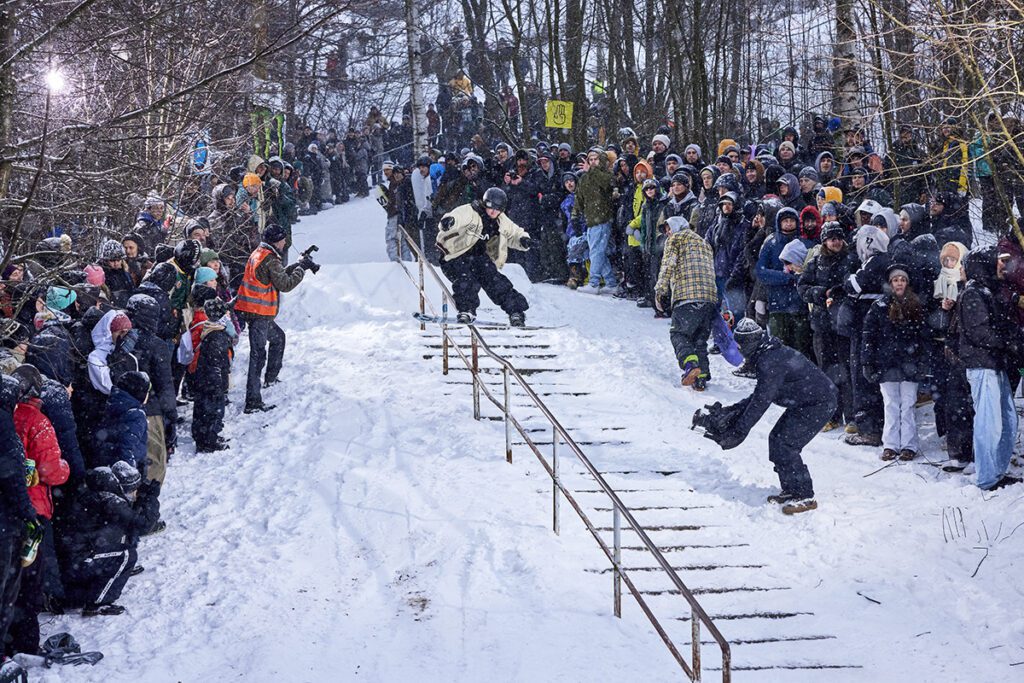
Photo by: Keke Leppälä.
“Your life isn’t over if you can’t snowboard on the level you did before”
Finding the right tools is one thing. Coming to terms with what happened is another one, and one of the hardest lessons you’ll have to learn is acceptance.
“For years, I was feeling sorry for myself, until I realized I needed to deal with this. I need to figure this out and move on. How can I live my life with this injury and make the most out of it, despite how much what happened sucks? It’s hard for me to accept that I’ll never get to that level that I knew was possible, but you can’t really think about that – that’s in the past. You can reach a point when your life is not run by your brain injury anymore, and your life isn’t over if you can’t snowboard on the level you did before,” Kevin says.
He went on to co-found the Love Your Brain Foundation with his brother Adam, offering yoga, meditation, and retreats for people navigating brain injuries. “I’m not the same kid I was before I got hurt. But I’m in a place now where I’m happy and content. Being a recovering brain injury survivor has given me a way to give hope and support to others who have suffered similar injuries. Some people will never regain what was lost. But to have hope – even if you’re not going to get back to your former self – is maybe the most important thing.”
Kelsey reflects on her journey: “Snowboarding gave me so much – community, purpose, the best memories. But after the injury, it also felt like it had taken everything away. My brain injury became both my greatest teacher and the monster I hid from. When you come that close to death, something shifts inside you. In the aftermath, I really struggled with self-worth. I hated myself. It took me years before I could even look in the mirror.”
“A brain injury changes you at your core. My relationships suffered, not because people didn’t care, but because I didn’t have the words to explain what I was feeling. The truth is, most people didn’t understand what I was going through… not even me.”
What truly helped Kelsey reconnect was being of service to others: “Starting Save A Brain became a big part of my healing journey, and coaching snowboarding with Beyond the Boundaries reminded me of the joy that comes from sharing your passions with others. For a long time, I was waiting to feel like ‘my old self’ again, but what I eventually realized was that I wasn’t going back; I was becoming someone new. Losing your sense of identity is one of the most disorienting parts of recovery, but slowly, I began to lean into the unknown.”
Henna is also learning to reconnect: “I was snowboarding already a few weeks ago and felt way better, so I’m feeling optimistic about the future again. I think it’s very important not to let snowboarding fully determine you and to also find other things in life to enjoy.”
“You can’t walk this road alone”
Recovery isn’t just physical. It’s social, and it’s deeply emotional. “In many cases, people can just disappear from your life because they think you’re inappropriate or can’t speak well,” Kevin explains.
Henna felt that loss of connection, too, though in her case it came from within. “I definitely started to feel some sort of anxiety about social situations. That felt weird and scary, cause I’d say I’m a pretty extroverted person. I’ve been putting myself into social situations again – it’s been getting easier. Even though I had people to talk to and went to see different kinds of professionals, I still felt like I was alone at times.”
Support can also come from love – in any form or shape. For Kevin, the love he needed came from the woman he married: “A lot of people who knew me before the injury treat me like I’m still injured. My wife never knew me before. She only knows me as I am now, and she never treated me as broken. That support made all the difference.”
Jamie’s way forward meant leaning on passion: “I’ve chosen to rise above and come back, and I think everyone has that choice when they’re injured or in a tough situation. For sure, at times, I was over it, felt my spirit was so broken. But after time and self-realization, the love and passion have always brought me back to the mountain. You just have to accept it and be in the present and go with your own rhythm. Life is changing all the time, and without challenges and hardship, we won’t evolve.”
Having something to keep you grounded is crucial, as Kelsey experienced. For her, community became the anchor: “Every journey is different, but one thing I know for sure is this – you can’t walk this road alone. Building a support system is critical. The stories of others truly saved my life. When I was in a dark place, I started sharing, and that opened the door for others to do the same. It showed me that people who felt like they had no one could feel seen, and it reminded me how healing each connection can be. That’s what Save A Brain has taught me: connection is everything.”
Her advice is both heartfelt and simple: “If you don’t know how to ask for help, let people in – even if it’s messy and you don’t have the words yet. If you’re supporting someone, don’t overthink it. Just ask how you can show up. Sometimes sitting in silence or dropping off a meal means more than you realize. I just wish more people understood the weight of having only one brain – it’s our memories, our personality, our sense of self. That’s why this mission is so personal: it’s about protecting what matters most.”
“Snowboarding culture is very powerful, and it’s important that we use that power to bring awareness and support on harder topics as well. The real topics. It’s not all about frontboards.”
– Henna Ikola
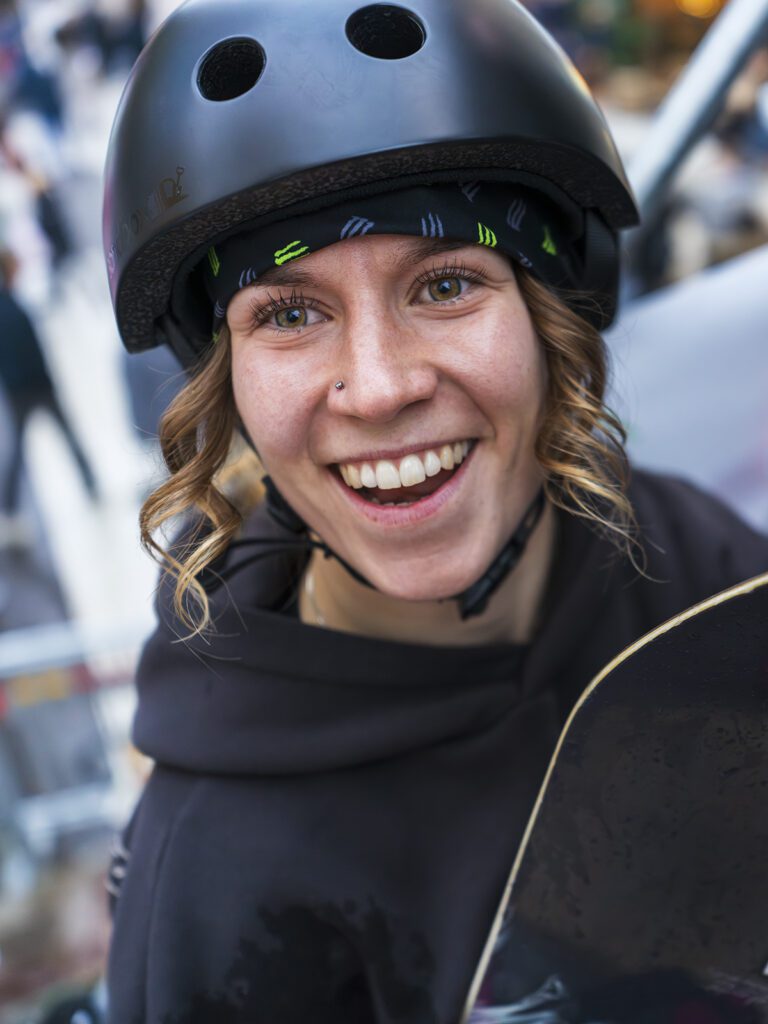
Photo by: Keke Leppälä.
“Having hope is everything”
In the end, recovery is about trusting the process. As Jamie puts it: “Take time to heal and love yourself. Everyone goes through injuries and hard times. You just have to have grace and acceptance. Time will heal.”
Her words resonate with others. From being in a really dark place, Chris has come a long way: “I feel great now. The good news is that you can heal your brain.” Henna adds her voice of hope: “It sucks right now, and it’s probably very confusing, but it’s gonna get better.”
For Sven, the hits to his head became a turning point: “It made me think about what I want to achieve. I probably took more safety precautions than I needed to, but I’m glad I made that choice because it opened my perspective on what’s most important.”
But as Kelsey reminds us, coming to terms with what has happened doesn’t always mean that the grief is gone, “I’d be lying if I said I’ve fully made peace with it,” she admits. “The grief still ebbs and flows. But over time, I’ve come to see my brain injury as one of my greatest teachers. As painful as it was, I wouldn’t take it back. It gave me a new purpose and a deeper understanding of myself and others. Hearing from people that my story has given them hope – that’s maybe the most important thing. Even if you don’t fully recover, having hope is everything.”
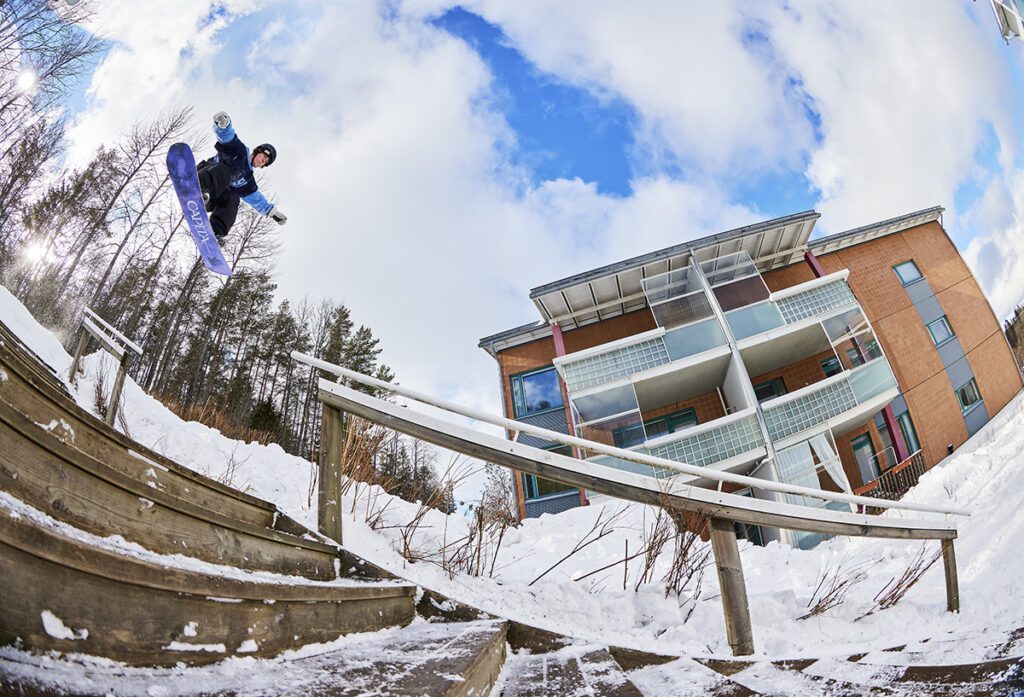
Photo by: Keke Leppälä.
“It’s not all about frontboards”
There’s still a lack of honesty and open communication when it comes to invisible injuries – not just in action sports but in society at large. That silence is part of the problem. “So many athletes suffer in silence because we can’t see brain injuries, so we tend to underestimate them,” Kelsey says.
Kevin reflects on his own injury: “I was already concussed when dropping in. So putting a concussion on top of a concussion is something you can’t do. Your brain can’t be hit that hard twice that close together. That was something I didn’t know.”
The needle is finally starting to move, but to create real change, “we need to keep the conversation going. Awareness is the first step to prevention and to healing,” Kelsey explains.
Sven shares the view: “Since I had my recent incident, I’ve talked a lot with other riders about concussions. When I mentioned it in an Instagram post, I got a huge number of messages from people sharing their own stories. Hearing about Halldór’s concussions definitely made me think more seriously about the topic. It made me realise the importance of not ignoring symptoms and being aware of mental health impacts.”
Henna, too, has noticed a shift: “I think that people are finally starting to realize that it’s not a joke and you’re not really the most G dude if you just ignore it and party and snowboard.” Jamie points out: “There has been a prompt light and focus on concussions, and also mental health, which I think is important.” Concussions are a common topic on Chris’s podcast as well: “We talk about them all the time on our show.”
There’s a growing understanding that brain health is mental health, and that connection is finally being acknowledged. Kelsey adds, “I’ve noticed how much more people, especially friends, are looking out for one another. One movement that’s been especially inspiring is the growing emphasis on helmet safety – and it isn’t just about wearing gear – it’s education, awareness, and changing the way we view invisible injuries.”
Kevin admits: “I was always told to wear helmets and protective gear, but I never understood that a brain injury could be this bad and this long-lasting. I never knew it could change your life this much.”
Sven adds, “When I used to compete at the X Games, you didn’t even have to wear a helmet. Now it’s mandatory, and they check your helmet to make sure. Back when I had my slam at the X Games, it was entirely up to me whether I kept riding – no one stopped me, and I didn’t even realize I’d been knocked out. I think contests could learn from sports like ice hockey, where the coach can pull a player out for safety.”
Henna reminds us: “Snowboarding culture is very powerful, and it’s important that we use that power to bring awareness and support on harder topics as well. The real topics. It’s not all about frontboards.”
And sometimes the smallest acts are the ones that matter most. “When someone’s going through recovery, one message can make their day so much better and make them feel like they matter,” Henna continues. “Make them feel seen. Make them feel like there’s no rush, cause they’re probably feeling like they are in a rush to get better, and time is just slipping away.”
A broken bone is visible. A broken brain is not. But if snowboarding is ever going to protect its riders, we have to start treating invisible injuries like the most dangerous fractures of all: “If you break an ankle, you’re not going to keep snowboarding. So why should you keep going with a brain injury?” Kevin states.
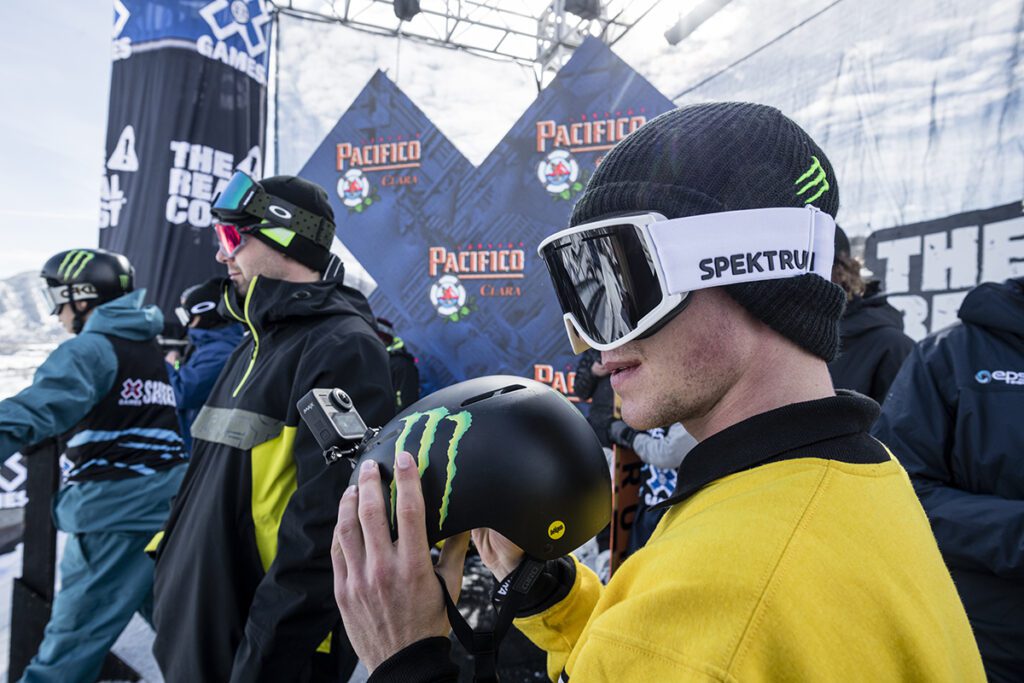
Photo by: Daniel Bernstål.
“For sure, at times, I was over it, felt my spirit was so broken. But after time and self-realisation, the love and passion have always brought me back to the mountain.”
– Jamie Anderson
Books That Helped Our Riders
The Power of Now by Eckhart Tolle – Mindfulness and presence in healing.
You Can Heal Your Life by Louise Hay – A holistic approach to self-acceptance.
Järnstark (The Real Happy Pill) by Anders Hansen – Exercise and mental health.
Resources & Tools That Helped Our Riders
Save A Brain – Founded by Kelsey Boyer to spread concussion awareness in action sports, offering education and support for riders.
Love Your Brain – Kevin Pearce’s foundation provides yoga, meditation, retreats, and community for people navigating brain injuries.
Craig Hospital (Denver, Colorado) – A leading rehabilitation hospital for brain and spinal cord injuries.
Carrick Institute – Specializing in clinical neuroscience and functional neurology education.
Mind-Eye Connection (Chicago) – Dr. Zelinsky’s clinic, focusing on visual and neurological rehabilitation.
Chydenius Neuro-Chiropractic (Finland) – Roope Chydenius’ practice, which Henna Ikola credits as life-changing in her recovery.
INTERVIEW: STELLA PENTTI PHOTOS: CRAIG ROBINSON UK-born, Avoriaz-raised, and fueled by endless energy:
New Role, Still Snowboarding Words: Darrah Reid-Mclean Darrah Reid-McLean reflects on shifting
Freshly Crowned Corbet’s Queen Ellie Weiler on Colorado Roots, Comps and Comebacks.