


Local Heroes: Max Glatzl
A new series celebrating the people behind the scenes who keep snowboard



WORDS: ALBA PARDO
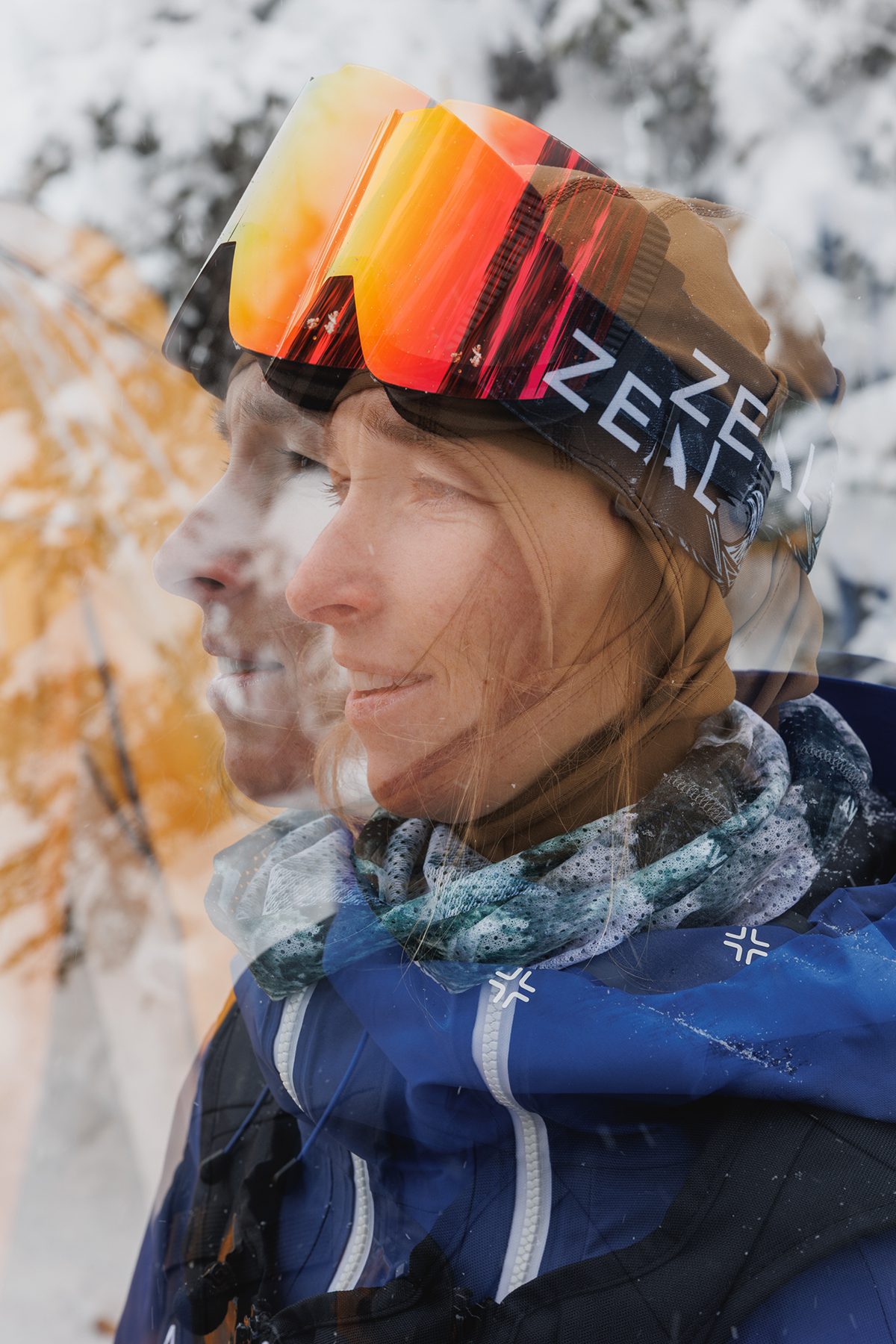
When Šárka Pančochová burst onto the international scene almost two decades ago, she brought with her an unapologetic energy, a playful presence, and a raw kind of talent that made her one to watch. A multiple Olympian and X Games medalist, Šárka has experienced the full arc of a professional snowboarder’s life: the early promise, the push for progression and the eventual shift away from competition. But perhaps most compelling is what comes after.
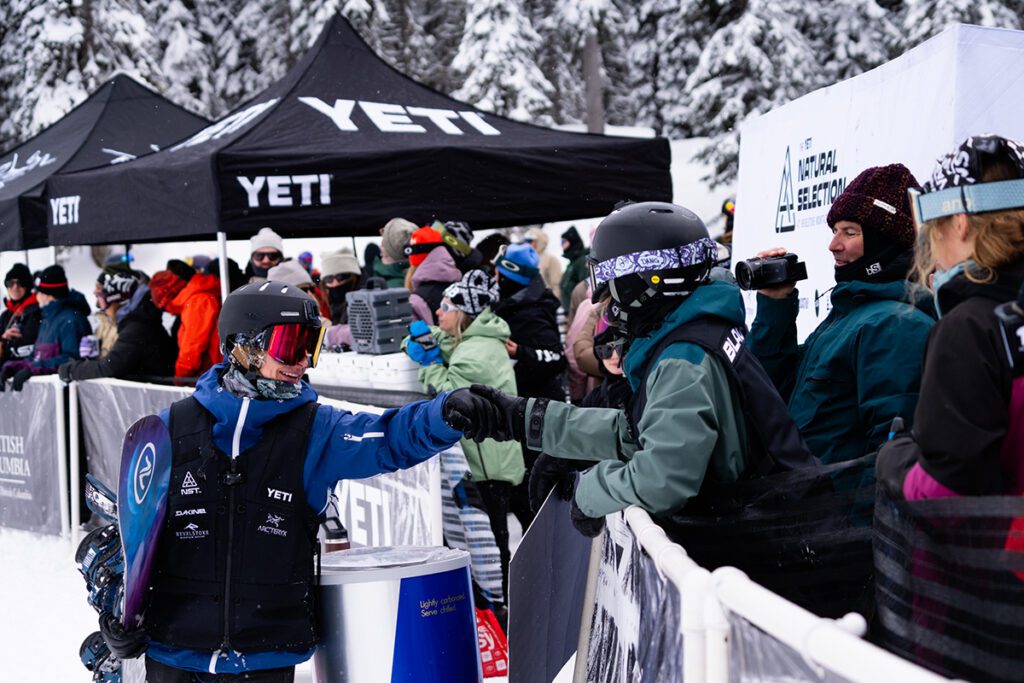
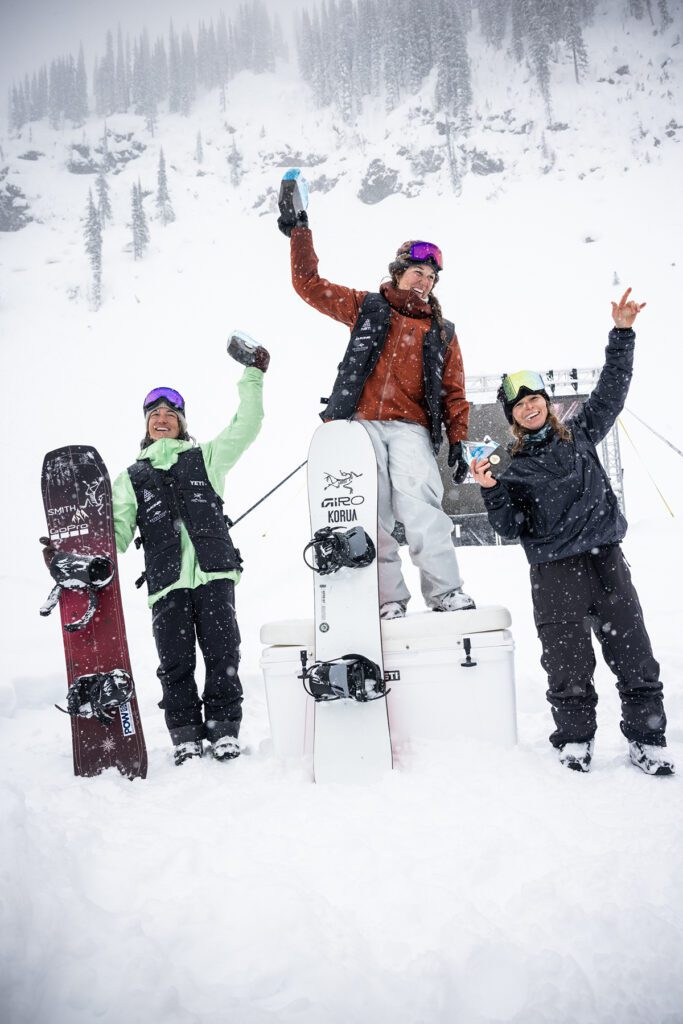
Now in her mid-thirties, Pančochová is not only still snowboarding: she’s thriving, creatively and personally. Her recent podium at Natural Selection, her immersion into the backcountry, and her candid presence both on and offline tell the story of someone who’s still very much pushing boundaries, but doing it on her own terms. I sat down with Šárka for a long, winding conversation that touched on everything from burnout and self-worth to mushroom trips and life goals. What emerged was a portrait of an athlete who’s had to fight hard to keep her passion alive, not just in her legs, but in her heart.
“I think it was when Anna [Gasser] did the cab double,” Šárka says, reflecting on a turning point. “That was the moment I realized, ‘Shit, it’s time to start working really hard’.”
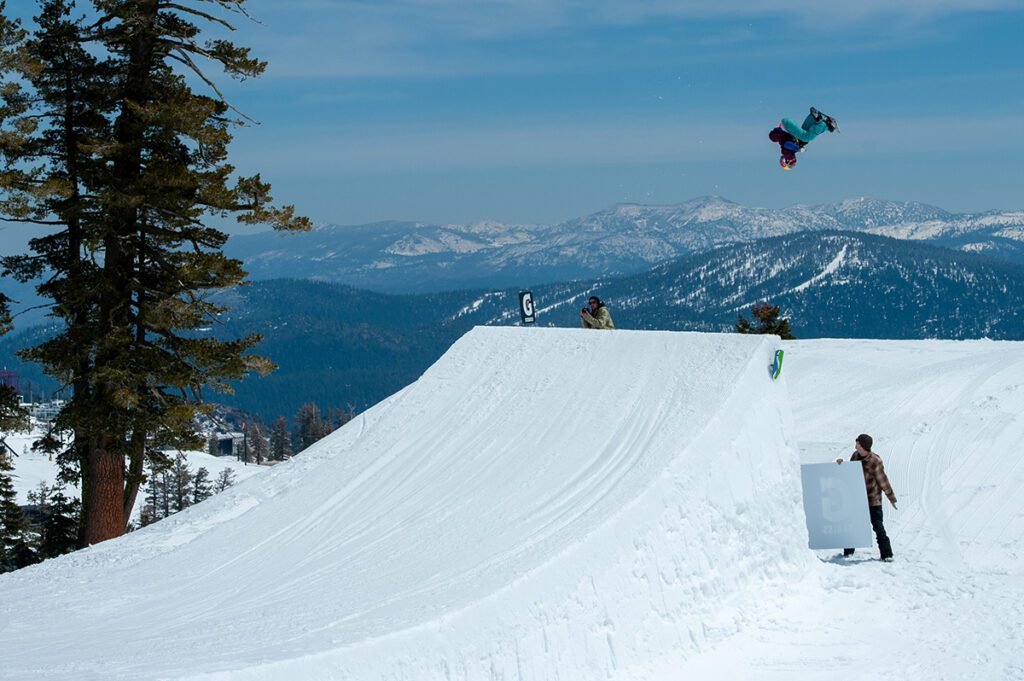
Until then, she had been coasting, not because of a lack of talent, but because the early generation of women’s freestyle snowboarding allowed it. “In the 360, 540, 720 era, I didn’t need to train that hard. I could land tricks after a couple of tries. I was always quite talented at sports, but it got to a point where that natural talent wasn’t really enough, and I had to shift my mindset. I believe there are two kinds of people: the ones that just hang onto that talent and refuse to accept that there is a limit, and the ones that swallow their pride, put their head down and get to work.”
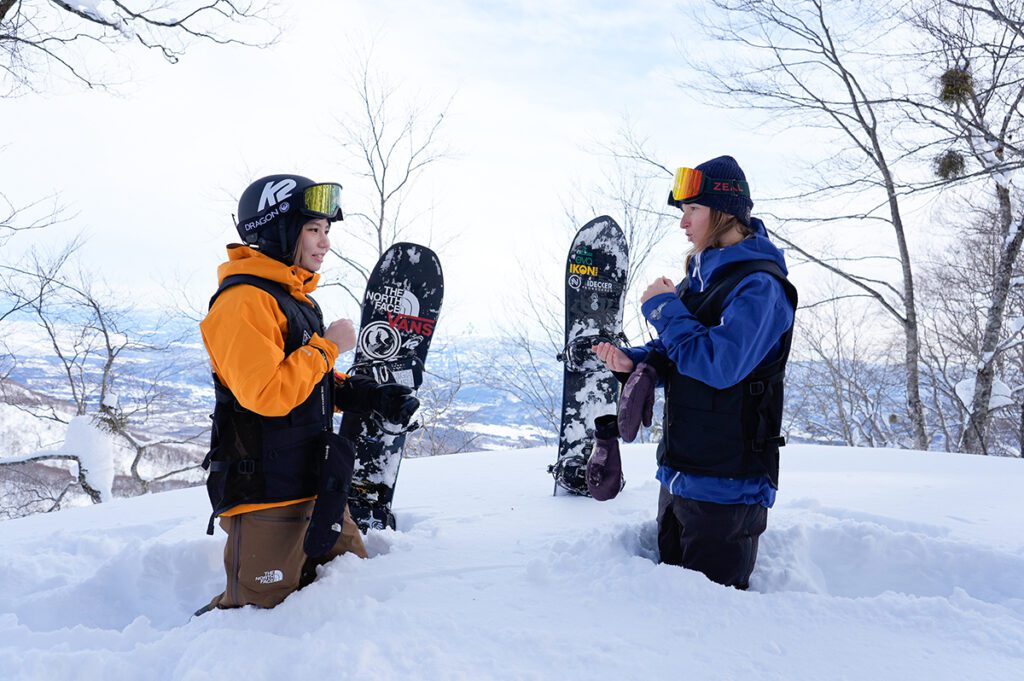
But that shift wasn’t easy. Šárka never loved regimented training. “Doing one trick eight hours a day, five days a week? I lose passion when things get that structured. So, I had to find my own way to improve, mixing it up a bit and making it feel more like skateboarding. If it started to feel like training, it wasn’t fun anymore.”
Still, she pushed. Through repetition, airbags, and mental battles. But she did it her way – and that was both her strength and her challenge. Interestingly, despite her distaste for repetition, she was one of the only women competing in both slopestyle and halfpipe. “It was just me and Peetu,” she recalls. “Enni was doing it for a little bit too.” Most riders eventually specialized as the level increased, but Šárka just kept riding. “I like snowboarding. That’s what I want to do. I want to use the terrain to become better at snowboarding.”
Looking back, she admits that choice may have come with a trade-off. “If you focus only on one thing, you’ll probably get really good at it. But if you spread yourself… maybe you’re not number one, but still pretty good.”
Doing Things Her Way
What many fans of snowboarding don’t see is just how precarious a professional athlete’s career can be – especially for women. While podiums may bring glory, they don’t guarantee longevity, and sponsors can vanish overnight.
“I kind of wish I had quit after Sochi,” she admits. “I had this idea of moving into the backcountry then, but staying on the federation team meant I had a salary. That gave me stability: travel money, expenses covered… which let me save the money from sponsors. But eventually, the sponsors fade. You’re not doing as well. You’re not as marketable.’”
For years, that safety net kept her in contests she no longer felt passionate about. “I wasn’t enjoying it. I didn’t care about the results. I was just showing up because it was the easiest way to keep some kind of income. But when your income depends on someone else deciding your worth, it’s hard. You’re putting your life in someone else’s power.”
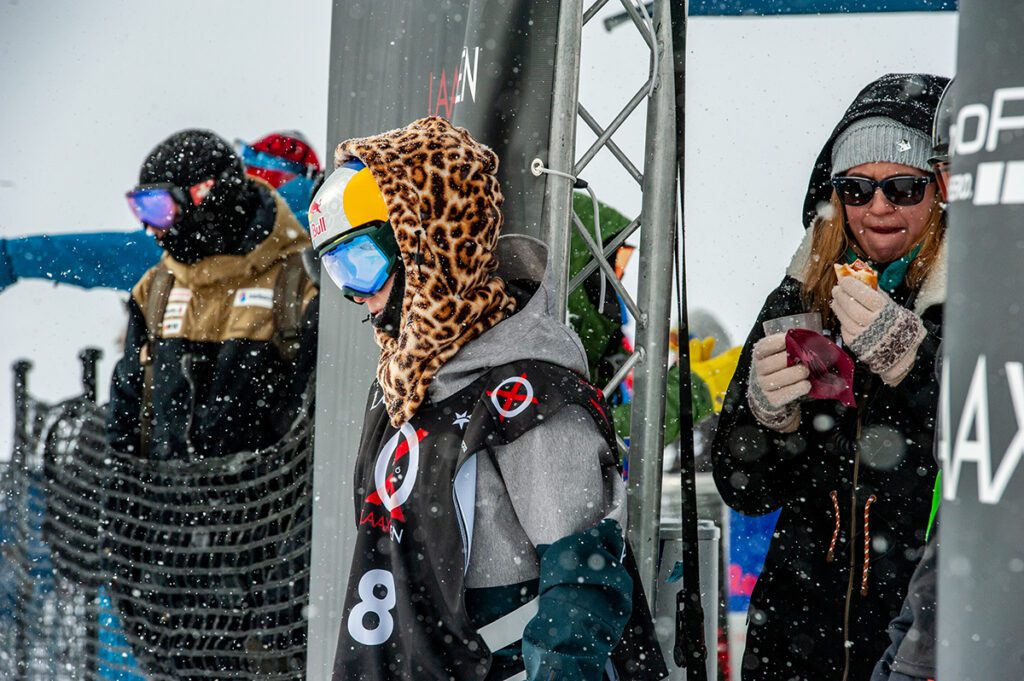
That constant uncertainty of sponsors pulling out, federations reshuffling, the pressure to perform online as much as on the mountain… creates a quiet but brutal emotional toll. For many athletes, including Šárka, it means staying in a lane long after you’ve outgrown it.
“I was still competing, still showing up, but I didn’t really care about the results anymore,” she says. “So I started experimenting – with mindset, with mushrooms, with anything that would help me understand my performance better. I’d go to Copper, microdose, land a back 12 and think, ‘This is wild.’”
She laughs, not because it was absurd, but because it was freeing. “It was actually really fun to play with all these different possibilities – to ask myself, ‘What state of mind do I ride best in?’ Most athletes never get that chance because they’re under pressure to win. But I wasn’t. So I used it. I realized I was utilizing it to enjoy what I was doing.”
After two decades of contest riding, Šárka found herself at a crossroads. It was a trip with Marie-France Roy, a road trip from Vancouver Island to the tip of Baja in a beat-up van, that lit the spark for something new.
“We surfed, talked, ate mushrooms – it was just the best time. And Marie kept saying, ‘You’re good, you should do this. Just do it.’” That support, along with the bonding and the break from competition, gave her the clarity to make a decision she’d long postponed: to transition fully into the backcountry.
By December, she’d packed her bags and flown to Japan for the Natural Selection Duels. And while her road into the main event wasn’t linear – she lost the Duel but won her spot back at the R&D event – it felt right.
“When I got to Natural Selection, I felt like a kid on the first day of school with a new backpack,” she smiles. “I was just so stoked to be there.”
And while others came in with full preparation and ambition, Šárka had a different approach. “I wasn’t trying to win. I just wanted to ride. That mindset, not chasing the result, was such a shift for me. And it worked.”
Šárka’s journey into backcountry riding isn’t just a career pivot – it’s a holistic alignment.
“There was a moment before dropping in where I thought, ‘What if this is already destiny? What if I make it or not… it’s already decided. All I can do is do my best.’ That thought took all the pressure off. It made me want to ride more.”
And ride she did. Her lines were fluid and expressive. Her energy radiated through the screen. For those familiar with her contest years, it felt like a revelation – a rider who seemed truly, finally, at home in her body, in the snow, and in her element. “Being in Whistler, riding with the girls, seeing the terrain – I was like, how have I never done this? This is insane. It was filling my cup in a way contests hadn’t for years.”
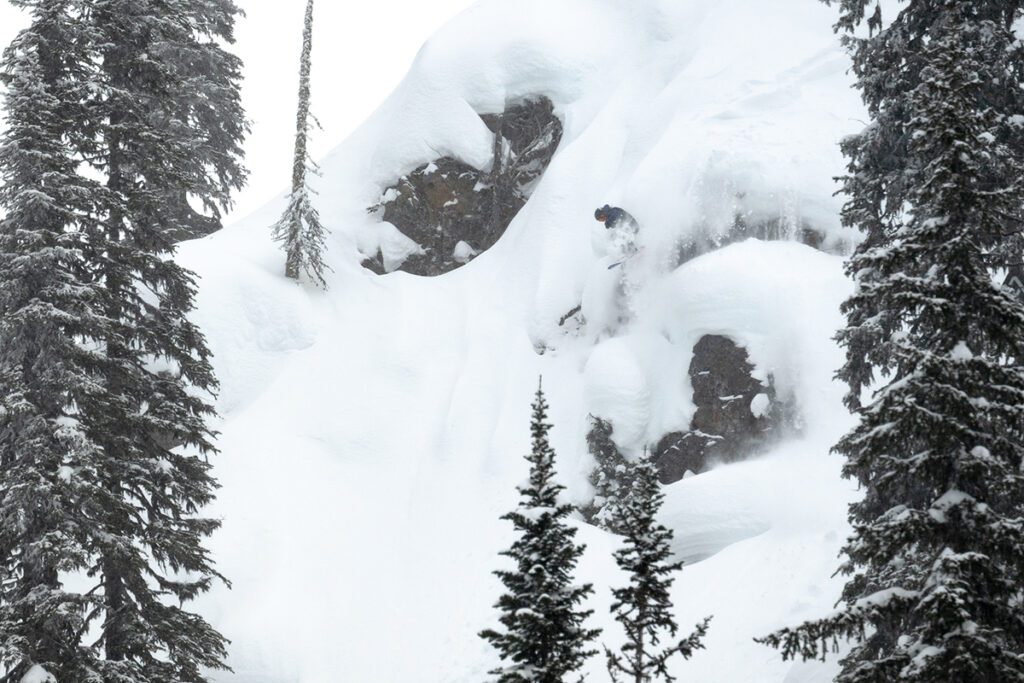
Despite her stature in the sport, Šárka is still navigating a career without a roadmap. She doesn’t have the luxury of endless filming budgets or guaranteed coverage. Projects take time, energy, and financial risk.
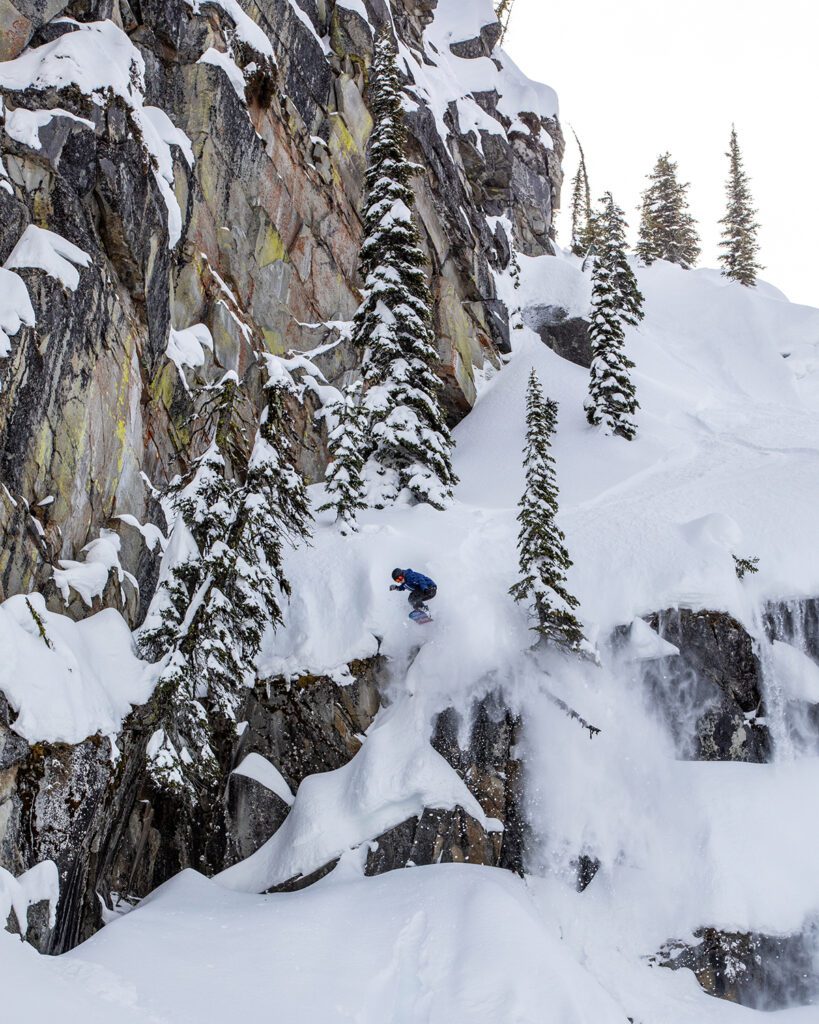
“I’ve always struggled to build parts. Without the right crew or resources, it’s hard. But I want to take all these tricks from my freestyle days and bring them into the backcountry – shifties, double grabs, switch rodeos. I’ve got all this stuff, and I want to use it.”
She’s also launching retreats in Oregon, exploring real-world community as an antidote to the pressure cooker of modern influence. “People are just missing community, and they don’t even know it. They think they’re depressed. They’re just lonely,” she says. “I want to do real stuff. Not content. Connection.”
At the same time, she remains conscious of the instability that can come with relying on external validation – from sponsors, federations, or algorithms. “I’ve always hated the idea that someone can just decide your value – whether that’s a sponsor, a federation, or even a government. It’s why I’ve always wanted some kind of passive income or something I can build myself.”
She still enjoys filming and editing – the creative process behind snowboarding content – but is less inspired by what the platforms demand. “It’s a love-hate relationship. I love filming, editing – the creative part – but the platforms, the constant demands, the algorithms? I don’t love that. I want a platform with no ads, just my friends, and no f***ing algorithm.”
There’s a calm confidence in the way Šárka speaks now – not the manic optimism of someone trying to prove themselves, but the grounded perspective of someone who already has and whose passion for snowboarding is multidimensional and runs deeper than ever. “I always wanted to move into the backcountry. That was my dream. And if I had walked away without doing it, I’d be really bummed. But now? Now I’m actually doing it. And it’s awesome.”
When I ask her what’s next, she smiles. She’s planning a return to Japan, hopes to film a full part, and maybe build something longer-term with her community of backcountry riders. Whether that becomes a new film project or simply more personal fulfillment, it’s clear that for Šárka, the prize has never been about the medals. It’s been about the ride. And now, more than ever, she’s finally riding for herself.
A new series celebrating the people behind the scenes who keep snowboard
Tidal is a biennial, on-mountain artist residency and exhibition in LAAX, Switzerland,
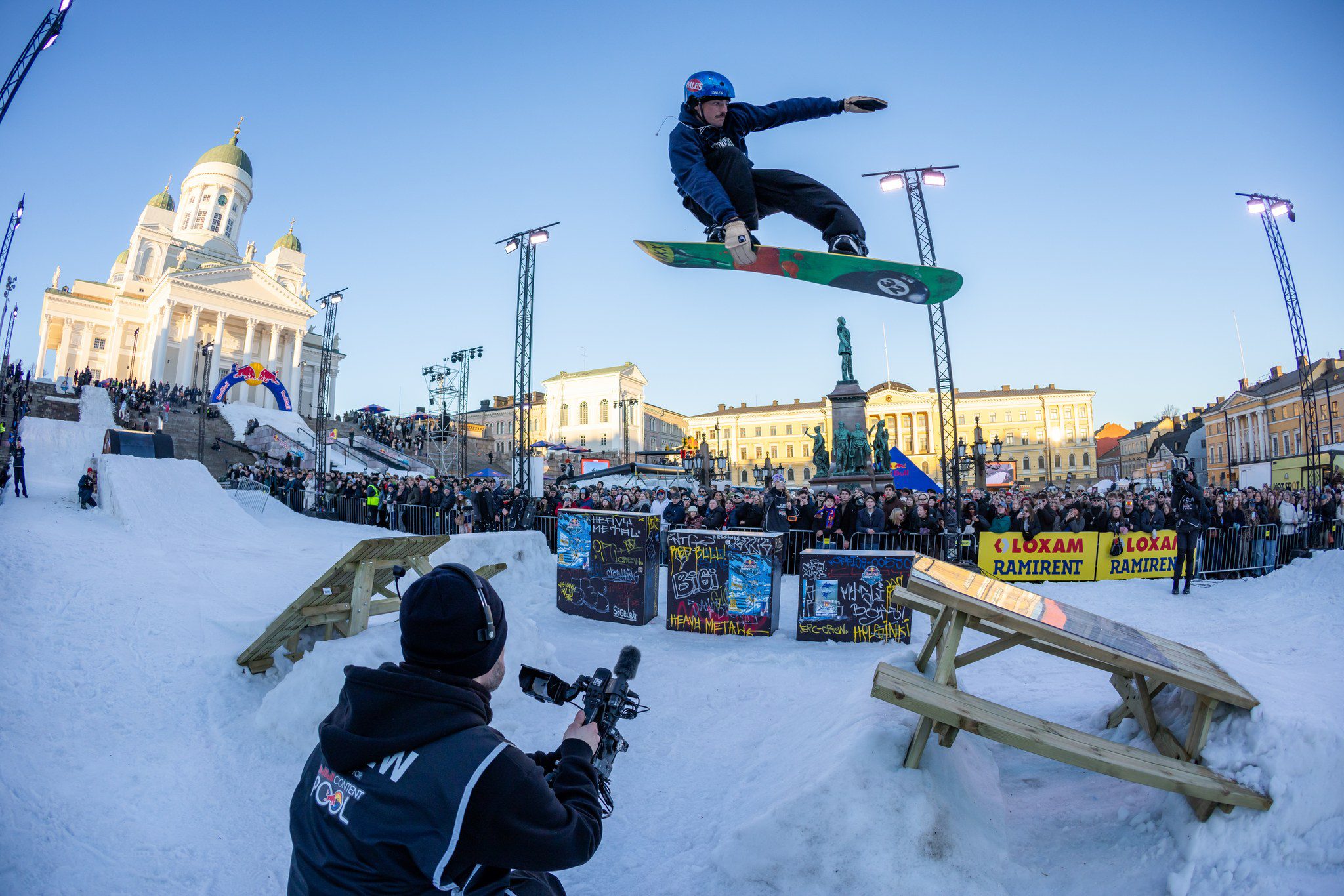
One of snowboarding’s most iconic rail jams filled a void the Finnish