

LES Crew: Building a DIY Snow Scene in Kazakhstan
We sat down with the LES crew to get an insight into



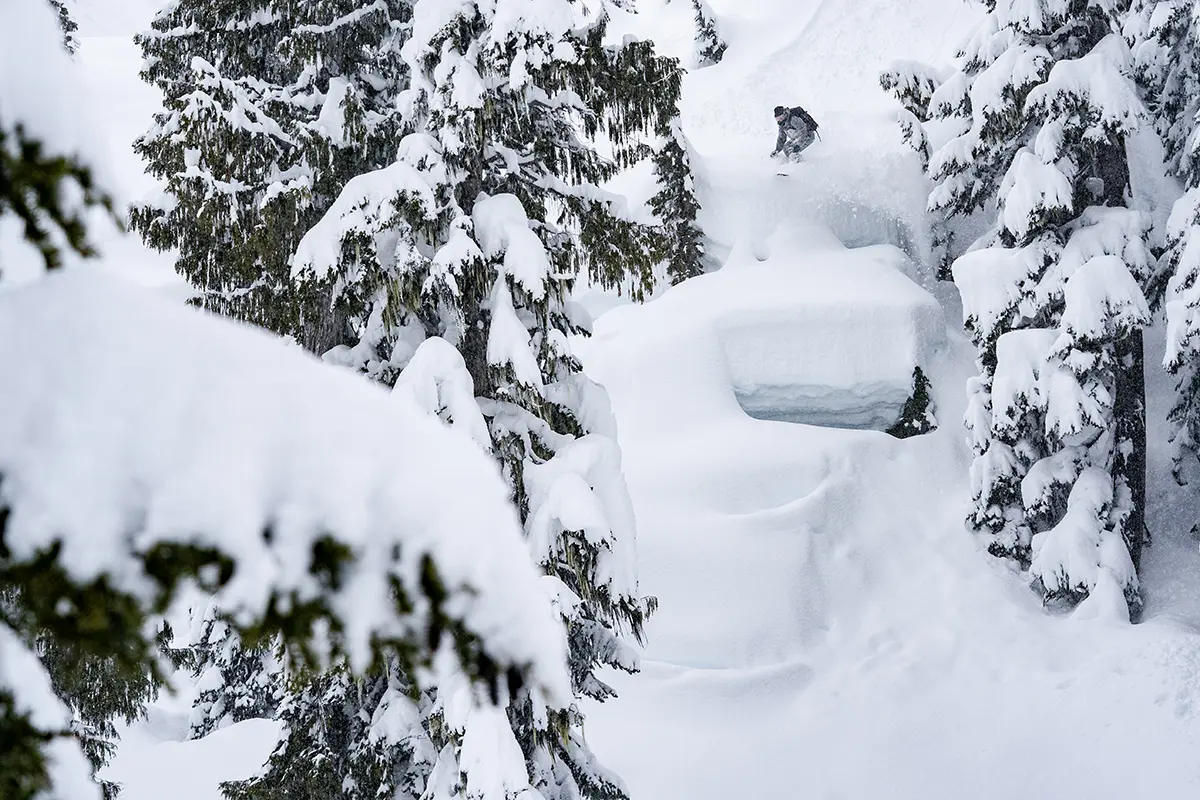
Marissa Krawczak discusses splitboard mountaineering, her film Super Misto, backcountry risk and finding her own path through snowboarding.
Interview by Alba Pardo
Photos by Erin Hogue
Marissa Krawczak has never followed snowboarding’s obvious path. With Super Misto, she wants to put the riding back at the centre of snowboard mountaineering.
Marissa Krawczak has a funny relationship with hiking. She grew up doing it, became very good at it, and still insists she hates it. Yet long approaches, winter camping, self-supported expeditions and days spent travelling through the mountains have become central to the way she snowboards.
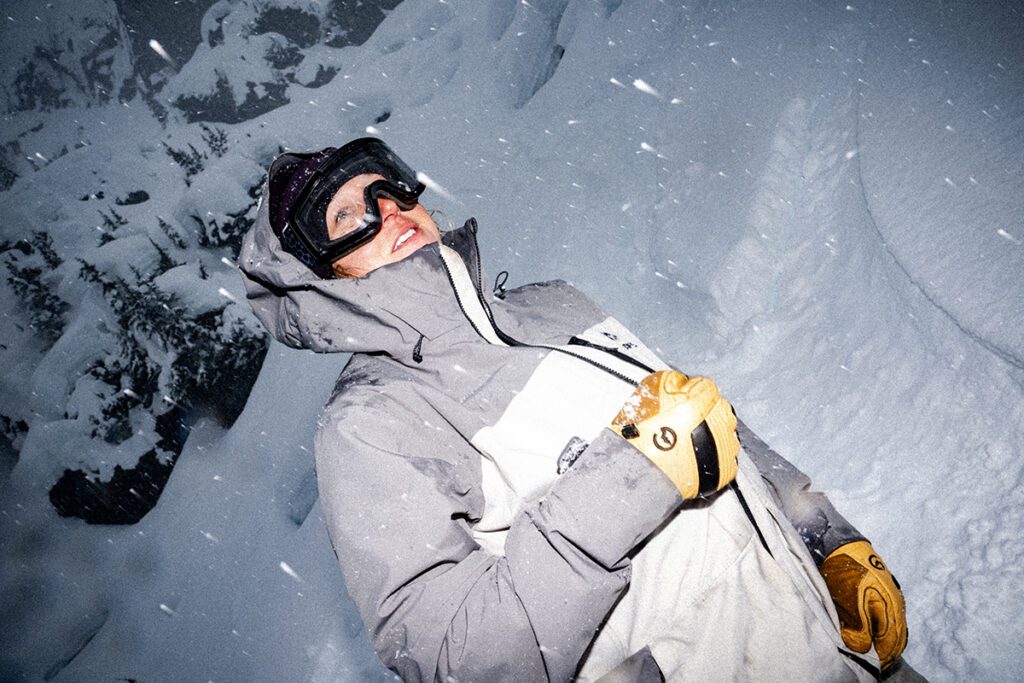
Her career has unfolded largely outside snowboarding’s conventional pathways. A former wildland firefighter now based in Central Oregon, Marissa has steadily built a reputation as a highly capable freerider and splitboard mountaineer. In 2023, she was invited to the Natural Selection Duels, where she went head-to-head with Zoi Sadowski-Synnott; a year later, she made her Freeride World Tour debut, finishing joint fifth in the women’s snowboard rankings. Somewhere in between came an 18-day, self-guided expedition on Denali with fellow splitboarders Amanda Hankison and Kaytlyn Gerbin.
But competition results don’t really explain the kind of snowboarder Krawczak is.
While much of what currently gets labelled “backcountry snowboarding” revolves around freestyle riding transferred beyond the resort, Krawczak is drawn to something less constructed: travelling through the mountains, finding a line and riding it as it is. For her, the approach, the conditions and the uncertainty are part of snowboarding.
That idea sits at the heart of Super Misto, the film she has produced and edited to put what she calls “beautiful snowboarding in adverse terrain and adverse conditions” on screen. It is less about making mountaineering look impressive than showing the riding that can get obscured behind the crampons, ice axes and long days required to reach it.
And perhaps that is the simplest way into Marissa’s world, in her own words: “Go as far as you can with what you’ve got, then ride the mountain you find when you get there.”
There’s much more attention on backcountry snowboarding now, but you make a distinction between what you do and what we often see described as “backcountry freestyle.”
I think people still really don’t understand it. There’s this backcountry freestyle thing going on, which a lot of slopestyle riders are gravitating towards, but to me that’s not really the same thing. They’re building jumps and making some sort of slopestyle course in the backcountry.
I see people building pat-downs or jumps and repetitively hitting something to get a shot, and I have a hard time relating to that. Even in some of the contests I do, I have to force myself to build a pat-down.
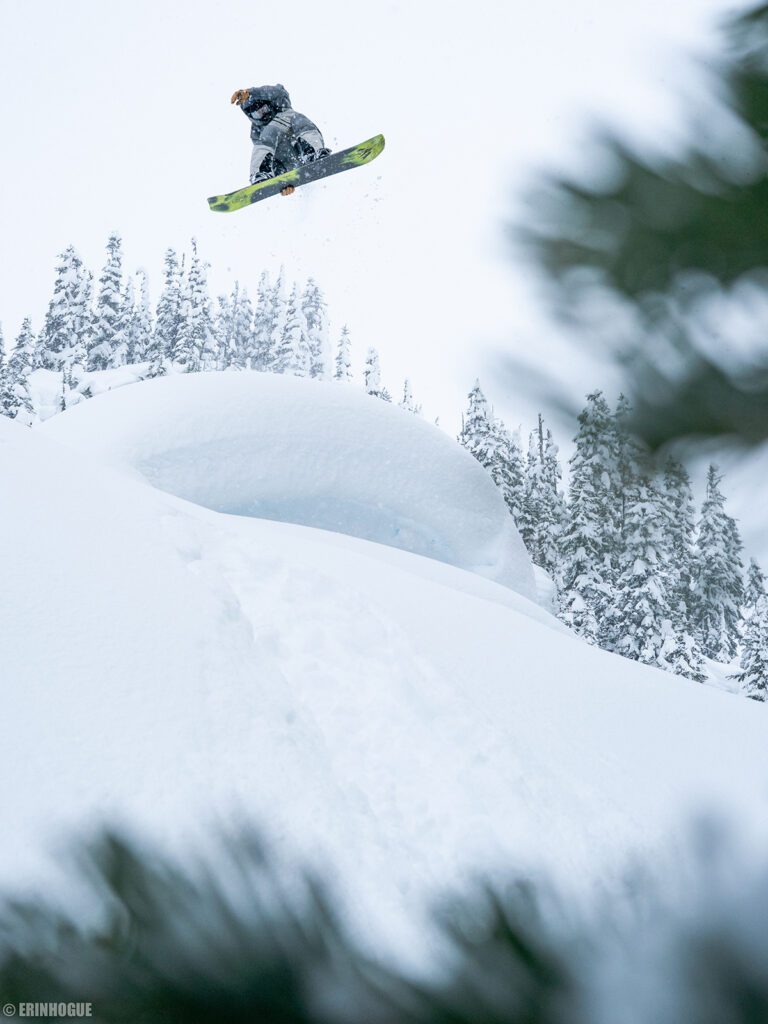
That’s awesome and it is backcountry freestyle, but that was never what snowboarding in the backcountry was to me. From my perspective, I’ll ride a face or a line and I’ll ride it once. I’ll ride it as it is naturally.
I still don’t think there’s really a spotlight on snowboard mountaineering or splitboard mountaineering.
So what is splitboard mountaineering to you?
To me it’s pretty much being in the mountains and going as far as you can with what you have.
Maybe that’s a splitboard, a snowmobile, or snowshoes and a board. You’re going to your summit of the day, whether that is a true summit or just the top of a really cool line that you find enticing, or somewhere you know the snow is going to be good that day.
It’s living in the day and time where the riding is going to be continuous, and fun and flowy. Sometimes it can be a really long journey to get to that. Sometimes it could be right off the parking lot.
Even with backcountry snowboarding in general, if your goal is to go and build a jump, it’s still the same idea: you can only go as far as you can with what you’ve got, and with the knowledge you have. And there’s a lot that goes into it.
And the expedition side seems particularly important to you.
My favourite expeditions are the ones where you have everything with you, on your back or on a sled. Totally self-supported.
Having really lightweight gear, a lightweight tent, lightweight food, and just living off the mountain for however long – a couple of days, a week or two weeks.
When we did Denali. We were on the glacier for two weeks, three of us, all splitboarders, and we didn’t have a guide. It was just the three of us out on the mountain. That was a dream, for sure.
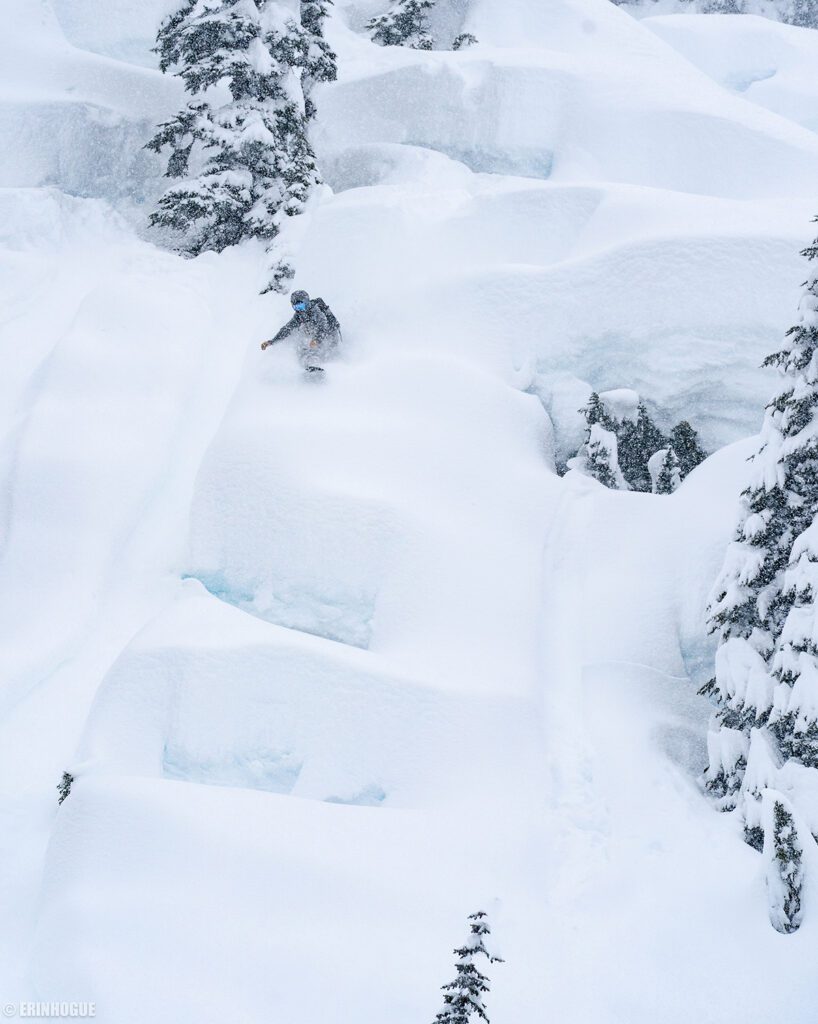
So is this where your relationship with Spark R&D came from? The practical side of all this rather than simply sponsorship? How did it begin?
Yes, I was doing these expeditions and self-supported trips and missions, and I was obsessed with weight. I was weighing every single little thing I packed. So I tested pretty much every splitboard binding company’s binding that was out there.
Spark R&D was obviously the lightest binding, so that was a huge selling point for me. Then, they were the most reliable, the most comfortable and had the least moving parts.
I can’t tell you how many times before I was on Spark R&D that I had things break in the backcountry, and how time-consuming, annoying and inefficient it was to have gear that wasn’t working when you’re out in the mountains in the snow.
I was sold on Spark R&D from the standpoint of it being reliable gear. Then I toured the factory and saw that they do everything in-house and manufacture everything there. I’m really happy I get to work with them, and I’m so excited that they support me in the ways they do.
I don’t have a lot of eyes on me when I’m doing the things I’m doing day in and day out. So it’s nice to know somebody has my back. Even when sometimes I’ll send them a cool clip and they’re like, “We’re posting it right away.” And that’s so nice, because I worked really hard to get that clip.
Your new film, Super Misto, seems to come directly out of wanting to show that world differently. What did you want the film to be?
The movie is about really good, beautiful riding in adverse terrain and adverse conditions.
A lot of my friends don’t have a spotlight on their riding, but they’re really good in the mountains. They’re really good at riding bad snow – I mean, there’s no bad snow – but they’re really strong riders in the mountains.
I wanted to showcase good, beautiful snowboarding in the alpine environment. I hadn’t really seen that done before in a way where the actual snowboarding was the focus. I wanted to put a spotlight on the riding side of this mountaineering stuff that we’re doing.
That’s why I love what I do. It’s different all the time and I’m not picky. I grew up in Michigan. I’ll ride anything. I’ll ride ice and not care. You just sharpen your edges and you’re prepared for it. So I wanted to communicate that through a film.
The title is Super Misto and the theme is sharp edges.
It isn’t an all-women project either. Was that intentional?
Yeah. I don’t have a huge interest in making it an all-women thing because it’s life, and life isn’t really like that. I think it’s more important for me to show people as they are and who they hang out with. I wanted to show people who are passionate about the same style of snowboarding that I am, and give them an outlet to show their riding as well.
You produced the project and edited it yourself. What did making the film teach you?
I learned that it’s important to be a good leader, and sometimes that means I can’t make everybody happy. If I have a vision, I need to speak up and communicate that vision better.
I think the biggest thing I learned is that nobody is going to care about a project and a vision I have as much as I do. I’m going to be the person who cares about it the most, and I need to realise that.
I also learned that I need to be more assertive, especially as a woman. When you’re in the backcountry with a group of people, you must be assertive. If you’re not, you’ll get walked all over.
Sometimes you think, “If I say something right now, this person is probably going to call me a bitch later, so I’m just going to stay quiet.” And then that bites you in the ass. So you just have to say something and not worry about what they’re going to think about you.
And producing in the mountains seems to create challenges of its own. Everyone may have an objective, but suddenly you’re also trying to make a movie.
Exactly. I was making a final product, so I needed to collect shots and direct people to get those shots. At the same time, everybody has their personal goals. Someone wants to summit. Someone wants to go here. Someone wants to do that. And they’re asking, “Why aren’t we summiting?”
And I’d have to say: “Because we’re making a movie and I need turn shots.” The reality is we’re not telling a story about going to a summit. We’re telling a story about beautiful snowboarding. Communicating that to a bunch of different people with their own personal goals was challenging.
Filming in the alpine is so hard. You need a filmer who is fit enough to carry all the gear and walk around to get the angles. You need a crew that is patient enough to wait for the filmer and wait for the shot. There is no fastest known time involved.
You need a certain type of individual and a certain type of crew who are willing to film in the backcountry, especially in the alpine.
Do you think making the film has changed how you look at big snowboard productions?
For sure. You watch these high-level snowboard movies and the production at the end is beautiful and amazing and perfect. But the people behind them can be incredibly efficient and tunnel-visioned on the outcome.
Then you see the result, and you’re like, “This is perfect. This is legendary. It’s insane.” But it doesn’t come without hard work, good communication and sticking to a plan and a schedule.
What I want to keep doing is documenting really good snowboarding in adverse conditions, with people who care about it and want to do it. I think that’s where the progression and the spotlight can be: focused on the actual riding.
Maybe mainstream snowboarding doesn’t relate to the mountaineering side because all they see are the crampons and the ice axes. It looks intimidating, and I don’t think they see the actual riding, and the awesome things you can do with a snowboard in the alpine.
So, I want to keep showcasing exactly that.
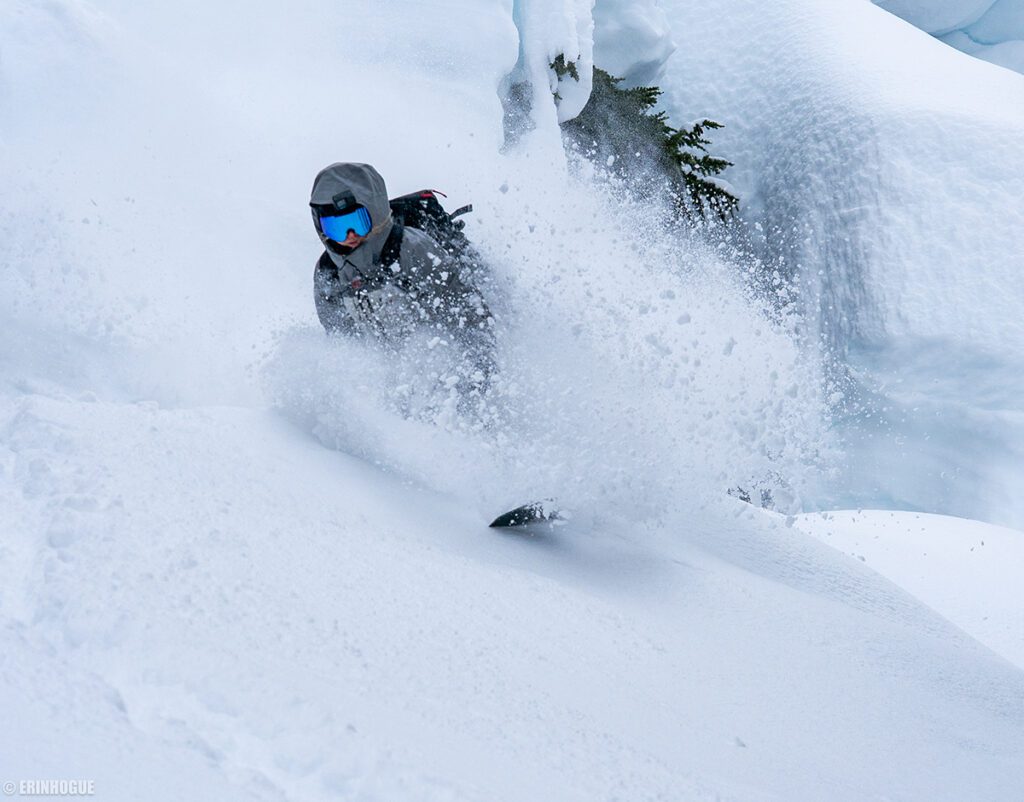
You talk about experience almost as something accumulated through other people. Who taught you how to operate in these environments?
When I moved to Central Oregon, I was lucky to run into the right people who were really into backcountry skiing and snowmobiling. It was a skier crew – a pro skier, pro mountain biker, and a really enthusiastic backcountry skier – and they were willing to take me out.
They taught me how to snowmobile. They taught me how to dig a pit, where the backcountry zones were, the routes up, how to safely ride things, how to ski cut. I had this really strong group of local skiers who taught me pretty much everything right off the bat, and then I was able to expand upon that.
But it didn’t come without having the drive to want to do it, having the fitness to keep up with them, and the common sense of it.
Travelling in the mountains and in the backcountry, a lot of it comes down to common sense.
And now you find yourself becoming the mentor.
I love it when people meet me halfway. With the film, I had friends who hadn’t really filmed in the backcountry before. They were really receptive to everything I was doing. They were soaking in my experience and knowledge. But that takes time.
It takes being together for two or three days, camping together, walking together, packing our packs together.
Or someone like my friend Will, who had never worn crampons or used an ice axe. He said, “I really want to summit Mount Hood. Take me to summit Mount Hood.”
So I took him, and he was willing to let me teach him for the day. Would I go out and advertise myself as some kind of mentor and organize an event? Probably not naturally. Maybe eventually. But if a young girl wants to get into mountaineering and approaches me and says, “I want to do this thing. Will you come do it with me?” I would love that.
How do you approach risk when the consequences can be so serious?
I rely on my gut a lot. There’s a lot of hoping and praying, because honestly, there are no guarantees at the end of the day. I choose my crew really wisely. I assess how people act in their day-to-day lives. On this project, I worked with some new people I hadn’t ridden with before, and that’s something I paid a lot of attention to, to understand how they worked and who they were before even going to the mountain.
If I’m by myself, I’m assessing the conditions, the weather, myself, how I’m feeling. If something goes wrong, am I going to be able to self-arrest? Am I strong enough to do that right now? Do I have the willpower to do that right now? Assessing risk is assessing many things at the same time: yourself, the people you’re with, the environment, the weather, the time of day. Nobody is immune to anything.
I can talk about safety for hours, but it isn’t going to make certain situations completely safe.
At events like R&D, you’re now around riders who may be incredibly accomplished snowboarders but have far less experience in this particular terrain. What’s that like from your perspective?
It’s a little scary for me, honestly. I’m not going to sugarcoat it. But I think it’s cool that they’re there and they’re learning quickly. When I go to something like R&D, I hope I’m leading as a good example. I’ve been in my own bubble doing this for so long that I’m starting to realise not everyone has the same experience I do and it’s hard for me to suddenly say, “Oh, I have so much experience”, because this is just my life. Then all of a sudden it is in a spotlight and that feels a little weird.
There’s also not a lot of breathing room to mentor people in events like that. You’re thrown into a venue with everybody and it’s a contest. I want to teach people and mentor these girls, but there isn’t really room for that there. So I just hope I can be a good example.
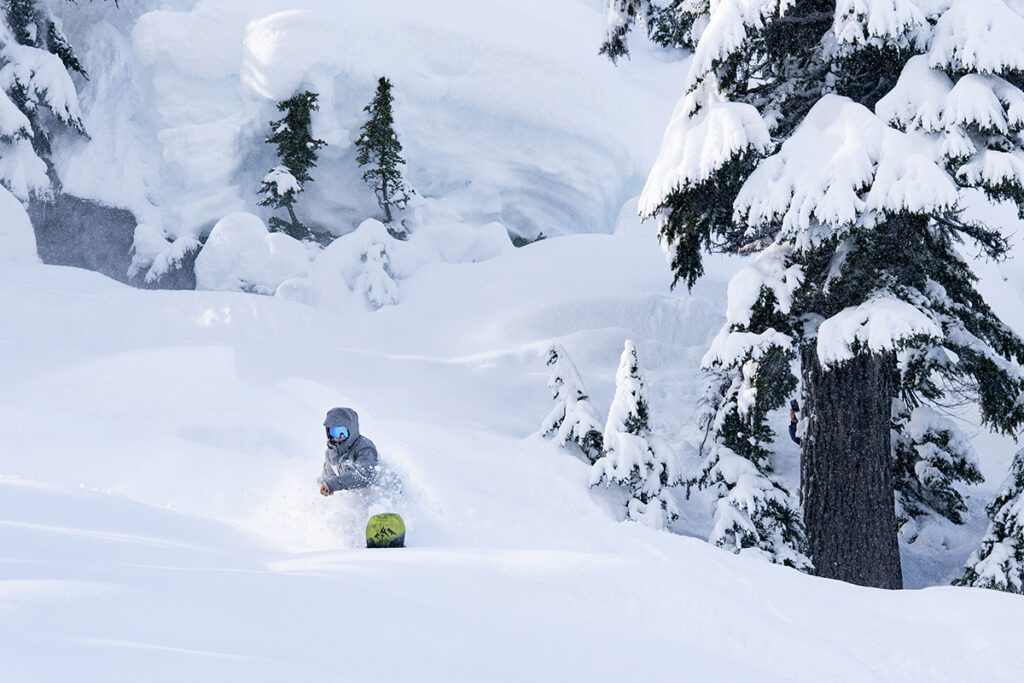
Splitboarding itself started almost accidentally for you. If someone looks at what you’re doing now and wants to start, what would you tell them?
The very first time I ever went splitboarding, I borrowed a board. People knew I was a firefighter, so they were like, “You’ll be good at this.”
We summited a volcano here on my very first time. I got stuck on the ice. It was horrible. I was crying. I hated it so much. I was like, “What the hell? I never want to do this again.”
That was definitely diving in with both feet. If I went back, maybe I would start small.
If you would like to start, but don’t knoe how, ask somebody local who you know is a backcountry rider: “What do you do? Where do you go? What equipment do you use?”
Just start asking small questions. I’ve been doing that myself with action photography. There are photographers I look up to, and I’m intimidated to message them and ask what camera they have or what they’re doing.
But they respond.
Nothing is ever not going to be intimidating. At the end of the day, you just have to want it. If you want it, you’re going to figure out how to do it.
So after Super Misto, what do you want next?
I just want to keep doing the thing.
I did a splitboarding trip to the High Tatras in Slovakia, and we did day trips, but I didn’t document anything.
I want to keep doing snowboard mountaineering in cool places and documenting it.
I’ve also built some pat-downs and done a little freestyle recently, and it was pretty fun. I’ve done a lot of freeriding, so I want to keep pushing myself. Maybe I’ll build some more pat-downs and get some freestyle clips.
But really, I just want to keep being in the mountains. There are a lot of seasons in the year. In deep winter, you can ride pillows. Then there’s the spring cycle where you can go pretty far.
There are so many obscure parts of the world that would be fun to explore. At the end of the day, that’s why I’m doing all of it. It’s fun.
We sat down with the LES crew to get an insight into

From race boards in Mikkeli to building one of Finland’s strongest snowboard

In a season dominated by contest schedules, livestreams, and Olympic pathways, PAVED
