




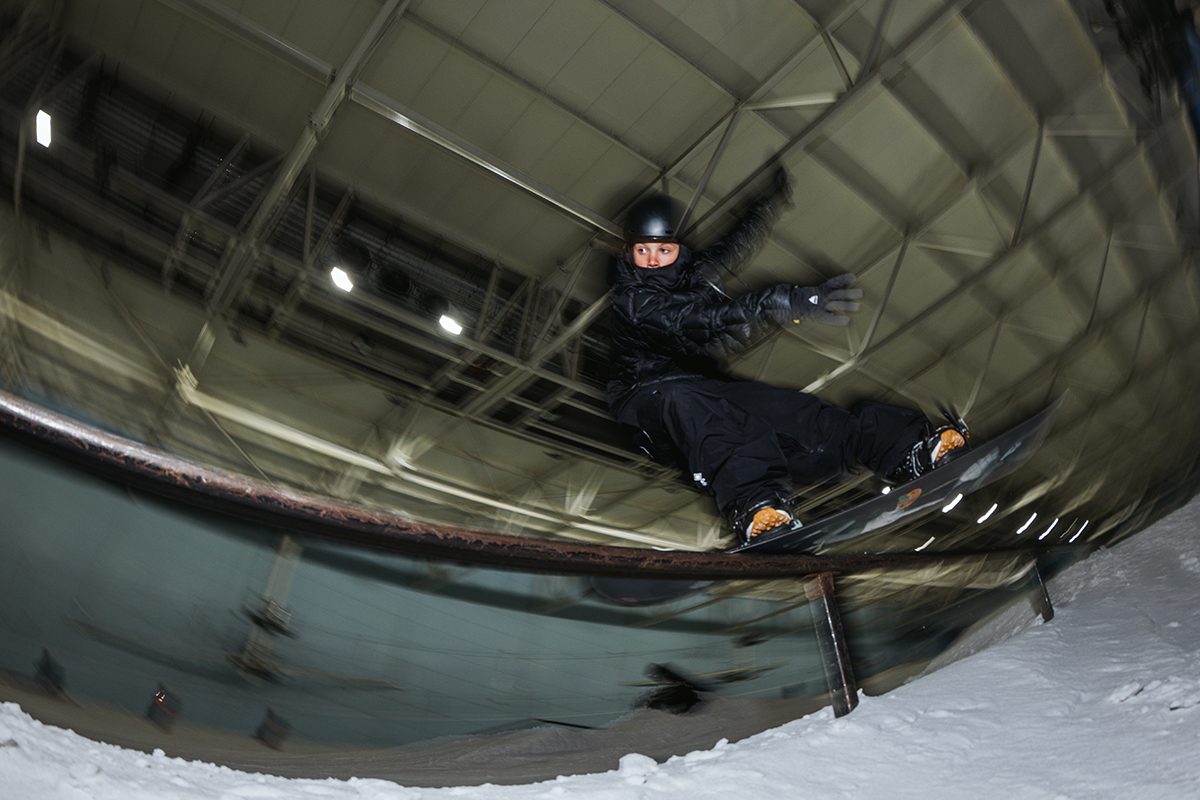
Rising Up: Riley Sharpe
INTERVIEW: STELLA PENTTI PHOTOS: CRAIG ROBINSON UK-born, Avoriaz-raised, and fueled by endless energy:



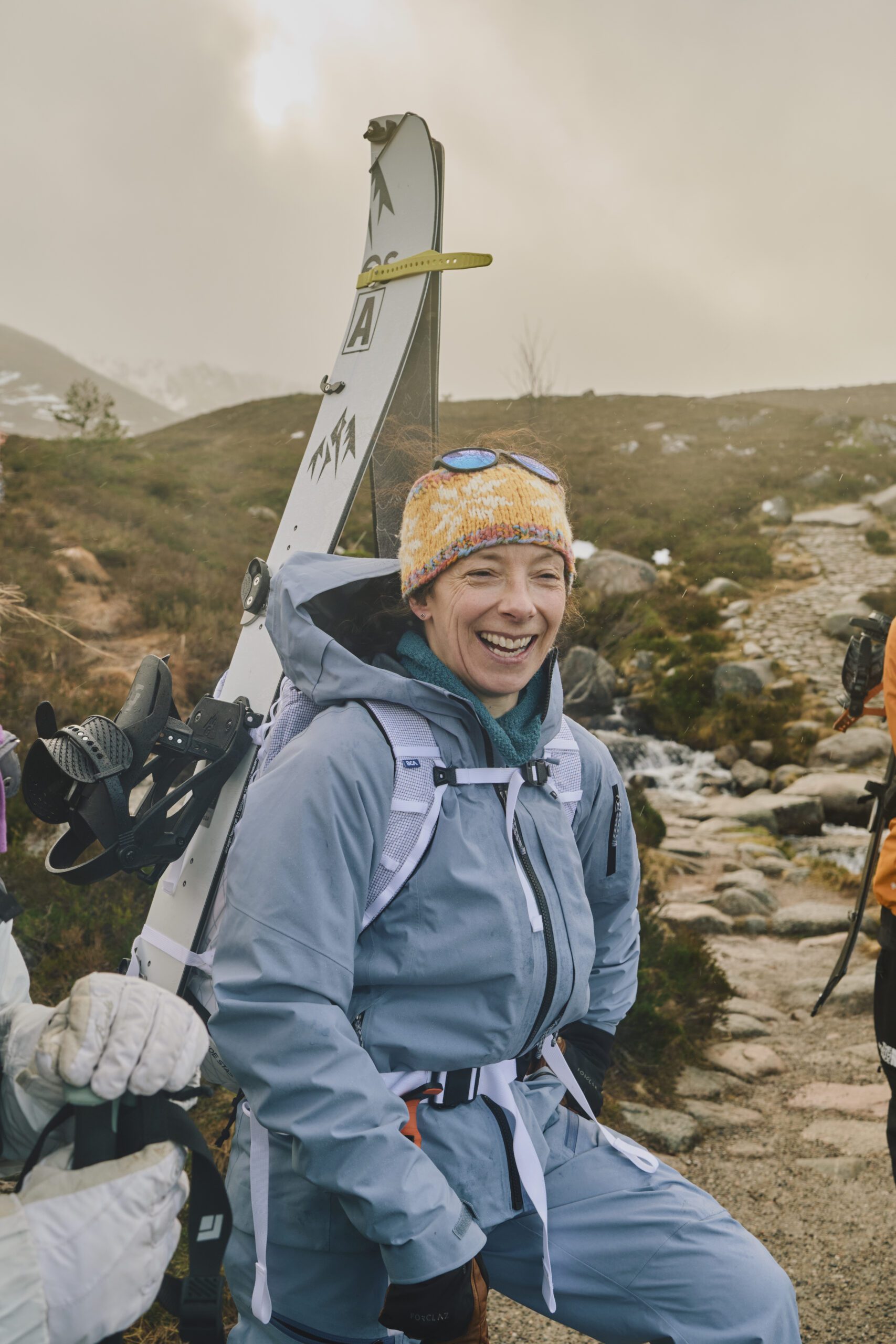
Lesley McKenna has spent more than three decades at the heart of snowboarding: as a rider, coach, team manager, filmmaker, and cultural custodian. A three-time Olympian and the first British snowboarder to win a Halfpipe World Cup, she has worked both inside and outside high-performance systems. In recent years, she stepped into academia, completing a PhD that explores a deceptively simple question: what makes sport meaningful?
Her research led to the development of what she calls the Risk-Aesthetic Framework: a way of understanding value in action sports that centres on risk, style, progression, community, and shared experience. Drawing on interviews, focus groups, and observations across both traditional high-performance sports and action sports, McKenna’s work offers a language for things snowboarders have long felt but rarely articulated.
In this interview, she explains the framework in accessible terms and reflects on what it may offer athletes, coaches, judges, and the wider snowboard community as another Olympic cycle unfolds.
Interview by Alba Pardo

Lesley, you’ve lived snowboarding from almost every angle imaginable. What pushed you to step into research and begin a PhD?
I’d spent most of my adult life inside snowboarding. First as an athlete, then coaching, team managing, working with brands, filming, judging, and sitting inside high-performance systems. Over time, I kept noticing a tension. On one hand, there was what actually made snowboarding feel meaningful to the people involved. On the other, there was the way success was increasingly being defined, measured, and managed within high-performance structures.
I became interested in why those things didn’t always line up, and why that mismatch could be so uncomfortable for athletes and communities. The PhD gave me a way to step back and explore those questions more deeply, without trying to ‘fix’ snowboarding, but to better understand what people value and why.
Risk isn’t just danger for its own sake. It’s about engaging with uncertainty, consequence, and commitment. Aesthetics relate to style, creativity, flow, and how something is done, not just whether it’s landed. In snowboarding, those two elements are inseparable.
Your research compares traditional high-performance sports with action sports. What did you set out to investigate?
The research looks at how people in different high-performance sports understand what makes their sport worthwhile and meaningful. I worked with participants from traditional sports like athletics, swimming, and cycling, and from action sports such as snowboarding, surfing, and skateboarding.
What became very clear is that there are different underlying logics at play. Most high-performance sport systems are built around measurement: times, scores, rankings, medals. That logic isn’t wrong, but it’s not the only way sport can be understood. In action sports, people consistently described value in a different way, and that’s what led me to develop the Risk-Aesthetic Framework.
What exactly do you mean by the “Risk-Aesthetic Framework”?
A framework is essentially a lens, a way of making sense of complex experiences. The Risk-Aesthetic Framework describes how value in action sports emerges from the combination of risk and aesthetic opportunity.
Risk isn’t just danger for its own sake. It’s about engaging with uncertainty, consequence, and commitment. Aesthetics relate to style, creativity, flow, and how something is done, not just whether it’s landed. In snowboarding, those two elements are inseparable. They work together, and it’s their interaction that gives experiences meaning.
The framework is made up of interconnected experiential, perceptual, and learning concepts that together explain why progression, community, creativity, and care for style matter so deeply in action sports.
One of the strongest ideas in your research is “stoke”. How did that show up in the data?
Stoke was central. Participants consistently described it as the most valued experience in their sport, even more than winning. Stoke encompasses fun, play, joy, achievement, and gracefulness.
What was particularly interesting is that stoke is rarely just individual. People talked a lot about shared stoke, where energy, excitement, and motivation spread through a group. There’s also what some participants described as a stoke train (when an entire session or crew gets caught in a collective wave of progression and enjoyment).
This shared dimension is important, because it shows that individual improvement often benefits the whole community. Progression isn’t zero-sum in the way it can be in traditional competitive models.
Your framework also talks about perception: how athletes experience performance itself.
Yes, perceptual concepts were a big part of the findings. Many action sport participants described what I call inside-out performance. They think, imagine, and do simultaneously. While riding, they’re feeling movements kinesthetically while also visualising how it looks.
There’s also outside-in viewing. When watching someone of a similar level, people described physically sensing what the rider was doing, almost ‘mind-surfing’ with them. This deep embodied understanding contributes to appreciation of style and risk, and it strengthens community bonds.
Another important concept is positive insignificance. Many participants described moments where they became acutely aware of their smallness in relation to nature, but experienced that awareness as freeing rather than threatening. It often led to a deeper environmental connection and care for the place.
How does learning and development fit into the Risk-Aesthetic Framework?
Learning in action sports is often story-based and visual. People make sense of experiences by sharing narratives, clips, photos, and moments. Epic moments, those life-defining experiences where multiple elements of the framework converge, play a huge role in how people grow and reflect.
This kind of learning supports belonging, shared understanding, and personal development that goes far beyond technical skill. It encourages creativity, humility, resilience, and appreciation of others’ abilities, rather than just individual dominance.
Action sport participants were more likely to change their own practices directly, creating the culture they wanted rather than waiting for permission.
You found some overlap between traditional and action sports, but also clear differences. What stood out most?
Some traditional sport participants did describe elements similar to the Risk-Aesthetic Framework: strong connections to training environments, equipment feeling like extensions of the body, or occasional stoke-like moments. But those experiences tended to be secondary to measurement-based achievement.
Many also described realising later in their careers that they’d lost joy and had to work hard to bring it back, sometimes after experiencing mental health challenges. In contrast, most action sport participants recognised early on that maintaining stoke was essential, even in competitive environments.
Another difference was how cultural change happens. Traditional sport participants often called for external reform like policy changes or organisational shifts. Action sport participants were more likely to change their own practices directly, creating the culture they wanted rather than waiting for permission.
Judging and competition are often flashpoints in Olympic snowboarding. Did your research touch on that?
Yes. One example that came up was snowboarding judges establishing ongoing consultation with riders about how judging criteria are applied. That kind of dialogue reflects a risk-aesthetic logic; it recognises that value can’t be fully captured by numbers alone and that credibility comes from shared understanding.
It’s a good illustration of how action sports often respond to tension by evolving practice from within, rather than relying solely on top-down systems.
What it can do is help athletes articulate what matters to them and recognise that those values are legitimate.
As another Olympic cycle unfolds, how might this research be useful for athletes?
The framework doesn’t offer performance shortcuts or guarantees. What it can do is help athletes articulate what matters to them and recognise that those values are legitimate.
Understanding stoke, shared progression, and holistic development as central, rather than secondary, can help athletes navigate pressure without losing connection to why they ride in the first place. It also offers language to push back, thoughtfully, when systems drift too far from what gives the sport meaning.
And for the wider snowboard community: coaches, media, organisers, brands?
Everyone shapes culture, whether they realise it or not. The framework highlights how decisions about what we reward, measure, film, write about, or commercialise all influence what snowboarding becomes.
It invites people to think carefully about authenticity, credibility, community, and sustainability. Not as abstract ideals, but as lived practices. Protecting those things is particularly important during Olympic cycles, when external pressures tend to intensify.
The framework highlights how decisions about what we reward, measure, film, write about, or commercialise all influence what snowboarding becomes.
Ultimately, what do you hope this research contributes?
My hope is that it provides a shared language for experiences people already know deeply. Snowboarding has always been rich in meaning, connection, and creativity. This work isn’t about replacing anything; it’s about recognising and valuing what’s already there, so that as the sport continues to evolve, it doesn’t lose the things that make it worth doing in the first place.
INTERVIEW: STELLA PENTTI PHOTOS: CRAIG ROBINSON UK-born, Avoriaz-raised, and fueled by endless energy:

New Role, Still Snowboarding Words: Darrah Reid-Mclean Darrah Reid-McLean reflects on shifting
Freshly Crowned Corbet’s Queen Ellie Weiler on Colorado Roots, Comps and Comebacks.