





Filling the Void: Shaun White, After the Medals
Interview and words by Alba Pardo There is a familiar way Shaun



Words Alba Pardo | Photos: Miquel Soler
For most snowboarders, Japan is a dream destination. A powder pilgrimage that lives in video parts, Instagram edits, and whispered stories: bottomless turns, perfectly spaced birch trees, ramen steam rising from a bowl after the best day of your life. A trip, a taste, and then back home.
For Jaume Pons, snowboarding has never been about ticking off destinations but about building a life around the mountains. Becoming a snowboarder in the Pyrenees, he began as a park rider before powder became his true passion. He worked as an instructor and coach, now rides for Arbor, and spends half of the year guiding in Japan and the other half surfing in the Canary Islands.
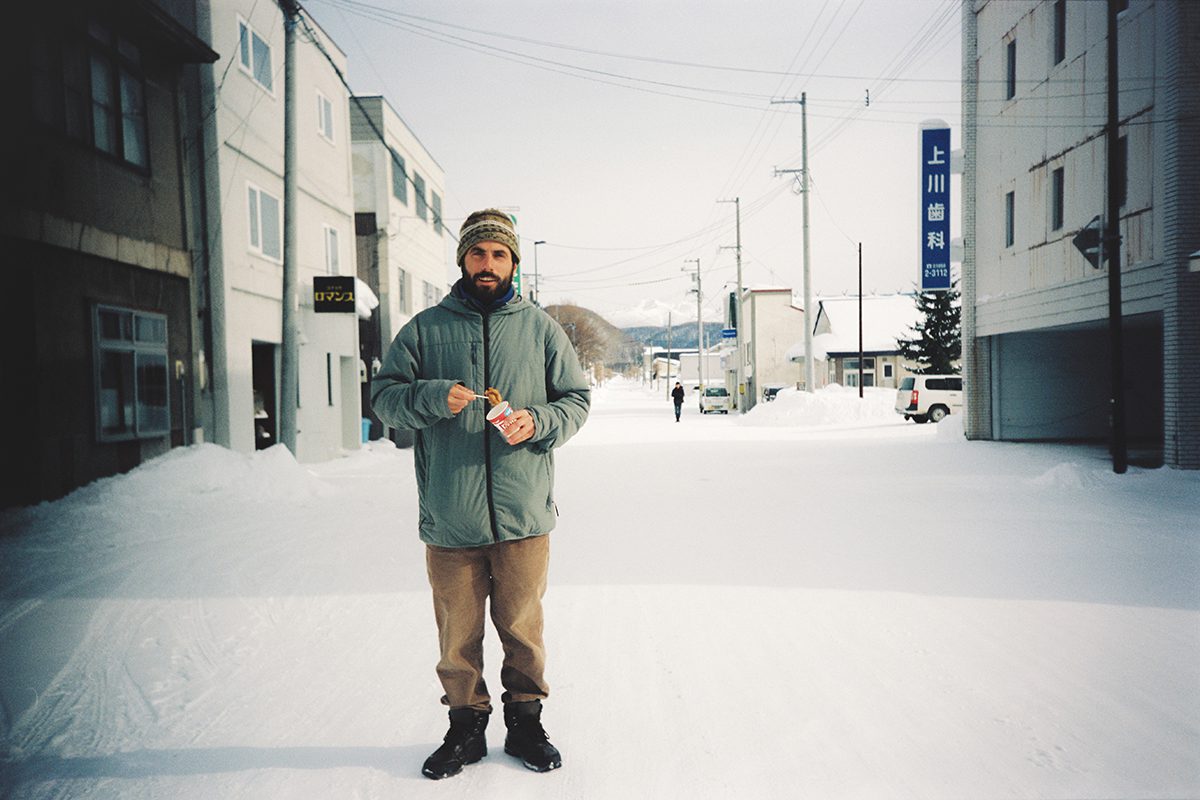
In 2016, that search for snow brought him to Hokkaido. What was meant to be a one-off season quickly became much more than that. Since then, Jaume has spent nearly half of every year in Japan, building a rhythm that goes far beyond the postcard image of “Japow.” His life there is not just about chasing the white room – it’s about shoveling snow every day, learning routines of work and onsen, discovering the richness of Japanese snowboard culture, and watching the quiet mountains shift under the pressure of booming tourism.
“I first went in 2016–17,” Jaume recalls. “I thought it might be my only season, but I ended up staying, going back seven winters so far. Only Covid stopped me when the borders were closed for two years.”
He didn’t go on a whim. A friend had already done a season there, another had contacts, and their stories convinced him to try it himself. “I went there for snowboarding, that was the main reason,” Jaume says. “Everyone talks about the powder in Japan, and I wanted to experience it – but not just for a couple of weeks. I wanted to live it. From the beginning, I knew I was going for the full winter.”
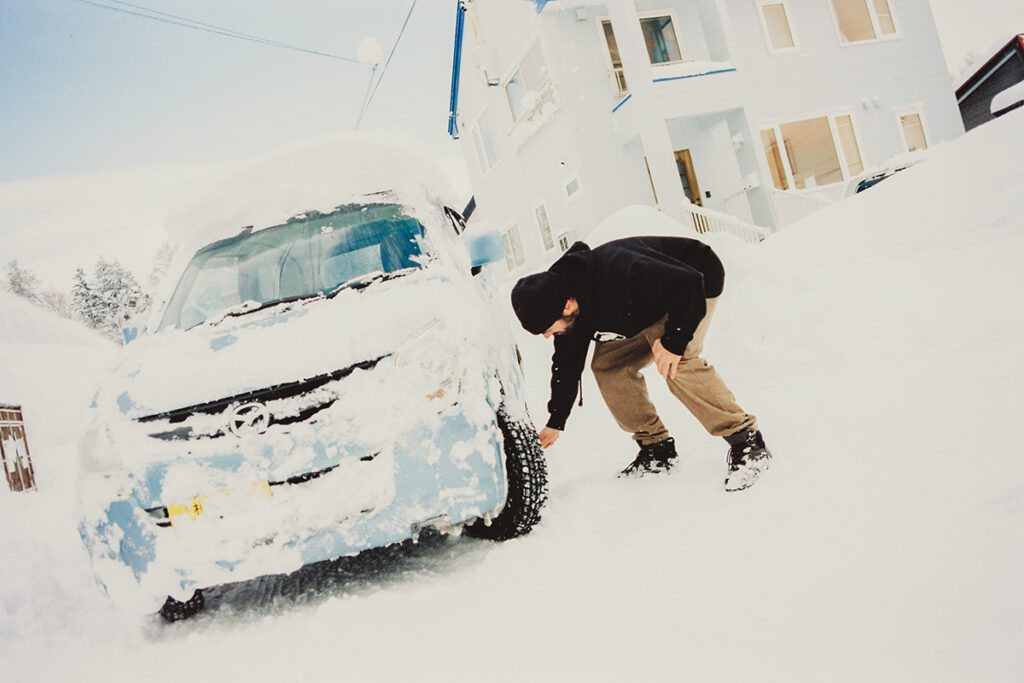
Japan delivered on its promise – and then some. “I arrived and it snowed for two weeks straight without stopping,” Jaume laughs. The legendary Hokkaido snowfall is intoxicating from afar, but living with it is another story. “It’s amazing, but also heavy. You don’t see the sun. It’s physically and mentally tiring.”
With relentless snowfall came relentless shoveling. Jaume smiles when he explains the word Yukikaki. “It means snow shoveling. They even have a word for it, because that’s what you do all day. You clear your car in the morning, drive to the resort, clear it again at night, then shovel out the house. You go to the onsen, come back out, shovel again. It becomes your life.”
“During the peak weeks like Christmas or Chinese New Year, you work like crazy – long days, no time to ride. But then it flips. Suddenly, you can have two or three weeks almost completely free. That rhythm – bursts of intensity and then nothing – is very different to Europe, where the season is steady. For me, it was perfect, because the quiet weeks gave me time to really snowboard, hike, and explore.”
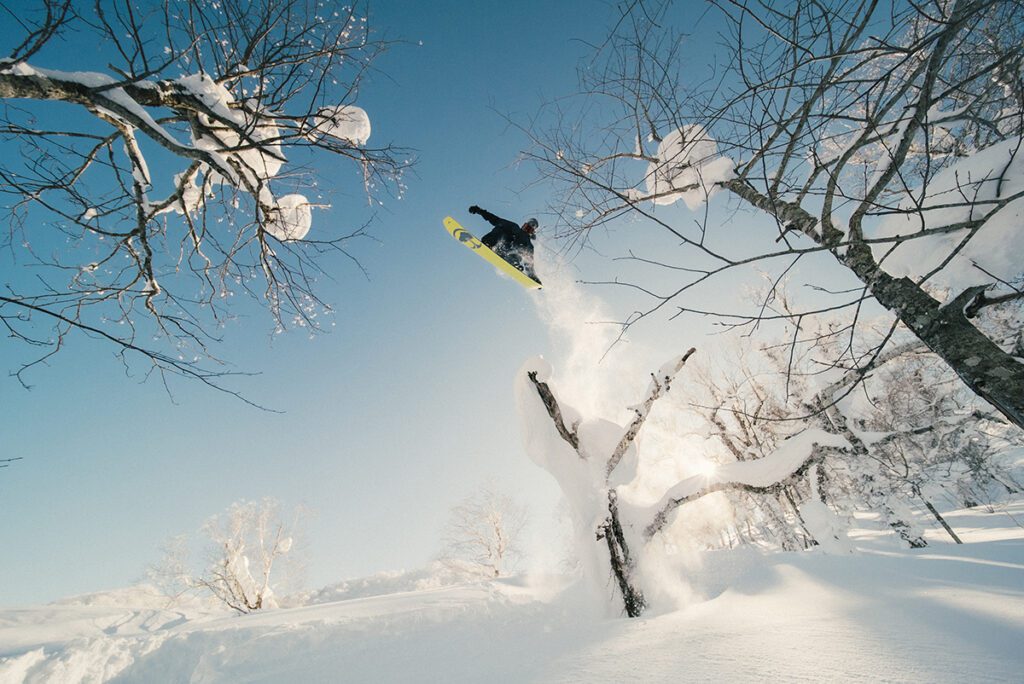
Like most riders, Jaume originally went for the powder. But living there expanded his perspective. “Everyone sees Japan as freeride or freestyle: park or powder. But there is so much more to their snowboarding culture. There are snowsurf crews who ride like surfers. Others are obsessed with powsurfing – riding boards with no bindings. Crews that only look for pillows. Riders who focus on carving… This variety opened my mind a lot.”
He was struck by the depth of snowboard culture in Japan. “It’s not just the pros you see in videos. There’s a whole population who snowboard – from kids to old people – and they’re deeply into it. I was blown away by groups of sixty and seventy-year-olds with immaculate boards, meticulously waxed, covers on their edges, everything tuned to perfection… They’d go out together just to carve perfect turns. In Europe, you’d only see skiers of that age. In Japan, snowboarding is part of life.”
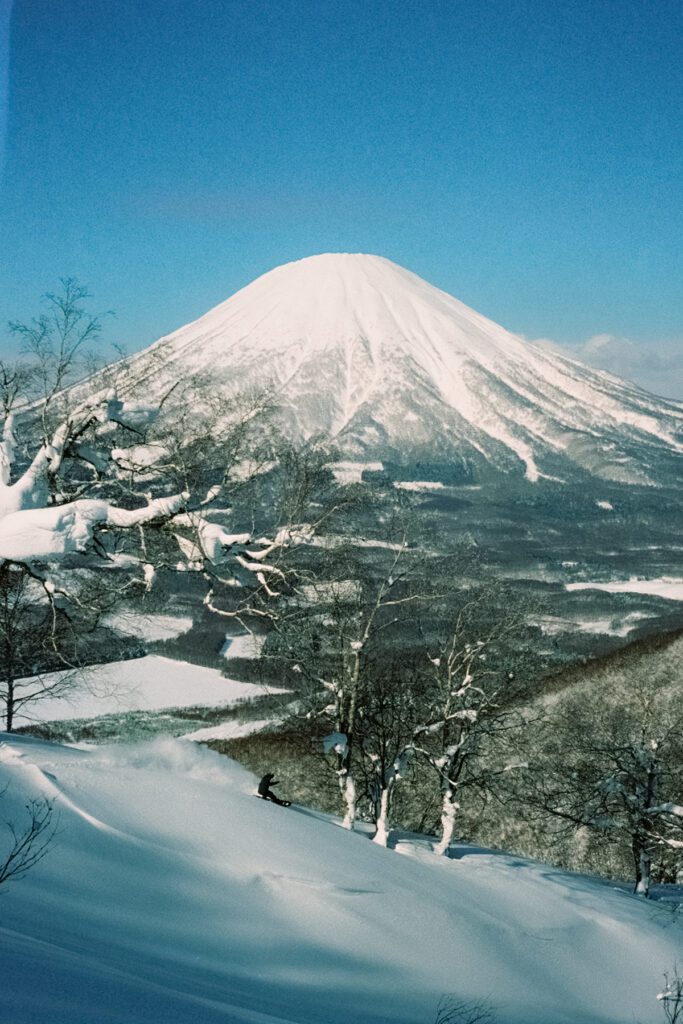
Also, the hiking culture in Japan is huge. “Everybody hikes, and they hike a lot to snowboard. I already had a splitboard before going to Japan, and I used to hike quite a bit, but there, it just became the norm. You hike almost every day, and the Japanese riders are very serious about it. You go to Mount Yotei, the volcano, and at three in the morning, you already see a line of headlamps going up. They’re super dedicated. It changed the way I thought about touring.”
Jaume admits that at first he thought he’d learn Japanese, but reality was different. “In Niseko, everything is English, so I ended up improving my English more than my Japanese. Yet the language was still a barrier. Even if you stay for months, it’s not easy to get inside their world if you don’t speak Japanese. People are polite, but very reserved. You always stand out, and sometimes you feel that gap. It’s part of the experience of living there.”
At the same time, daily life started to take shape. Work, snow, onsen, hiking. Over time, summers too. “I stayed some summers, made a life. It’s not just going for six months and back. It becomes home, with your own routines and economy.”
Still, he remains aware of the cultural limits. “There are two types of Japanese. The ones who have been abroad, who speak English and are more open. And the ones who never left, who are polite – but very reserved. They won’t reject you openly, yet sometimes you feel the distance. Like when a local told one of my friends at a resort gate: Only locals. It’s like surfing. You’re welcome, but not really.”
Jaume has always tried to approach it with respect. “I adapt as much as I can to their culture, to do things properly and respectfully, because you stand out immediately as a Westerner. And I think that makes a difference in how you’re received.” For him, it’s also advice to anyone heading east. “If you come to Japan, don’t just take the powder and leave. Pay attention, adapt, respect the people and the place. You’re a guest here – and if you understand that, the experience is so much better.”
“A LOCAL TOLD ONE OF MY FRIENDS AT A RESORT GATE: ONLY LOCALS. IT’S LIKE SURFING. YOU’RE WELCOME, BUT NOT REALLY.”
While Niseko is the hub, Jaume’s relationship with the resort has changed. “Now I use Niseko mostly for work. It’s too crowded. But what I still love is the night riding. Half the mountain is lit up. Sometimes the best powder days of the season happen at night, because the storm hits in the afternoon, resets the tracks, and you ride the forest under the lights. You actually see better than in daytime flat light. Night riding there is something special.”
The seasonal rhythm in Hokkaido is intense. “December is just dumping almost every day. You watch the mountain transform – pillows growing, wind lips filling in. By March, suddenly the sun comes out, it warms up, and the powder is gone. It’s over, just like that. You might get a snowfall or two, but the season shifts immediately into spring. It’s brutal how fast it changes.”
But for Jaume, that shift isn’t an ending – it’s another beginning. “Spring in Japan is amazing. The weather clears, you get blue skies, and you can really see the mountains. You ride corn snow, hike lines that would be impossible in mid-winter, and the parks open up, too. You can ride park laps, build jumps, and enjoy that side of snowboarding again. It’s another face of Japan. Powder is incredible, yes, but spring has its own magic. That’s why I love it – Japan gives you all these different ways to ride.”

Staying long-term gave Jaume access to more than just the obvious spots. “There are the classic features every pro crew has filmed on. I watch a video and I know exactly where it is. But every year you also discover something new. A pillow, an area, something someone shares with you but asks not to share. There’s still some secrecy. And the Japanese keep their own spots too – zones no foreigner has been to, only accessed with snowmobiles. They don’t share everything, and I get it, it’s their place.”
At the same time, tourism has exploded. “When I first arrived, it was mostly Australians. Now Americans and Europeans are coming strong. Prices have gone crazy. Niseko is like Aspen now. For me, it’s good because I can make a living there. But for locals, it’s hard – they can’t afford Niseko anymore. Luckily, there are other resorts close by where they go.”
The boom also created a surge in guiding. “There are so many more guiding companies now. Everyone wants a piece of the cake. For tourists, it makes sense. If you come for two weeks and it’s stormy, you won’t find anything by yourself. With a guide, at least you know where to go. Even I, when I go to a new zone, sometimes waste days hiking to the wrong place. You need time to learn the terrain.”
But with the hype comes risk. “There are more accidents nowadays. People arrive with little experience, no avalanche gear, no knowledge, sometimes not even the level to ride the terrain. It’s become a trend, but not everyone has the necessary awareness to venture into the backcountry. It took me twenty years of learning in the mountains before getting into the Japow. Now people just go straight in.”
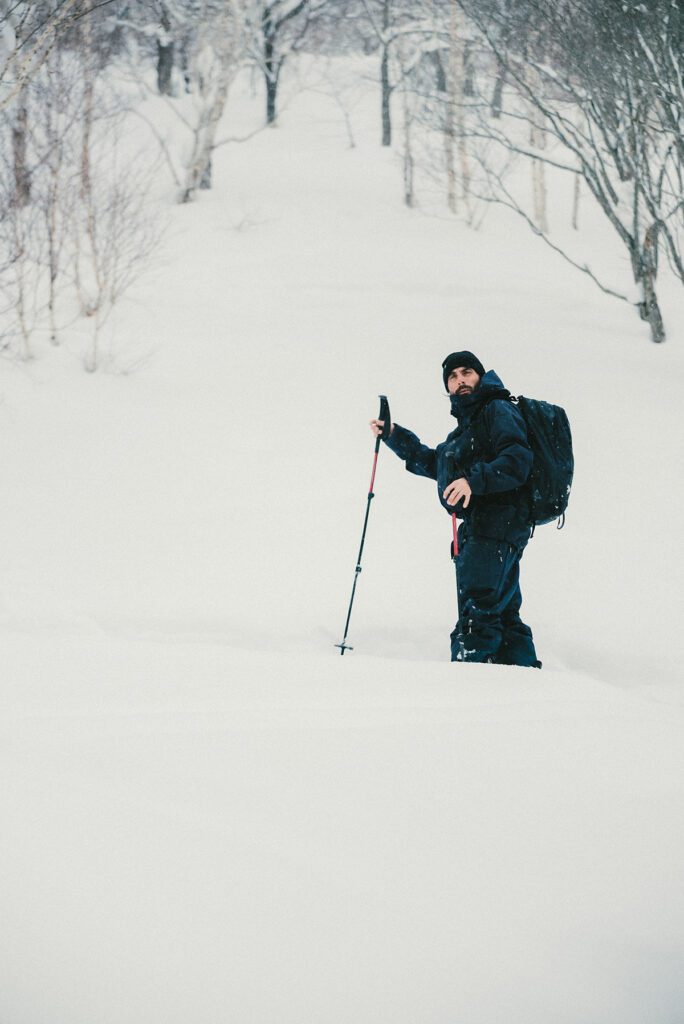
Amid all the challenges and changes, Jaume still holds on to the magic that first drew him there. One memory stands out: the smell of powder.
“It’s something I never noticed anywhere else. In Japan, when it’s snowing a lot and you’re walking buried in the forest, there’s this smell. A mix between humidity and something else. It’s hard to explain. But I recognize it now. The smell of powder. It’s unique.”
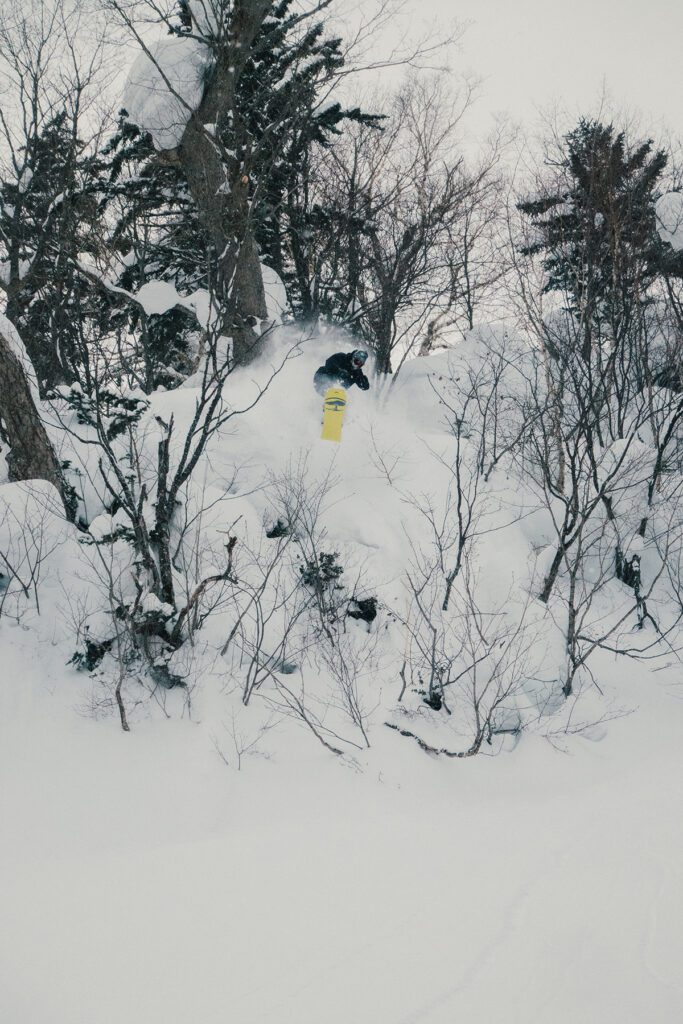
After nearly a decade of back-and-forth winters, Jaume now sees Japan not as a trip, but as part of who he is. “I went there for snowboarding, and I’m still there for snowboarding. But little by little, you build your place, your life. It’s not just about riding powder anymore. It’s about everything that comes with it.”
For him, Japan is no longer an exotic dream. It’s a second home, with all the work, fatigue, culture clashes, and beauty that come with it. And that’s what makes his story stand out. While others chase the perfect clip, Jaume chose to live the storm, shovel the snow, learn the rhythm, and discover the life behind the myth.
“Japan is special,” he says. “If you only visit, you see the powder. If you live there, you see everything else.”
Interview and words by Alba Pardo There is a familiar way Shaun
WORDS: ALBA PARDO If there’s one thing snowboarding keeps giving me, it’s
When You’re Not Scared to Dream INTERVIEW: ALBA PARDO From viral follow-cams