

Snow League in Aspen: What Progression Gone Mainstream Looks Like
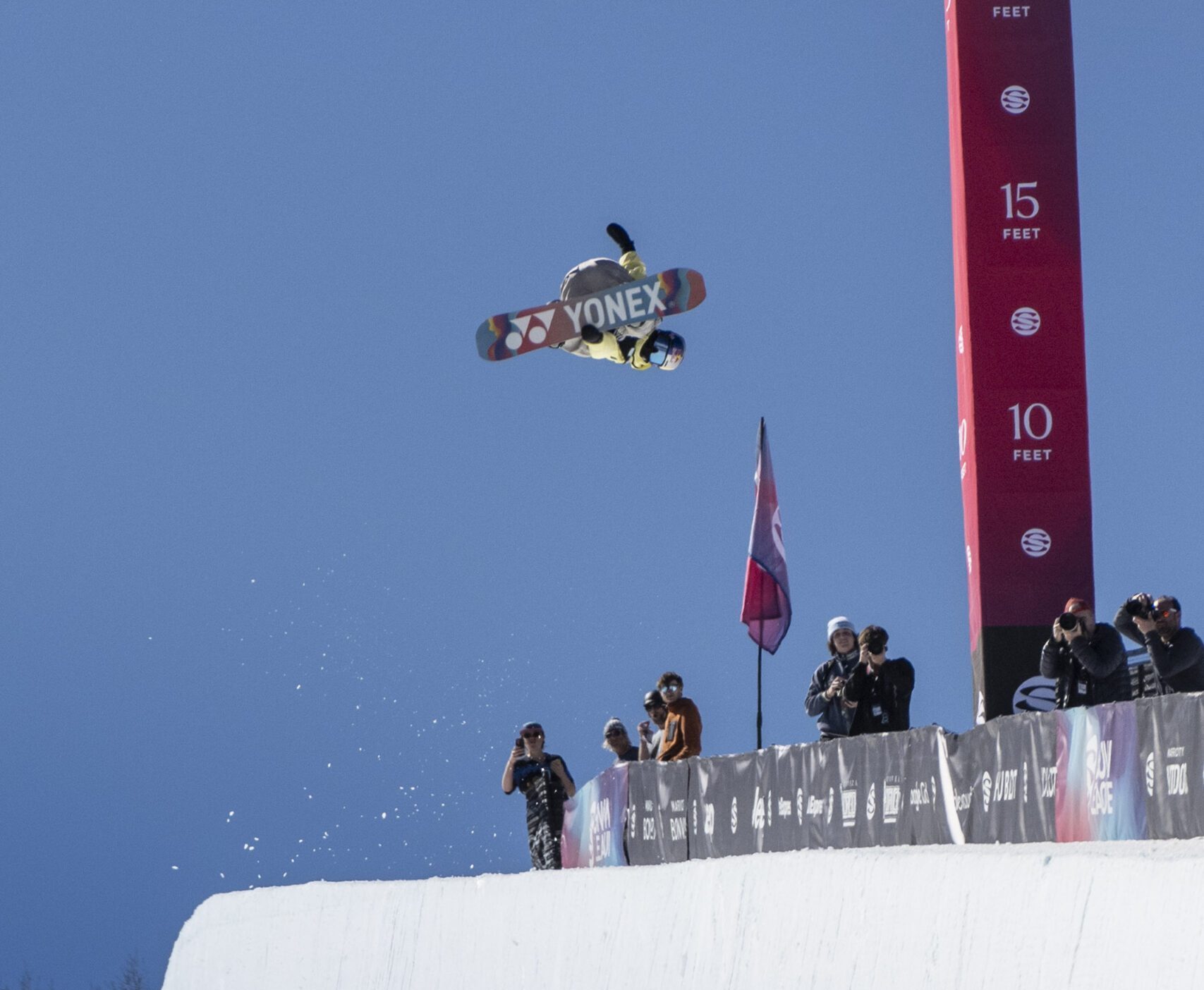
By the time Snow League wrapped in Aspen, the results were clear:



INTERVIEW: ALBA PARDO
PHOTOS: JUSTIN BEFU
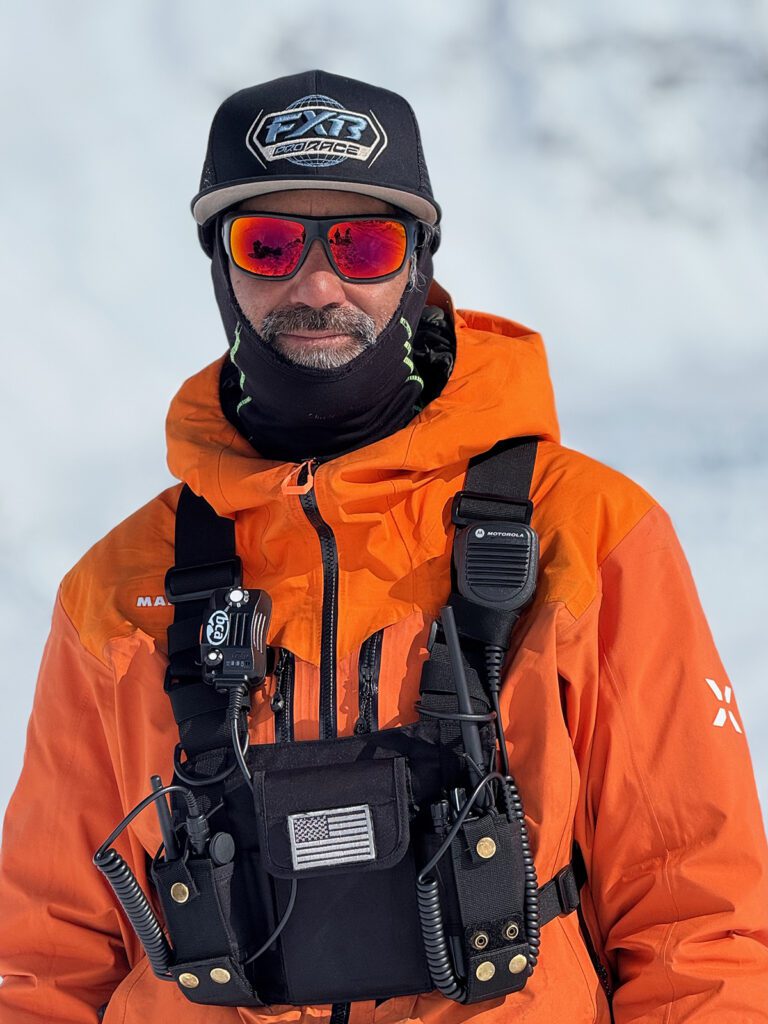
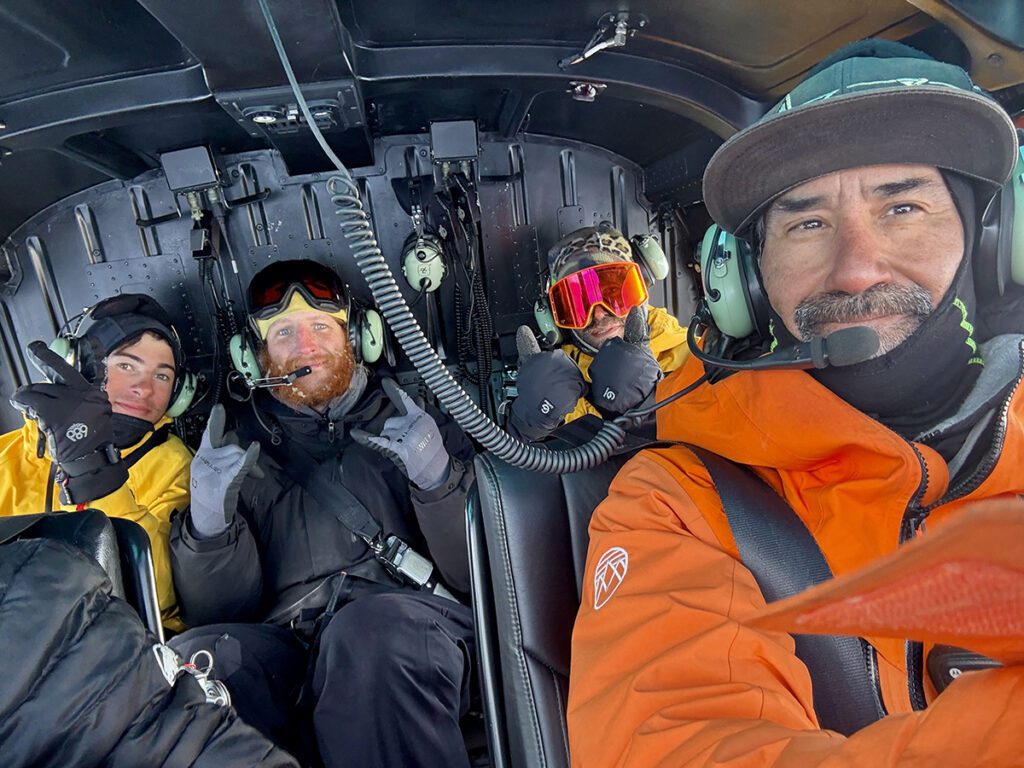
I first met Justin Befu in Alaska back in 2014. He wasn’t my guide, but he definitely helped our crew get our act together. Some of the guys I was with kept going back to him for advice, and I quickly understood why. There was this quiet, calm guy by the heli corner, leaning back with his white-flecked black beard, sunglasses on, and always ready to drop a piece of extra intel, not just from his privileged bird’s-eye view, but from hard-earned experience. At first, I saw him almost like a mystical figure, with a halo of knowledge around him. I realized quickly that I didn’t know shit – and that the reason I was still standing there, alive, was because of people like him.
Over the years, as we have kept in touch and followed his work, my respect for him has grown from awe to something deeper and more grounded. The calm, humble dedication and love he puts into his trade are what stand out most.
Guides like Justin are often overlooked in snowboarding. They rarely get mentioned in magazines, yet they’re the invisible force behind the films, the trips, and the moments we all celebrate. Riders and filmmakers get the spotlight, but guides are the ones who live and breathe the mountains, who make those lines possible long before a rider even starts to visualize them.
That’s why I thought it was fitting to sit down with Justin – to hear his story, to learn what really goes on behind the scenes, and to shine a light on him and, by extension, all the other guides out there who make the impossible possible.
For almost two decades, Justin Befu has been at the heart of Alaska’s big mountain scene. As both a trusted heli and sled guide and a behind-the-lens storyteller, he’s shaped how riders and audiences experience the last frontier. From managing the safety of world-class pros to capturing cover-worthy shots in between, Befu has lived a life most snowboarders only dream of.
“When they’re stoked and tell me ‘That was the best day of my life’ that’s the best part of my job.” – Justin Befu
You’ve been guiding for years now, but your roots are in snowboarding. What came first: the sledding, the heli guiding, or the photography?
Snowboarding, 100 percent. We got into snowmobiles in ’98 because we wanted to get out of the resort and into the backcountry. Those old sleds were brutal – really hard to ride, nothing like the machines today that can get you on top of almost anything with half the effort. But they gave us access, and that access changed everything.
At first, it was just about snowboarding more pow, going further, deeper. But sledding turned into guiding. The owner at Alaska Snowboard Guides saw me show up with a sled and said, “I want you to be a heli guide.” I didn’t want any part of it. I’d been heli-skiing in Alaska before, and it was gnarly – big mountains, high consequence. I was used to learning the ranges from the bottom up, slogging in on a sled or by foot. Suddenly, I was supposed to learn them from the top down, getting dropped onto summits by a helicopter. It’s a whole different perspective. But eventually it evolved. I started sled guiding every day, which eventually led to heli guiding.
And that’s also how you started working with pro riders?
Exactly. Back then, I was sled guiding daily, and the pros would be stuck at the heli op waiting out weather. They’d see me heading out and ask, “Why can’t we just go with him?” Next thing you know, they’re tagging along. Then they started coming back from trips saying, “Can we get Justin for heli guiding and sled guiding?” That’s what opened that whole world for me.
The guiding world has changed a lot since then.
It has. When I started, you earned your stripes. You began at the bottom – fueling helicopters, running dispatch, tail-guiding. You had to understand every part of the operation before you ever got the front seat. Over the years, you’d move up the ladder.
Now, a lot of people come in with high-caliber certificates, which take time and effort to accomplish and which are now needed by most operations. Those are great, don’t get me wrong, but they don’t replace mountain savvy; they add to it. You can’t compress 30 years of experience into a course. Some of these kids are 22, incredible skiers or snowboarders, but they just don’t have decades in the backcountry. And that’s the real difference. At the end of the day, if you’re hopping into a helicopter, do you want a decorated 24-year-old with qualifications or someone who’s been reading terrain for decades?
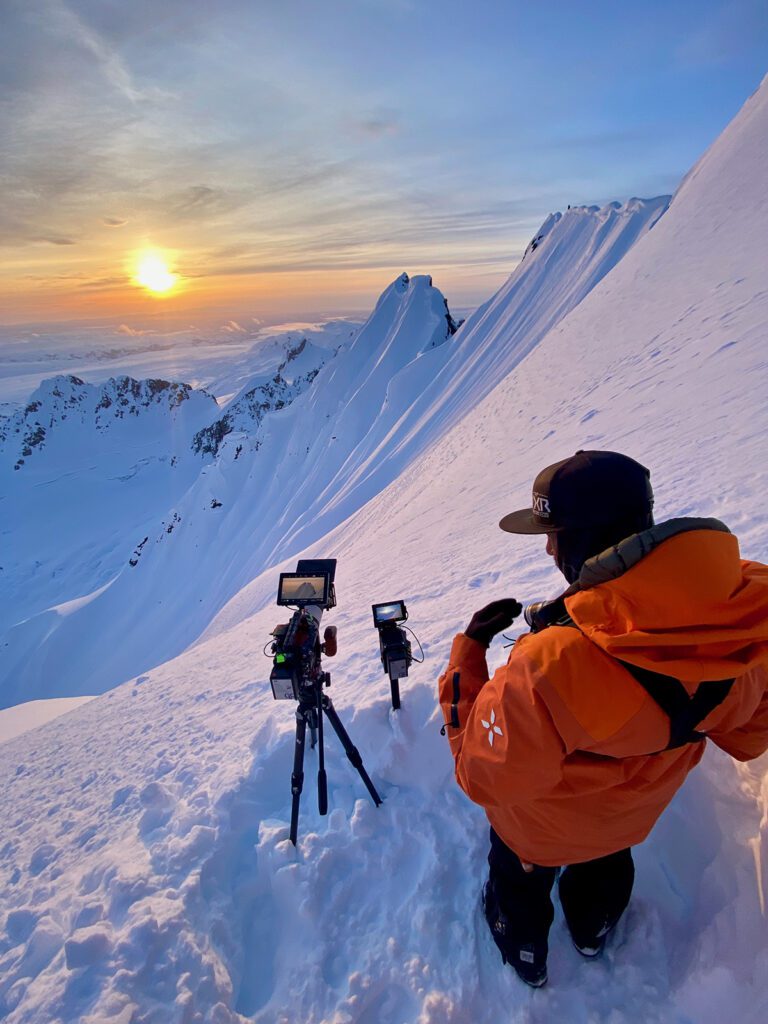
And mentorship is key in passing that knowledge down.
Exactly. I learned from the best. I try to pass it on because those young guides are the ones who’ll be there if something goes wrong. I want them to be as knowledgeable as I was, or more. I teach them how to work around helicopters, how to treat clients, and how to stay humble. And I tell them: don’t ever lie to your clients. That’s why I’ve lasted so long – I’ve always been genuine.
When I think of a guide, the first thing that comes to mind is experience. You just can’t fake it.
Mountain savvy comes from time, plain and simple. Some young guides are amazing riders, but they haven’t spent 20 or 30 years in the backcountry. That really counts.
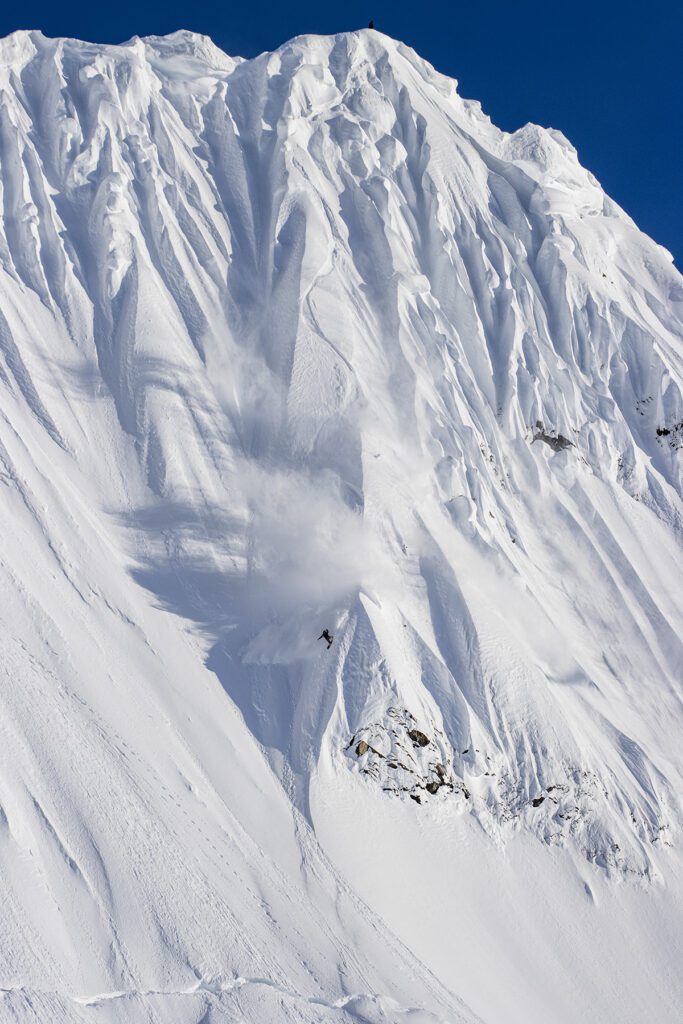
You guide both clients and pros. How different are those experiences?
With clients, I actually get to ride with them. I open the slope, cut the line, deem it safe, and ride it. It’s fun! When they’re stoked and tell me, “That was the best day of my life,” that’s the best part of my job. And I hear that from both ends of the spectrum. A world-class rider will come back from a run and say it was the best day of their life, and I’m thinking, “Really? I’ve seen you ride gnarlier stuff.” And then a client who’s never been in a heli before will say the same thing. For me, it’s equally rewarding to share that moment with both.
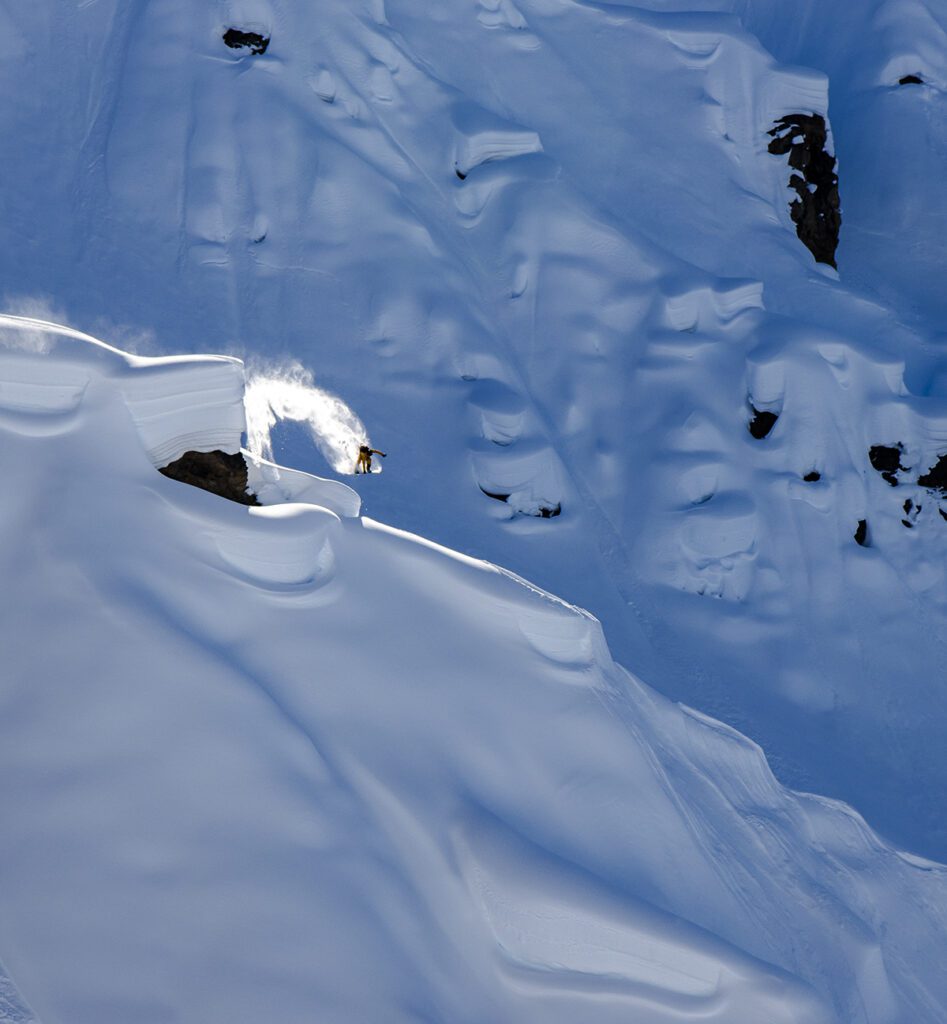
With pros, however, it’s a whole different beast. We dissect lines from afar, go over islands of safety, and good outs, dig pits, manage snow science, stage media, and set up gear. We don’t just ride down lines with them. People think I’m riding what the athletes are riding, but generally I’m not. My job is to keep them safe and set them up for success.
And with pros there must also be the weight of expectations – sponsors, film crews, huge pressure.
That’s probably the hardest part of guiding: the people side. Most athletes respect what we say, but when you’re standing on top with someone like Travis Rice or Marcus Eder, it’s intimidating. You want to deliver them the best terrain in the world. My eye is good enough to spot the line, but I can’t ride it like they can. Sometimes I think they’ll just ride it down clean, and then they throw a huge air in the middle of it, and I’m like, “Holy s***, if they crash, they’re done.” But they’re that good, that calculated. That’s why they’re the best in the world.
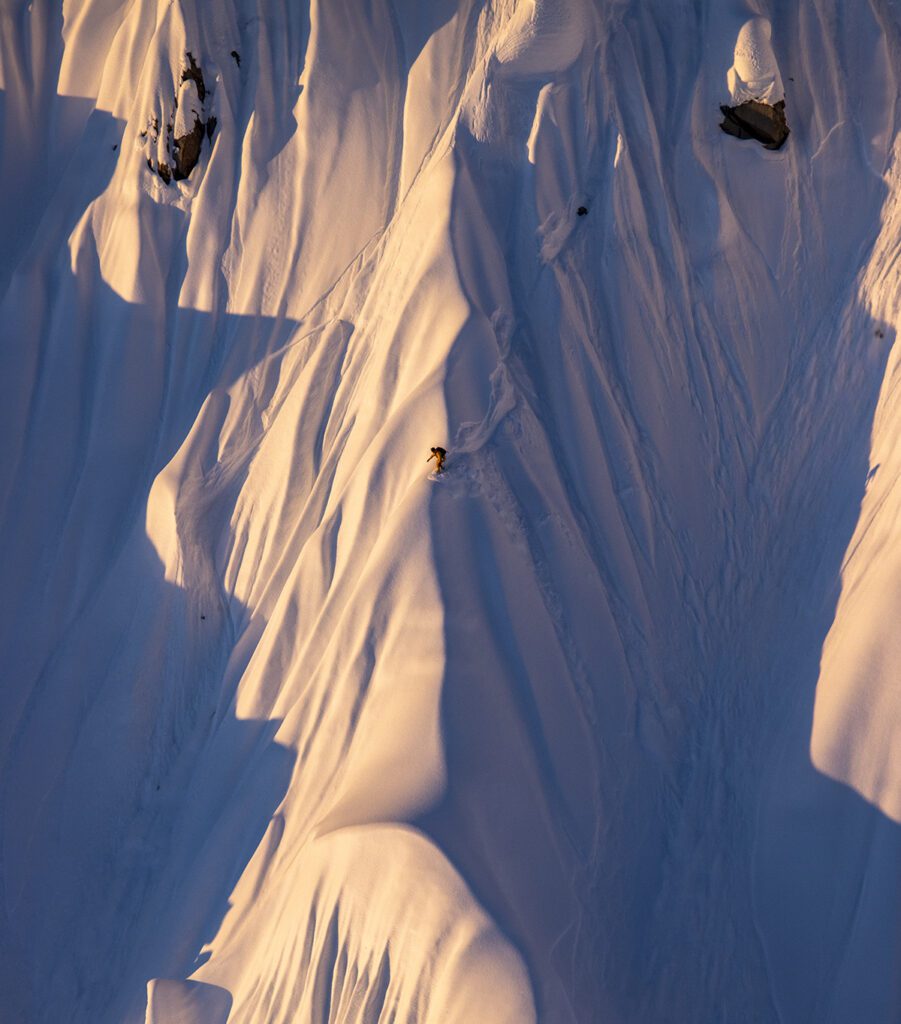
You’ve become known for production guiding. What drew you to that side of it?
Honestly, because not many guides want to do it. Production guiding is a grind. We’re up at four in the morning checking weather, chasing light, working 15 or 16-hour days. Client guiding is fun – six to eight perfect runs, back for dinner, big tips. Production guiding is a whole other thing. It’s long hours, staging gear, safety, managing the media, and keeping an eye on heli time. Those hours can cost over $100,000 a week. We’re constantly watching the clock, doing math out there, making sure the budget stretches. But I like it. When a rider nails their line and we high-five at the bottom, that’s just as good as riding it myself.
“Sometimes I’ll tell them straight up: ‘This is gnarly, don’t f*** up.’Honesty builds trust. People appreciate knowing exactly what’s at stake.” – Justin Befu
And on top of that, you’re often shooting photos.
I call myself a guide with a camera. I’ve always been around the media, so I started carrying a camera. Sometimes I back up the photographer, sometimes I get the shot myself. Over the years, I’ve had hundreds published, even some cover shots. But guiding always comes first. I tell athletes: if you’re serious about photos, bring a photographer. If not, I’ve got you. And sometimes they’d rather save the seat in the heli and trust me.
People see the movies and think it looks easy. What do they not realize?
The grind. The cost. The number of moving parts. One clip might cost tens of thousands once you add heli time, fuel, guides, pilots, filmers, and logistics. And everything has to line up: snow, weather, light, the rider sticking their line. Everything can be perfect, and the rider can still fall, and that’s it.
People don’t think about the filmers, the drone guys, the heli op crew handling logistics. Or even the team managers who pull the whole thing together before anyone even gets on a plane. It’s a massive machine just to make one clip happen.
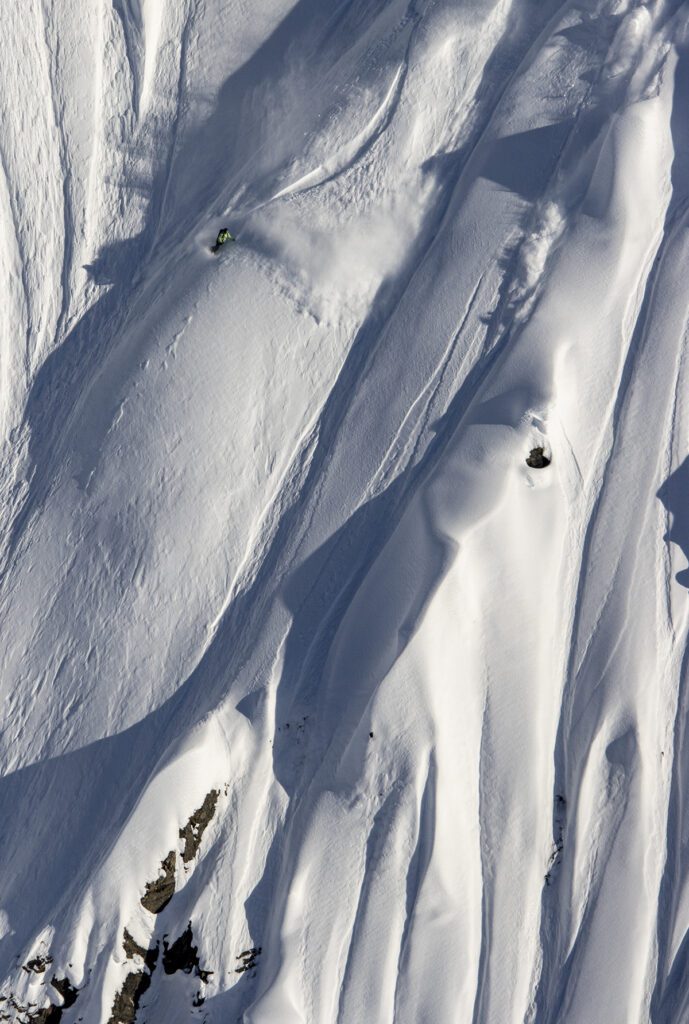
And, at the same time, you’re managing fear – your own and your clients’.
Fear is always there. If a guide says they’re never scared, they’re lying. Fear keeps you sharp. I’m calm on the outside, but inside I’m calculating every risk. Almost every run I open, I’m nervous until I’m on it and feel comfortable. I’ve lost friends, athletes, guides in the industry (not on my watch). The more time you spend out there, the higher the odds. That’s why I think about retiring – I want to be alive to tell my stories.
How do you manage fear for your guests?
Guests usually lose their senses when they’re staring down a big face. I talk them through it calmly. But I’m also honest. Sometimes I’ll tell them straight up: “This is gnarly, don’t f*** up.” Honesty builds trust. People appreciate knowing exactly what’s at stake.
“Papa. Justin Befu. My AK Dad. With the exception of 5-10 runs, he’s seen every line I’ve dropped in AK. He is the guru of keeping the program calm, cool, and collected while making the impossible a reality. He’s the one who put the needle in for me, but also takes it out at the end of the trip. Haha.” – Spencer “Gimbal God” Whiting
Everyone dreams about Alaska, but only a few make it. What’s your advice to those riders?
Try. Even if it’s just one day. It’s expensive, but nothing compares to standing on top of an Alaskan peak with no one around and dropping into bottomless pow. You don’t need to be in a film crew to experience that. Save up, make the trip, and you’ll know why we all keep coming back.
What’s the biggest misconception about riding in Alaska?
People show up saying, “Take me to the spines.” They’ve seen the movies. Then I drop them on a regular client run, and they’re freaking out. Even a mellow Alaska run is next-level. That’s the magic. The mountains humble everyone.
The job is physically demanding. How do you think about longevity?
Guiding has kept me young. Most people ask my age and can’t believe it. But I know I’ve only got a couple more years left. It’s a numbers game. I’ve had an amazing career, but I don’t want to push it until I’m a statistic. Every season when I leave for Alaska, I say goodbye to my kids and think, “God, I better come home.”
What do your daughters think?
I don’t ask them what if I don’t come home. But they like telling their friends their dad’s in Alaska doing cool stuff. That makes me proud. I always thought I was a cool dad – and I guess I’ve got the badge now.
After everything you’ve seen and done, what keeps you going?
Sharing someone’s best day. Whether it’s a pro piecing together the line of their life, or a first-time client saying, “That was the best day of my life,” it’s the same reward for me. Watching an athlete rip a line and high-fiving them at the bottom feels as good as riding it myself. That’s what makes it worth it.
By the time Snow League wrapped in Aspen, the results were clear:
INTERVIEW: STELLA PENTTI PHOTOS: CRAIG ROBINSON UK-born, Avoriaz-raised, and fueled by endless energy:
New Role, Still Snowboarding Words: Darrah Reid-Mclean Darrah Reid-McLean reflects on shifting