
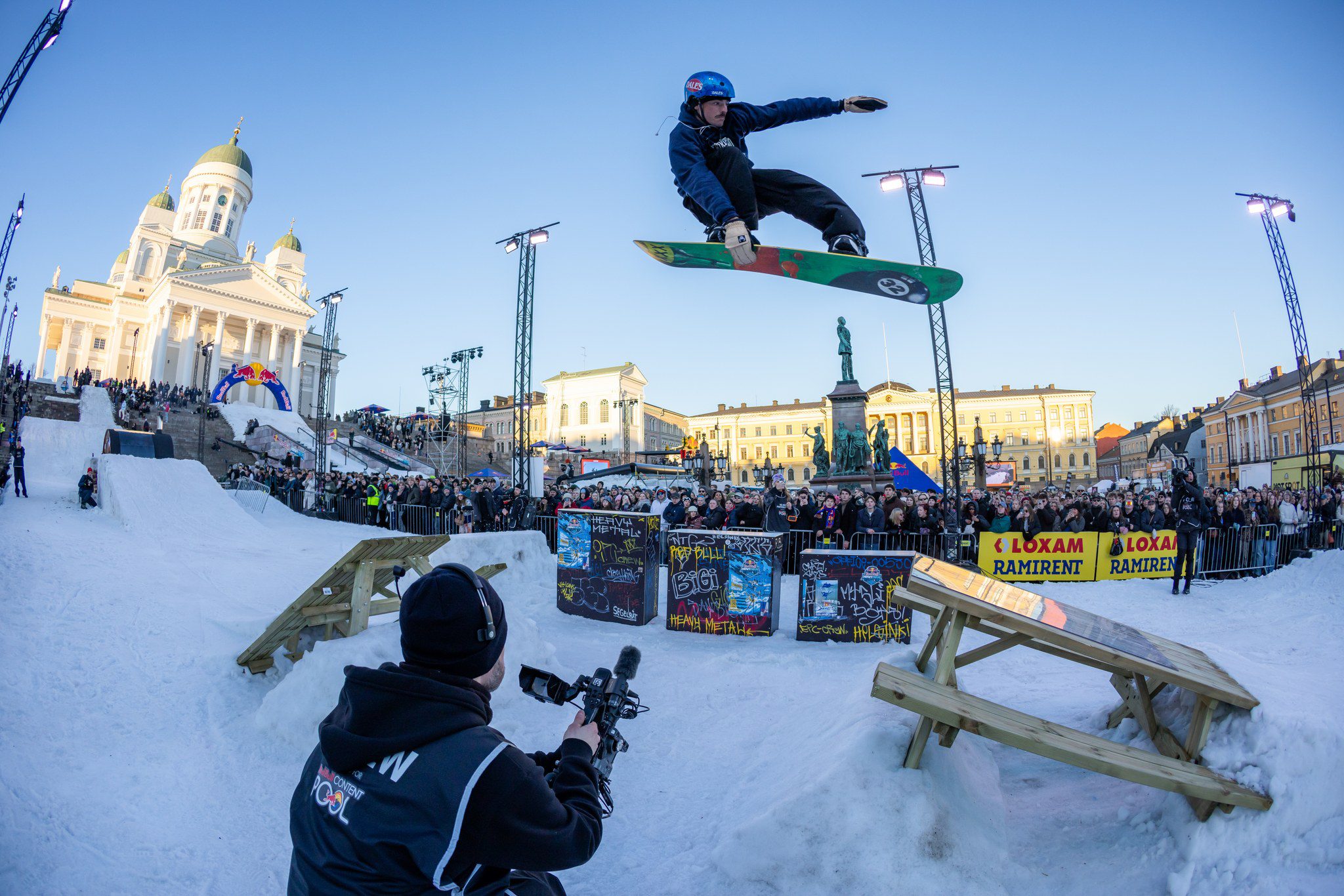
Red Bull Heavy Metal 2026 Made Its Mark on Helsinki
One of snowboarding’s most iconic rail jams filled a void the Finnish



Freeride joins the 2030 Winter Olympics. Nicolas Hale-Woods and Holly Thorpe explore what Olympic recognition means for the future of freeride snowboarding.
What Freeride Gains – and What It Risks: Insights from Nicolas Hale-Woods and Holly Thorpe
Words by Alba Pardo
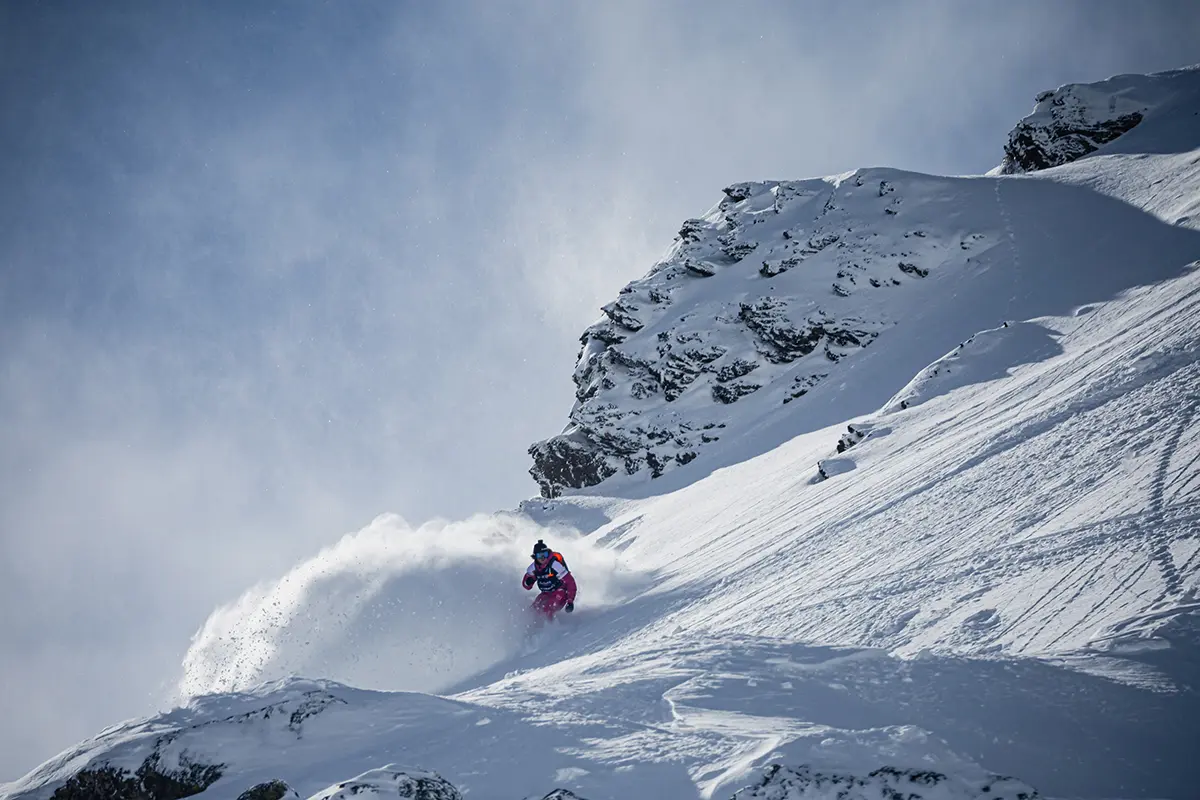
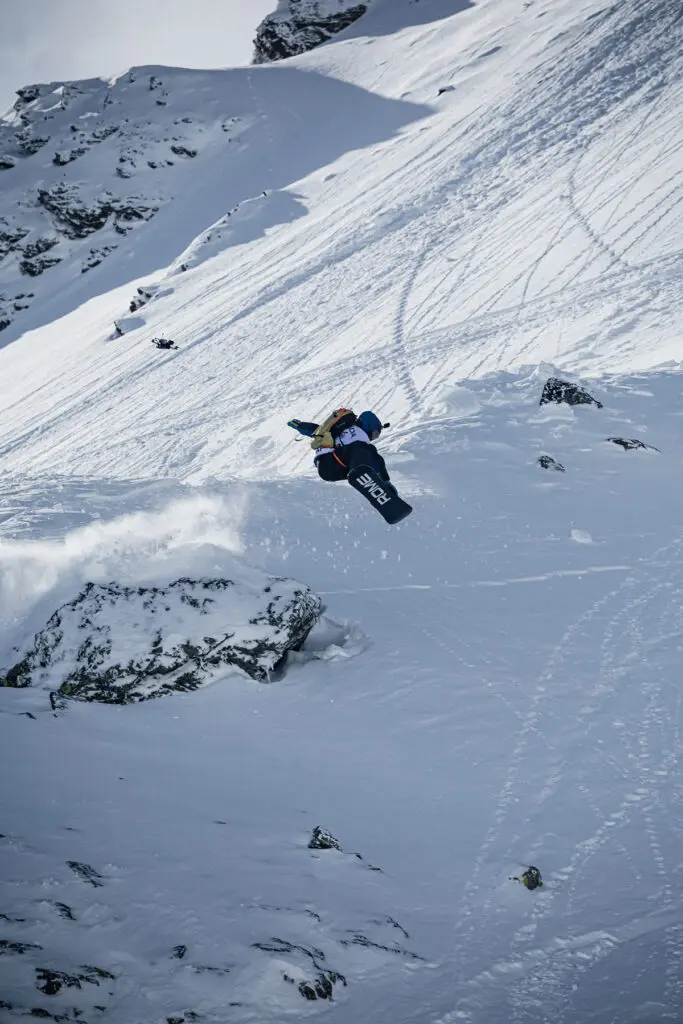
Photo above: Rider Cesar Barin. Photo Dom Daher..
Freeride has spent three decades building towards the biggest sporting stage in the world. Alpes 2030 will bring medals, money, visibility and a clearer pathway for the next generation. But snowboarding has been here before – and Olympic recognition has a habit of changing the sports it celebrates.
On 7 July 2026, freeride became an Olympic sport. The announcement was both extraordinary and, if you had been paying attention, strangely inevitable.
At the Alpes 2030 Winter Games, ski and snowboard freeride will make their Olympic debut with four events and a total quota of 44 athletes, equally split between women and men. The qualification system is still being developed, but the Freeride World Tour will sit at the centre of the pathway to the Games.
For a sport whose competitive history is only a few decades old, the trajectory has been remarkable. The Xtreme Verbier began in 1996 as a snowboard-only event. Skiers joined later, and in 2008 the Freeride World Tour brought the emerging international contests together into a global circuit. In December 2022, FIS acquired the FWT properties, with the existing organisation continuing to operate the Tour and its competition and judging systems. In February 2026, Andorra hosted the first FIS Freeride World Championships. Five months later came the Olympic announcement.
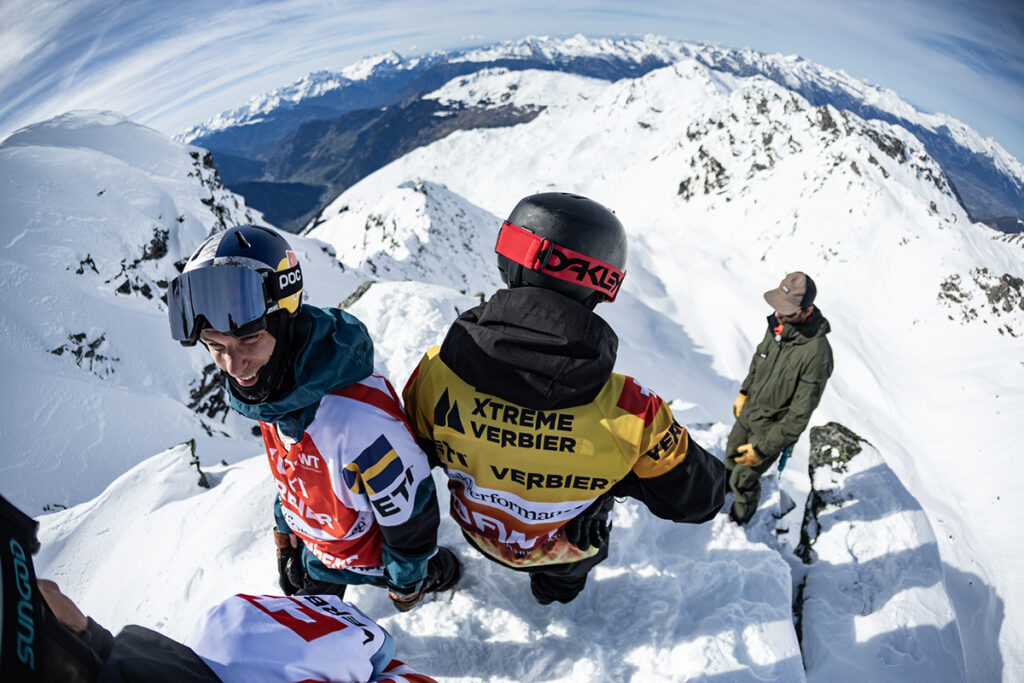
Today, according to FWT founder Nicolas Hale-Woods, the wider competitive system comprises 318 events, more than 11,000 licensed riders, 73 nationalities and competitions in 23 countries. That scale was not incidental to the Olympic bid. Universality, a functioning qualification pathway and the ability to produce a credible global sporting product were central to showing that freeride had matured beyond a spectacular niche.
There is plenty here to celebrate. An Olympic medal changes what is possible for an athlete. Most importantly for Hale-Woods, it gives young riders something previous generations never had: a visible route from a junior freeride contest to the Olympic Games. “There’s a path to an Olympic gold medal that they could be dreaming of,” Hale-Woods told me.
An Olympic medal also does something else: it changes the incentive structure around a sport. It attracts institutions, governments, money, media and people who previously had little reason to care about it. It alters who gets to make decisions. It formalises pathways that used to develop organically, and it changes what parents imagine for their children and what nations imagine from their athletes.
And, eventually, it can change what the sport imagines itself to be. That is the part of the story that takes longer to see.
When I started thinking about what freeride’s Olympic inclusion actually meant, the obvious historical comparison was right in front of us: snowboarding.
Few people have studied that relationship as closely as Professor Holly Thorpe, a snowboarder and sociologist whose research with Professor Belinda Wheaton has followed the incorporation of action sports into the Olympic movement for more than a decade. Their work has examined snowboarding, surfing, skateboarding, BMX and climbing; governance and national funding structures; gender and generational differences; media consumption and new technologies; and the power struggles that emerge when informal or self-governed cultures enter formal sport systems.
When I contacted Thorpe, she described two reactions to freeride becoming Olympic: As a snowboarder: how cool is this? As a sociologist: it is much more complicated.
Later, when we spoke, she put it simply: “As a snowboarder, I’m kind of into this. As a critical sociologist I can see some tensions here.” And both things are, and can be, true.
In fact, one of the strongest findings across Thorpe and Wheaton’s work is that the standard action-sports story – core participants hate the Olympics while everyone else celebrates progress – was never particularly accurate. Their international research on action-sport audiences was conducted in nine languages. Most of the respondents were positive about Olympic inclusion, even while expressing concerns about governance and the politics surrounding it. The youngest respondents were particularly supportive: in one report from the research, around 80 percent of participants under 20 agreed that including action sports was a good idea and that it would make them more likely to watch the Olympics. Women were also generally more enthusiastic than men, while opposition was strongest among older, male, “core” participants.
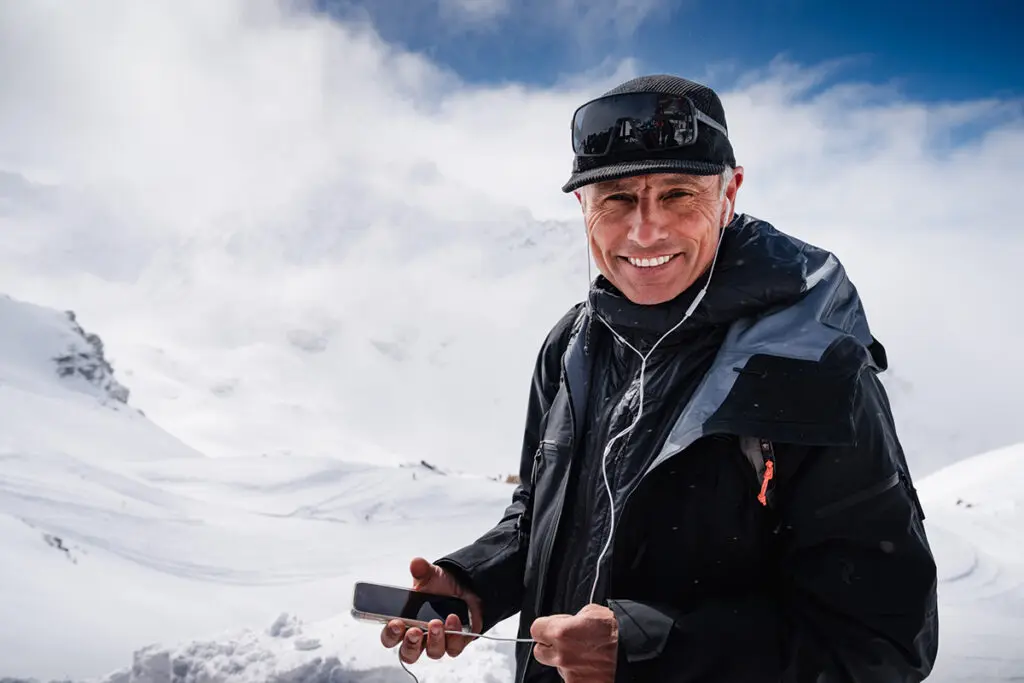
That does not make the older generation automatically wrong. Some of their fears were prophetic. It does, however, complicate the idea that resisting institutionalisation is necessarily the authentic position.
The question is no longer whether freeride should be Olympic. That decision has been made. I believe the more interesting question is: what does becoming an Olympic discipline set in motion for freeride culture?
To understand why that question matters, go back to Nagano in 1998.
Snowboarding’s arrival at the Olympics was anything but a harmonious celebration of acceptance. The International Snowboarding Federation (ISF) was established by snowboarders in 1990. But when snowboarding entered the Olympic programme, the IOC placed it under FIS rather than the ISF. Many snowboarders saw the decision as an institution from skiing taking control of a culture it had neither created nor previously represented.
Terje Håkonsen, arguably the most influential competitive snowboarder of his generation, refused to compete. The conflict was not simply about whether snowboarders liked the Olympics. It was about governance: who had the right to define snowboarding?
Thorpe and Wheaton’s early research describes Nagano as an uncomfortable debut. Snowboarders were treated as outsiders and curiosities, and Ross Rebagliati’s marijuana controversy reinforced the perception that the culture did not fit neatly inside the Olympic institution.
Then something interesting happened. Within four years, snowboarding went from awkward outsider to one of the Olympics’ most powerful youth products. Thorpe and Wheaton’s 2011 study cites a Leisure Trends survey reporting that almost 92 million Americans – approximately 32 percent of the US population – watched the 2002 Olympic snowboard halfpipe competition in Salt Lake City. NBC subsequently reported a 23 percent increase in ratings among viewers aged 18 to 34.
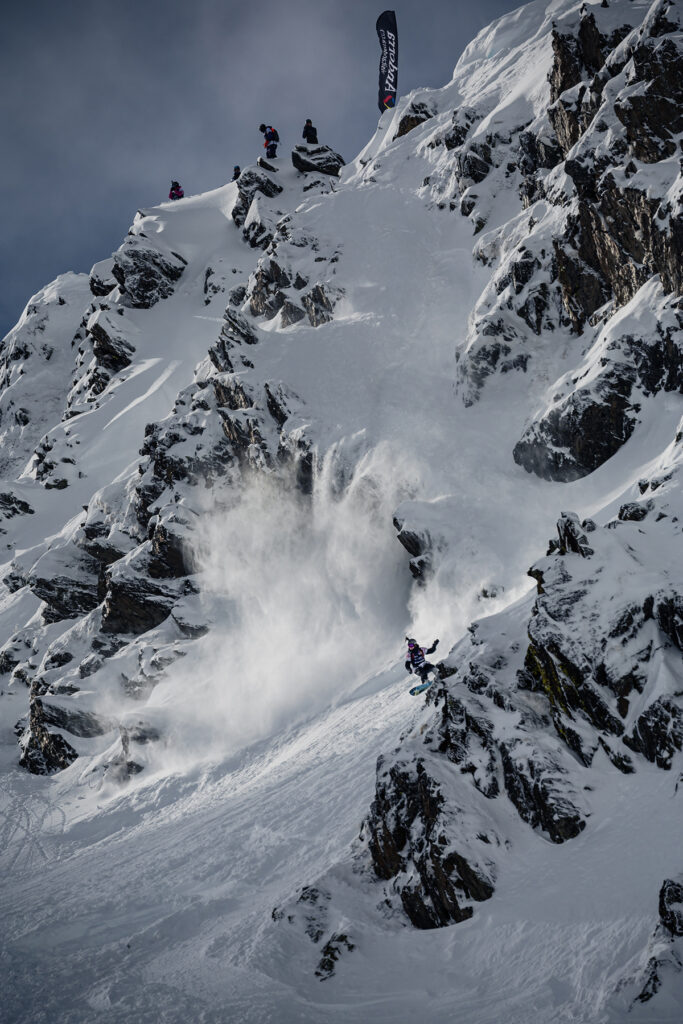
The Olympics needed what snowboarding had: youth, energy, style, cultural relevance and television appeal. It fed the attitude that could be summarised as: they need us more than we need them.
But snowboarding gained something in return: global exposure, legitimacy and access to sporting infrastructure far larger than anything the snowboard industry could have built alone. Olympic careers became possible, national programmes grew, and public funding followed medals.
It would be absurd to pretend there were no benefits. But now we have something we did not have in 1998: nearly three decades of hindsight. And Thorpe is considerably less certain about the long-term equation.
“Has it ultimately helped snowboarding?” she asked during our conversation. “I don’t know. I don’t think that’s all that positive a story.” That doubt deserves nuance.
It would be simplistic to draw a straight line from Olympic inclusion to every difficulty snowboarding has experienced since. Industry consolidation, resort prices, climate change, demographic changes, the collapse of print media, shifts in youth culture, the rise of social media and countless other factors have transformed the sport.
The Olympics did not “kill snowboarding”. But Olympic inclusion was part of a wider process of institutionalisation, professionalisation and mainstreaming, and mainstreaming changes what an activity means.
At one point in our conversation I told Thorpe about something I had recently been thinking about through my own daughter. For many of us, snowboarding was never just one of the sports we practised. It shaped the clothes we wore, the magazines we read, the music we listened to, the places we travelled and often the people around whom we built our lives.
My eight-year-old daughter snowboards. She also dances and plays football. Snowboarding is simply another thing she does.
That is not necessarily a loss. Perhaps it means the culture became more accessible and less tribal. Perhaps a generation no longer needs to choose between identities in the way ours often did. But I believe it illustrates something important: mainstream acceptance can be both the ultimate validation of an activity and the moment it stops functioning as an alternative.
There is another side to this relationship that is easy to forget. Freeride did not simply convince the Olympics it deserved entry; the Olympics need sports like freeride.
For years, the IOC has grappled with reaching younger audiences, and action sports have become part of its modernisation strategy. Surfing, skateboarding, BMX freestyle and sport climbing formed a significant part of that push around Tokyo 2020, and Thorpe and Wheaton’s research was itself partly developed within that wider Olympic conversation.
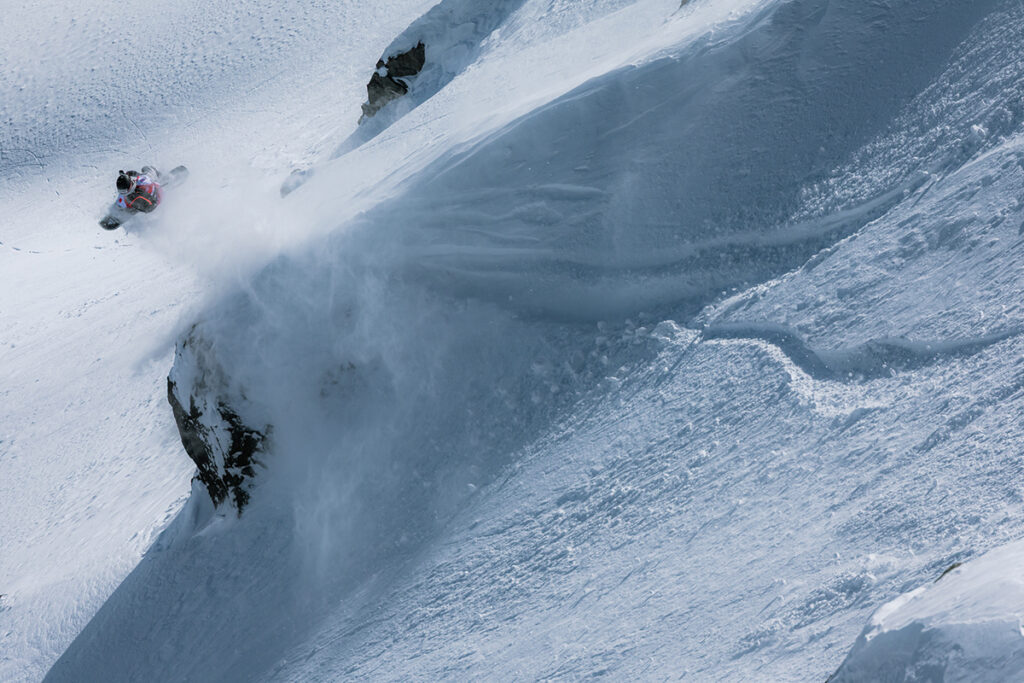
The decision surrounding the Alpes 2030 programme makes the shift particularly visible. On the same day freeride was added, Nordic Combined – part of every Winter Olympics since 1924 – was removed from the 2030 programme. According to FIS, the IOC cited shortcomings across a series of popularity indicators in reaching that decision.
One sport with more than a century of Olympic history moves out while a young discipline moves in. That says something about where the Olympics believes its future lies.
Thorpe has seen those tensions from inside the institution. She has presented research to the IOC Executive Board and describes an organisation that is neither the immovable old establishment its critics sometimes imagine nor a frictionless modern sporting company. There is an old guard, but there are also younger, reform-minded people inside the organisation who understand that the Games have to evolve. “The structures are hard to change,” she told me, “but they’re smart and they’re trying.”
This is also where the comparison with snowboarding in 1998 begins to break down.
Freeride is not arriving empty-handed. It already has a mature competition circuit, established judging, decades of organisational experience, junior and qualifier pathways, an international athlete community and a recognisable media product.
Hale-Woods sees that existing structure as freeride’s strongest protection against losing itself.
The FWT currently uses five judging criteria: line, control, technique, fluidity, and air and style, combined into an overall impression score. Crucially, its philosophy is not to force riders towards one model of performance. Different approaches – steep technical riding, speed, freestyle, big airs or creative line choice – should all be capable of winning.
“The freedom and the creativity are protected by the judging system,” Hale-Woods told me. “The judging system today is built to allow any style, any line to win.”
There is also a Pro Freeriders Board of eight riders that, according to Hale-Woods, is consulted on matters including judging, rankings and competition format. His confidence is that as long as those fundamentals remain in the hands of people who understand freeride, the Olympic version does not have to become a different sport.
Thorpe agrees with the importance of that principle. What concerns her is how much harder maintaining control becomes once Olympic inclusion brings new institutions, funding structures and commercial interests into a sport.
“What happens with an Olympic inclusion is the power dynamics shift,” she explained. Those new stakeholders can bring valuable resources, but they also bring priorities of their own.
That makes the people capable of defending freeride’s values particularly important.
While working on another story for this issue, I found myself discussing exactly that with photographer Dom Daher. Daher first worked at the Verbier event in 2003, when it was still snowboard-only, and has photographed the Freeride World Tour throughout its history. He has watched Hale-Woods build the competition from very close range.
His assessment of him is revealing: “He’s not an easy guy. He’s tough,” Daher said. “But he’s passionate, and I think we can trust him in the sense that we’re going to keep the spirit of our sport.”
For Daher, there is already evidence that the FWT has protected its independence through its integration with FIS. He says the fundamentals of how the competition works have barely changed: the Tour still selects its faces, decides whether the snow is suitable, and retains the weather windows needed to choose the best possible competition day. “For the moment we are in charge of our sport, and we have been in charge of our sport for the last 30 years,” he said.
The interesting part of Daher’s confidence is that it comes with a caveat. “We’ll see afterward when he’ll be gone, when he will be retired. Maybe then it’s another story.”
That may be one of the most important questions surrounding the whole transition. A strong individual can defend a culture at the negotiating table; a strong team can do the same, but Olympic integration is not a four-year project, and protecting freeride cannot ultimately depend on one individual being stubborn enough to say no.
The longer-term test is whether those protections become structural enough to survive the people who created them.
That is particularly interesting in snowboarding because competitive snowboard freeride has never existed solely inside the FWT. Natural Selection has become hugely culturally significant, while film projects, expeditions and video parts remain powerful measures of status and legitimacy. Even Hale-Woods acknowledged that Olympic qualification will draw snowboarders into the FWT system who previously had little reason to pursue it. “There will be riders, especially North Americans or even Japanese, that have not competed in the Freeride World Tour system yet,” he predicted, “and who will be because they will want to give a shot at the Olympic qualification.”
That could dramatically raise the level of competitive snowboard freeride. It might also change what success in freeride means.
This is where Thorpe delivered one of the most memorable warnings of our conversation. “Watch out,” she said. “It could become gymnastics on big mountain terrain.” The comment was partly playful, although the concern behind it is serious.
Progression is unavoidable. More riders entering the system means more talent. More funding means more time to train, and athletes from freestyle backgrounds will bring increasingly complex tricks into natural terrain. What looks extraordinary today may become normal remarkably quickly, and none of that is inherently bad.
Freeriding has always evolved. Modern FWT runs look nothing like competitive freeriding from 20 years ago, but progression and homogenisation are not the same thing.
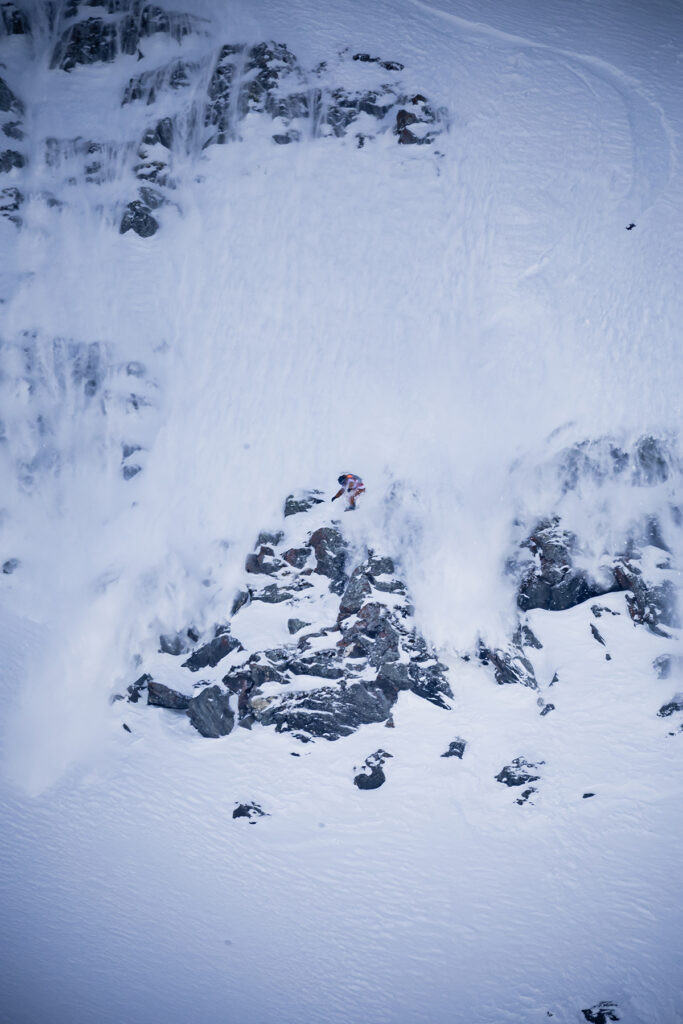
If the winning formula gradually becomes the maximum number of rotations performed between start gate and finish, something essential would have changed, and the defining quality of freeride is not that tricks happen on a big mountain: It is the relationship between the rider and an uncontrolled piece of terrain; reading a face, understanding exposure, choosing where to accelerate and where not to, deciding that a smaller feature fits a better line, managing sluff, responding to snow and connecting terrain that another rider might interpret completely differently.
The mountain is not merely the surface underneath the performance; it is part of it.
That is why Hale-Woods returns repeatedly to judging when he talks about protecting freeride’s “DNA”. And it is why who controls the criteria four, eight or twenty years from now matters more than whether the first Olympic competition looks authentic.
The danger may not be that somebody suddenly decides to build kickers across an Olympic freeride face. The danger is gradual: a small weighting change here, a television-friendly adjustment there, a generation of athletes training to the system rather than the system adapting to the athletes.
What I took from Thorpe’s research is that Olympicisation rarely transforms a culture overnight. It changes incentives, and then people adapt to them.
One of Thorpe’s most interesting observations had less to do with governance than cameras.
She suspects freeride’s Olympic moment would have been much harder to imagine before drones, POV cameras and modern live production. This sits directly alongside her earlier research into action sports and new media technologies. In a 2016 paper, Thorpe examined how GoPros, drones, GPS systems and digital platforms were transforming not only the representation of action sports but the relationships between athletes, audiences, corporations and sporting bodies themselves.
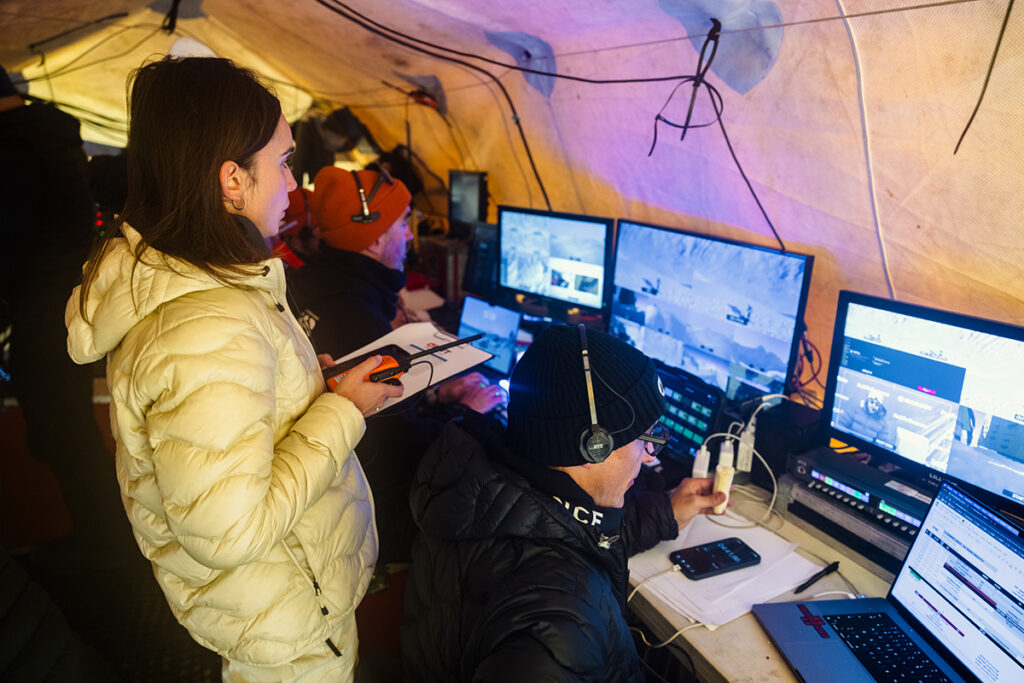
Freeride is perhaps one of the clearest examples. If you stand underneath a mountain, the scale is obvious. Put a single long-lens camera on a rider hundreds of metres away and everything flattens. The cliff looks smaller, and the exposure disappears. A face that terrified an athlete during inspection can become a white background with a tiny moving figure on it.
Technology has progressively helped solve that problem. Drone footage shows the three-dimensionality of a face, and POV cameras put the viewer inside the descent. Graphics identify lines and features while replays connect angles, and better production helps communicate what the athlete is actually seeing.
“The media technologies,” Thorpe said, “I think that’s critical to freeride getting into the Olympics.”
It is an intriguing idea because Olympicisation is usually discussed as a process of sporting organisation. Perhaps freeride also had to undergo a process of visual translation. It had to become understandable to someone who has never stood underneath the Bec des Rosses.
And yet, that creates another contradiction. The camera helps freeride reach the Olympics, but once it is there, television may begin shaping freeride in return.
Olympic sport has to communicate quickly to enormous audiences. Mainstream viewers need to understand why one run scored higher than another. They need narratives and recognisable measures of difficulty. Subjective sports already struggle with that tension.
During our conversation, I told Thorpe about my frustration watching Olympic snowboarding broadcasts where camera selection sometimes made it difficult even for people familiar with the sport to understand what had happened. The image that makes the most exciting television is not necessarily the image that best explains a performance, and freeride could magnify that problem.
Mainstream storytelling will need to communicate not only what a rider did but why a decision mattered: the exposure above a cliff, the condition of the snow, the originality of a line or the speed maintained through technical terrain. The FWT has already been doing this, but at Olympic scale it could become one of the greatest educational opportunities freeride has ever had.
Or the complexities could be reduced to the easiest thing to understand: Who went biggest?
The most immediate effect of Olympic status may not occur on the mountain at all, it will happen inside national sporting systems. For Hale-Woods, this is one of the strongest arguments for Olympic inclusion: a freerider who previously received little attention from a national federation can suddenly become a potential medal. And medals, in many cases, have budgets.
He used Switzerland as an example, explaining that Olympic status would allow Swiss-Ski to access resources through Swiss Olympic to support freeride athletes and development structures in ways that were not previously possible.
To an athlete, that can mean a radical change: coaching, travel support, physiotherapy, sports psychology, medical support, strength and conditioning. Thorpe does not dispute those benefits. Her research asks a different question: which athlete gets them?
A chapter of Action Sports and the Olympic Games compared the professionalisation of newly Olympic action sports across New Zealand, Australia, China and the United States. The differences were significant. Olympic inclusion can open resources while simultaneously widening the gap between well-funded and poorly funded sporting systems.
Thorpe described the mechanism to me plainly: One nation decides it has three medal prospects and surrounds them with expertise. Another equally talented rider continues paying their own way. “There’s no such thing as a level playing field in any sport,” she said, “but I think the extremes get exacerbated.”
And whether we like it or not, freeride begins with inequality already baked in. This is not football. You need a snowboard – or skis, if you are one of those – boots, outerwear, avalanche equipment, lift access and travel. More importantly, genuine freeride competence requires time in mountain environments – ideally years of it.
The Olympics can make the pathway clearer without necessarily making it more accessible. So the sport can become more globally visible while its elite becomes increasingly concentrated among countries with the resources to build medal programmes. That is not an argument against Olympic inclusion. It is something worth watching once the money starts flowing.
Because Olympic resources can also disrupt existing inequalities in positive ways, and Thorpe and Wheaton’s research on gender is particularly relevant here. Their work into skateboarding and surfing found that Olympic inclusion brought meaningful opportunities for women into cultures and industries where those opportunities had historically been limited. Equal Olympic quotas and institutional pressure around gender did not magically solve every inequality in sponsorship, leadership or cultural status, but they changed the incentives surrounding investment and visibility.
In our conversation, Thorpe pointed particularly to skateboarding. For female skaters, Olympic inclusion created events, media exposure, national support and potential careers at a scale that would have taken far longer to emerge through the existing industry alone.
Freeride will debut with an equal male/female athlete quota. That is significant – and exciting. It also complicates one of the favourite arguments of action-sport traditionalists: that institutionalisation inevitably damages the “core”.
Who had access to that old core? Who was visible inside it? Who got paid? Who got to decide what authenticity looked like? “Protecting the culture” therefore also requires asking which parts deserve protection, and for whom.
If Olympic status changes elite sport from the top down, its strongest effects may eventually be felt at the bottom.
The FWT already has a sophisticated development pyramid. Its junior circuit accepts riders from as young as ten, with age-specific formats and additional supervision requirements for younger participants. FWT Pro competition itself currently has a minimum age of 18.
Hale-Woods is passionate about this pathway. For him, early education is part of freeride safety.
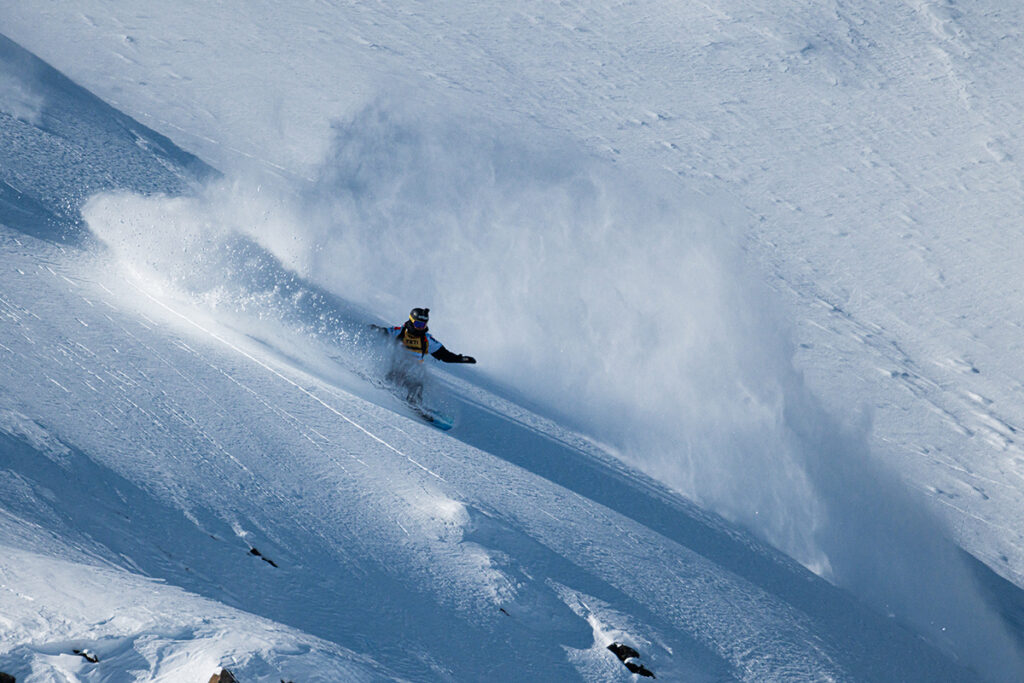
His argument is compelling: young skiers and snowboarders are going to explore off-piste terrain anyway. It is safer to teach mountain awareness, planning, snow knowledge, risk management, and responsibility than to pretend the terrain does not exist. He describes freeriding as a “life school”: managing discomfort, making decisions, helping others and being helped, planning before acting and knowing when not to go.
Those lessons are worth protecting. But during our conversation I realised that two ideas I instinctively support – freeride education for children and an Olympic development pathway – are not necessarily the same thing.
Once there is a medal at the end of the pathway, its purpose can change. National systems start looking for talent, parents see possibility and Coaches see progression. Thorpe calls this “gold medal lust”.
Her research has documented dramatically different responses between countries. In China, for example, she described children as young as four or five being brought into action-sport training systems as the nation sought future Olympic competitors. Australia invested heavily in high-performance infrastructure. New Zealand followed a very different path, leaving some athletes with significantly fewer resources.
The point is not that freeride will suddenly start removing five-year-olds from classrooms and sending them into avalanche terrain. The point is that Olympic status changes incentives long before an athlete reaches the Olympics. “Who is thinking of what’s best for that child?” Thorpe asked.
Freeride makes that question especially important because technical ability is not enough. A child can learn rotations very young, but mountain judgement takes something else: experience, consequence, emotional regulation, humility and the capacity to recognise a bad decision before making it. You cannot fast-track all of those things simply because 2030 is approaching.
There is another reason freeride cannot simply copy the Olympic pathway of skateboarding or halfpipe. The field of play can kill you.
That reality is easy to sensationalise, which Hale-Woods is keen to resist. One of the misconceptions he most wants Olympic inclusion to correct is the idea that elite freeriders are reckless people throwing themselves from cliffs.
His argument is almost the opposite. Top freeriders are highly skilled and prepared athletes. The judging system heavily penalises loss of control, and the riders themselves spend years building the experience required to operate in this terrain.
Hale-Woods believes that better public understanding of that professionalism could actually make freeride safer.
Thorpe sees the other possibility too: Olympic exposure makes things desirable. Social media already fills our feeds with powder turns, enormous lines and remote terrain. Freeride can look spontaneous precisely because the years of preparation before the image are invisible and Olympic coverage will multiply that visibility.
If it romanticises the descent but fails to communicate the knowledge behind it, freeride risks looking far more casually accessible than it is.
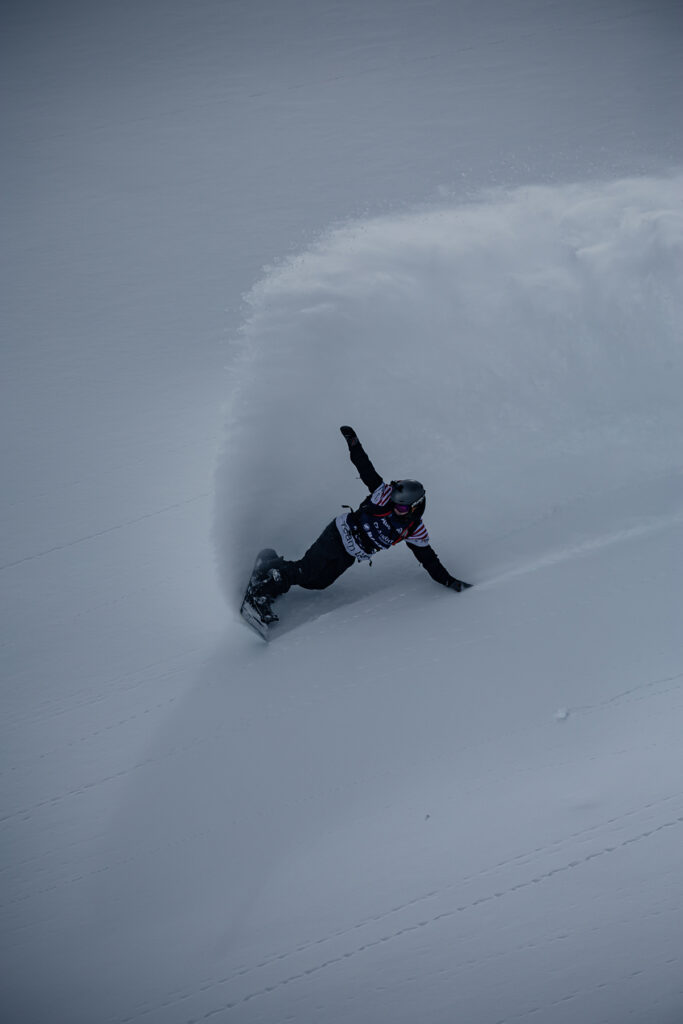
This is where media responsibility becomes larger than explaining a score. A good Olympic broadcast should make route planning, snow safety, inspection and decision-making part of the story. It should explain why a rider changes a line, or why sometimes deciding not to drop is the most important decision of all.
The mountain should not become a spectacular white stadium, because while it is spectacular, it is definitely not a stadium and it also refuses to behave like one.
Olympic broadcasting prefers certainty: a start time, a programme and a medal ceremony. Freeride works with wind, snowfall, visibility, avalanche control and rapidly changing mountain conditions. Surfing has already forced the Olympic system to accommodate that unpredictability through waiting periods, and Hale-Woods told me Olympic freeride will use a similar approach. “You will have a waiting period,” he said. “We will not guarantee that the event is on the 3rd of February 2030 starting at 10:15 a.m.”
Daher’s experience since the FIS integration also gives some reason for optimism. He says the Tour has retained the ability to decide whether conditions are good enough and to work within weather windows rather than being forced into competing on a predetermined day.
That may sound like an operational detail, but culturally it matters enormously. If freeride can force one of the most scheduled sporting productions in the world to wait for the mountain, perhaps some of the mountain’s authority survives.
When I asked Hale-Woods what success would look like ten years from now, he had no shortage of ambition.
He imagines unforgettable Olympic contests in 2030 and 2034, a stronger World Tour, events in new regions, larger budgets, much greater prize money and a live product good enough to command mainstream media attention. He also imagines thriving academies and ski clubs, and 30,000 licensed riders instead of 11,000.
That is a coherent vision of success, and it is difficult not to be inspired by it.
But Thorpe’s research suggests other measurements will matter too: whether the judging system still rewards genuinely different interpretations of terrain, whether junior systems are producing knowledgeable mountain people rather than simply earlier competitors, and who ultimately retains control over what competitive freeride becomes.
Olympic freeride is a sporting version of freeriding, and freeriding itself remains larger than competition. People will still hike into the mountains because they love powder, exploration, creativity and being outside with friends. A gold medal cannot – should not – own that. But Olympic sport will increasingly shape how the next generation understands freeriding.
This is normally where I would reach a conclusion, perhaps even pick a side. Is Olympic freeride good? Or is it bad?
Thorpe would rather we resist the question. “We need to try really hard not to frame it as, what side are you on?” she told me.
Media increasingly turns complicated subjects into teams because teams are easy to understand: for or against, progress versus sell-out, old guard versus new generation. Freeride does not fit neatly into either column, perhaps the mistake is thinking we need to choose between competing truths at all.
Thorpe’s own position is much more useful. She is excited, she is worried, and most of all, she is curious.
So am I.
Because right now freeride has something researchers rarely get: a visible starting line. We know what the ecosystem looked like before Olympic inclusion. We know who the athletes were, how they were funded, how children entered the sport, what the judging rewarded, how the media represented it, and who held the power.
Now we can watch what changes. In 2030, someone will stand at the top of a freeride face wearing an Olympic bib. There will be a countdown, national flags at the bottom and, somewhere in the world, a child will watch the run and realise for the first time that freeriding is something they could become very, very good at.
An Olympic champion will be crowned and that moment deserves celebration, yet the most interesting story may only just be beginning.
I believe the real legacy of freeride becoming Olympic will not be measured by who wins the first gold medal; instead, it will be measured by what kind of sport is left for the generation that grows up chasing it.
One of snowboarding’s most iconic rail jams filled a void the Finnish
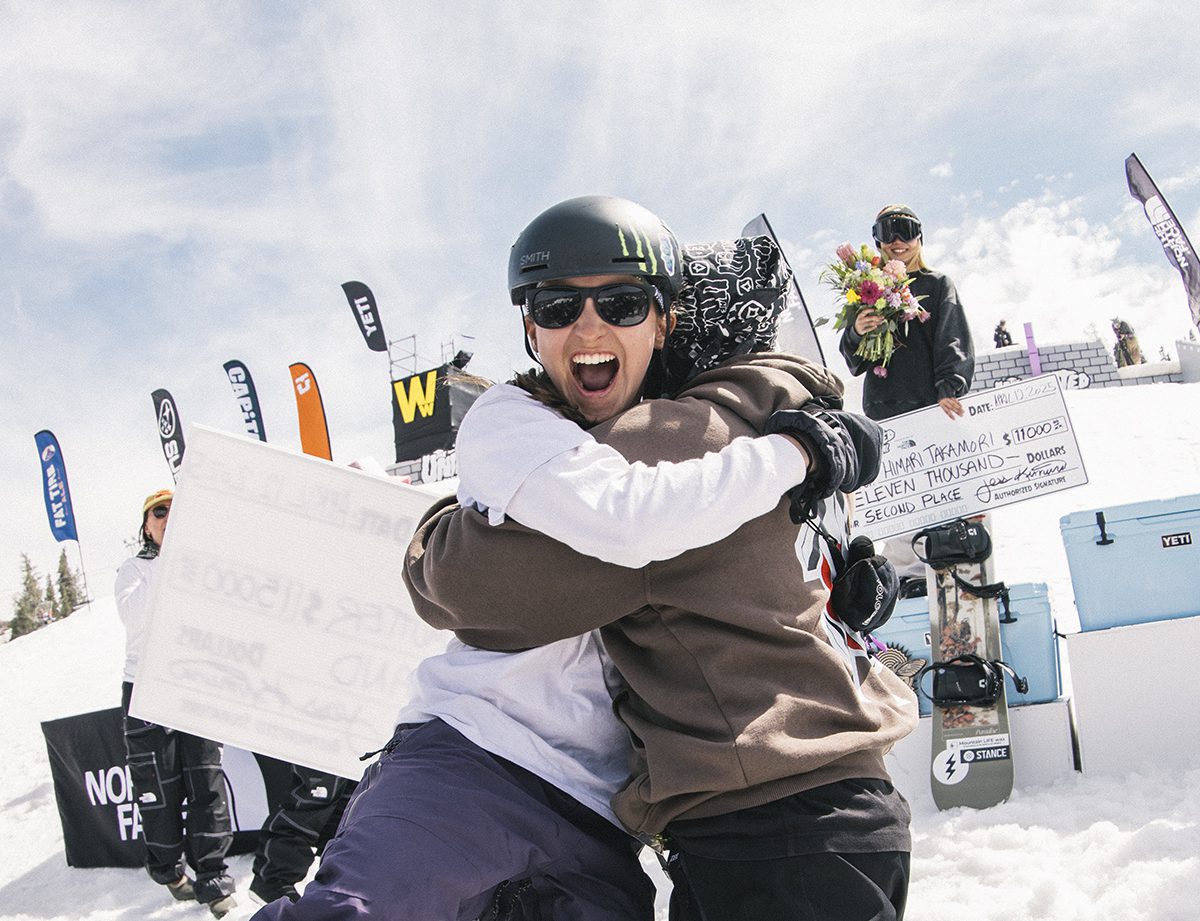
INTERVIEW: MARY T. WALSH PHOTOS: ASHLEY ROSEMEYER The first day of the 2024
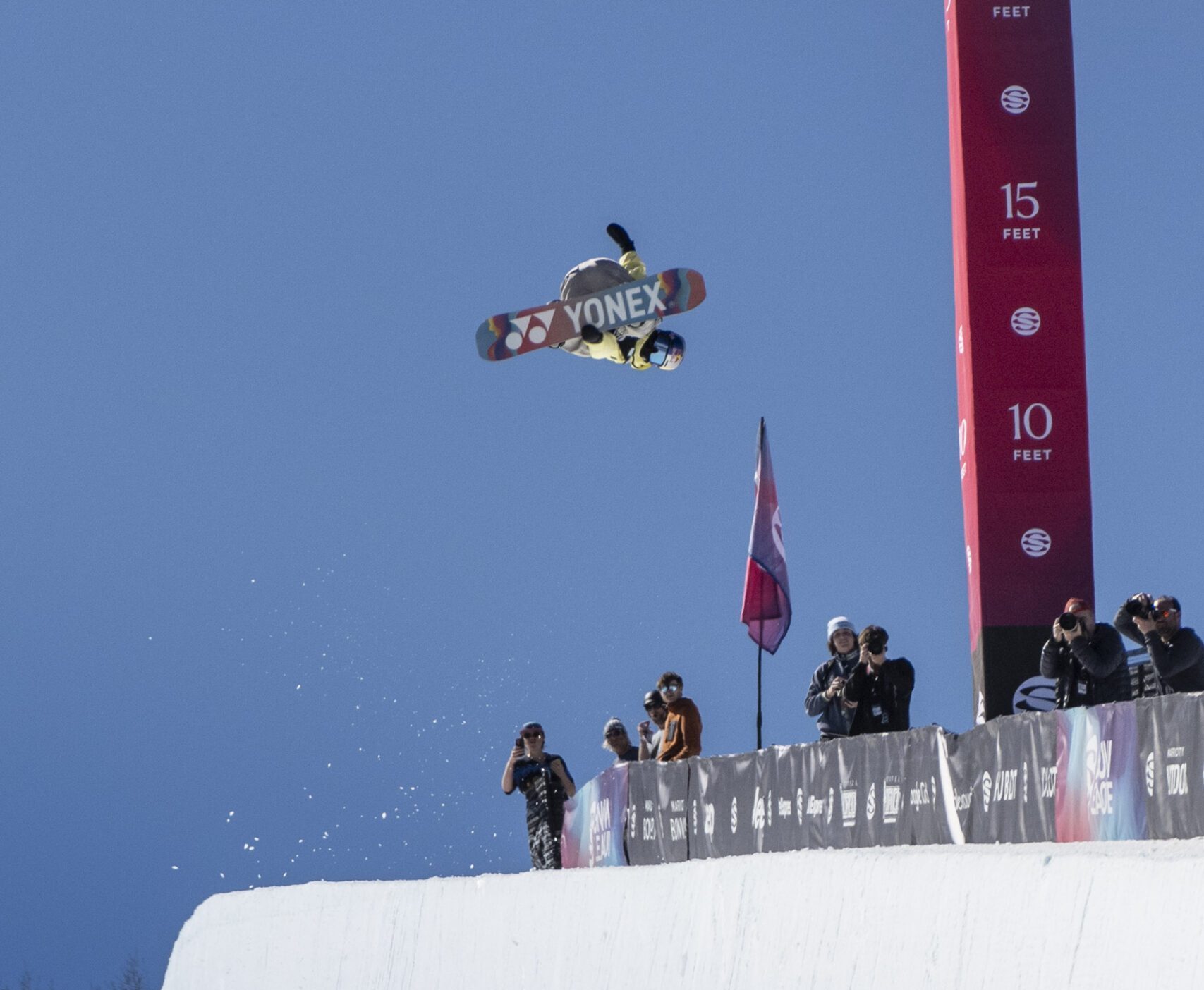
By the time Snow League wrapped in Aspen, the results were clear:
