




Tidal Q&A with Aaron Schwartz
Tidal is a biennial, on-mountain artist residency and exhibition in LAAX, Switzerland,



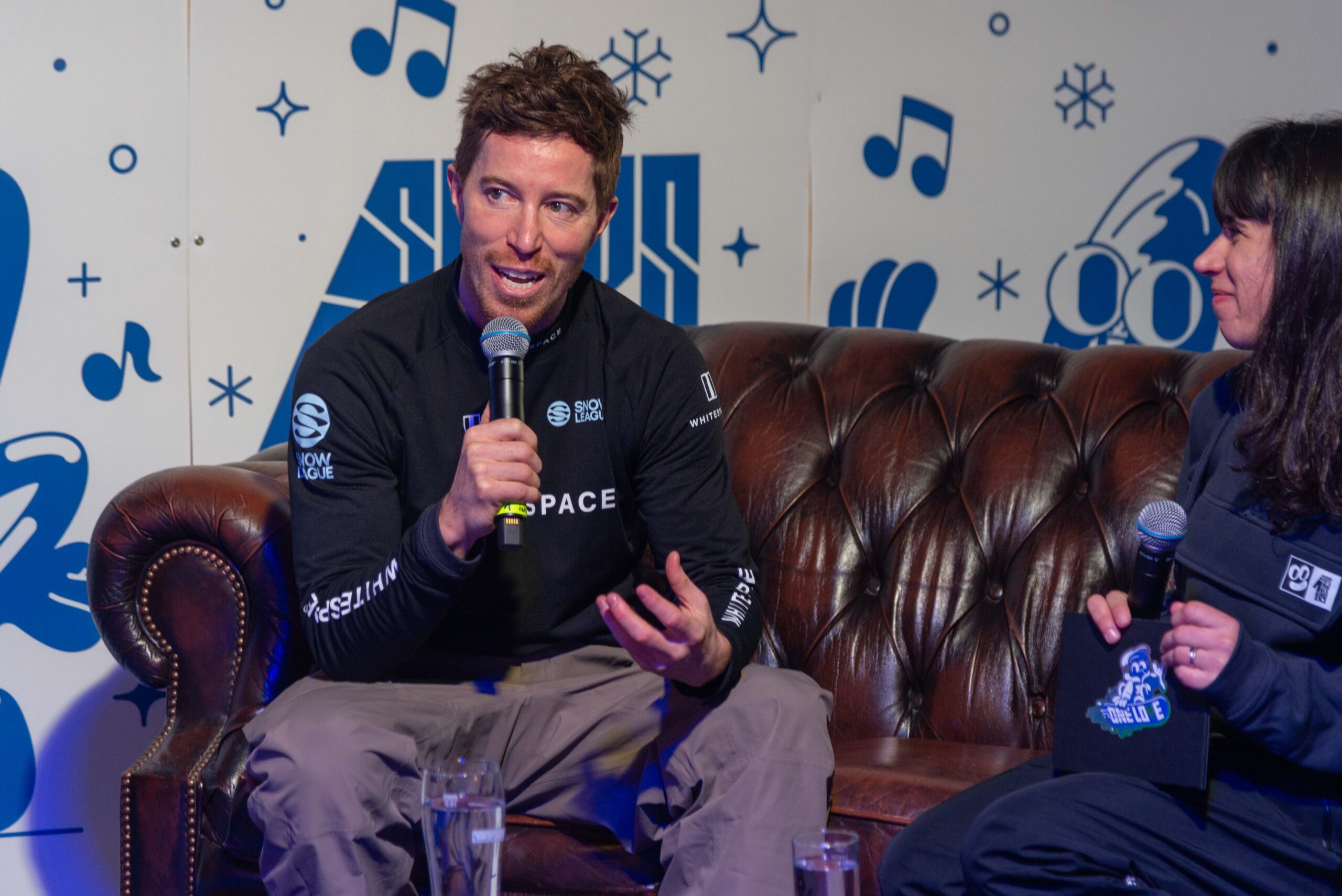
Interview and words by Alba Pardo
There is a familiar way Shaun White is usually introduced. It starts with numbers: five Olympic appearances, three Olympic gold medals, 15 X Games Medals, overall halfpipe World Cup titles, two FIS World Championships… He has won everything there is to win and is one of the most recognizable athletes snowboarding has ever produced. The résumé is indisputable and often sufficient.
But it rarely tells the whole story.
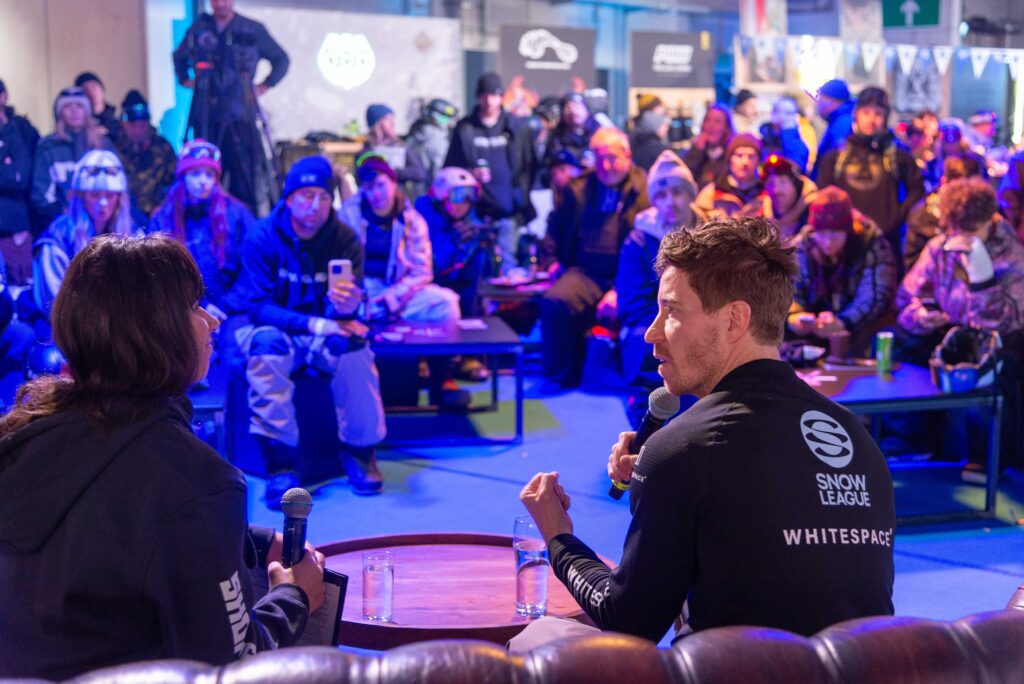
This interview was originally conducted live at SHOPS 1st TRY, Europe’s largest on-snow snowboard demo and retail gathering, held in January 2026 in Hochfügen, Austria. Over three days, the event brought together more than 1,460 industry participants from over 30 countries, including 725 shop representatives, 94 distributors, and 65 media outlets, a concentrated cross-section of the people who shape how snowboarding products, events, and narratives move forward.
SHOPS 1st TRY is not a consumer-facing festival. It’s where brands are tested back-to-back on snow, buying decisions are made, partnerships are discussed, and the future direction of the snowboard industry quietly takes shape. Which makes it a particularly revealing setting for a conversation with Shaun White, not as a competitor, but as a builder.
White was attending the event for the first time. It was his first visit to the resort, his first exposure to SHOPS 1st TRY, and his first opportunity to engage directly with European shop owners, distributors, and industry professionals in this context. By the time we sat down to talk, he had already spent the morning riding, sharing laps, and reconnecting with people who remembered him from earlier chapters of his career and now encountered him in a very different role.
This piece is the result of that conversation.
Not a career retrospective, and not a celebration of past results, but an exploration of what White is doing now, and why. Of how he is stepping into a different kind of influence through Snow League, through WHITESPACE, and through decisions that reach far beyond his own legacy. Decisions that affect athletes’ careers, event structures, brand strategies, and the retail ecosystem itself.
At SHOPS 1st TRY, a place where the industry speaks candidly, away from public spectacle, the focus shifted naturally from what Shaun White has achieved to what he is attempting to build. From medals to responsibility. From individual success to structural questions. The tone of the conversation was relaxed. The implications were not.
For most of his life, White’s world ran on a precise cycle: seasons, qualification windows, Olympic years. Everything: training, sleep, food, travel… revolved around progression and performance.
“If I was at a resort,” he explained, “I’d be like, okay, this is fun, but tomorrow I need to get to where the halfpipe is. I need this trick by this competition so I can qualify for that event.”
That structure didn’t just shape his career, it shaped his identity.
“So to be in a position now where I’m retired and not competing, and that sort of ticking clock of progression isn’t really happening anymore,” he said, “it’s nice… but it’s also something I miss.”
What he misses isn’t just winning. It’s the pressure.
“I kind of miss the anxiousness of competition,” White admitted. “Standing at the top, knowing you’ve got one more run, don’t blow it. There are commercials in your face, billboards going up, and you’re expected to win.”
It’s a feeling most athletes are relieved to leave behind. White isn’t so sure.
“It’s an anxious excitement,” he said. “I was happy to avoid it in retirement, but now I’m missing it a little bit.”
That tension, relief mixed with absence, quietly underpins everything he’s doing now. Snow League, Whitespace, even his increasing role as a commentator and interpreter of elite performance all seem, in different ways, to reintroduce structure where the competitive clock once lived.
White’s awareness of image didn’t arrive late in his career. It was forged early and out of necessity.
Growing up in Southern California, far from a traditional snowboarding environment, there was no roadmap. When sponsors started calling, his mother “a waitress from the Sheraton at Torrey Pines, at the time” as White describes, had no idea how to navigate it.
“We got an agent because we needed help,” he said. “There was no playbook. Everything was happening really quickly.”
That learning curve extended beyond contracts into how snowboarding was presented to the world.
At one point, a sponsor told him he had to stop wearing a helmet, that it wasn’t cool, that he’d never make magazines or videos if he kept it on. Shortly after, White was knocked unconscious in a collision on the mountain.
“I had a big gash in my helmet,” he said. “I always wore it after that.”
The same logic applied to media appearances. Watching Tony Hawk, White noticed how inseparable the skateboard was from Hawk’s public image.
“I remember thinking, am I going to be holding my snowboard every single time I’m on camera?” he said. “Is that how I want to represent the sport?”
His answer was deliberate.
“I was very calculated,” White said. “I’d wear a suit. I’d walk out. You play the video. We talk about it. I walk off like any other guest.”
It wasn’t about distancing himself from snowboarding; it was about expanding how snowboarding could exist beyond the caricature or what was expected of it.
Looking back, these moments form a clear pattern. Long before WHITESPACE became a brand name, White was already operating in the same way: observing the landscape, questioning the default, and identifying what wasn’t being done.
WHITESPACE, the brand, is often framed as a product venture. A natural next step for a rider who spent decades at the highest level of the sport. But listening to Shaun White describe it, it’s clear that WHITESPACE isn’t simply about boards: it’s an extension of a way of thinking that has shaped his entire career.
“The name of WHITESPACE means a gap,” he explained. “A void waiting to be filled. A blank canvas.”
That idea didn’t originate in a boardroom. It’s the same instinct that once guided his competitive decisions.
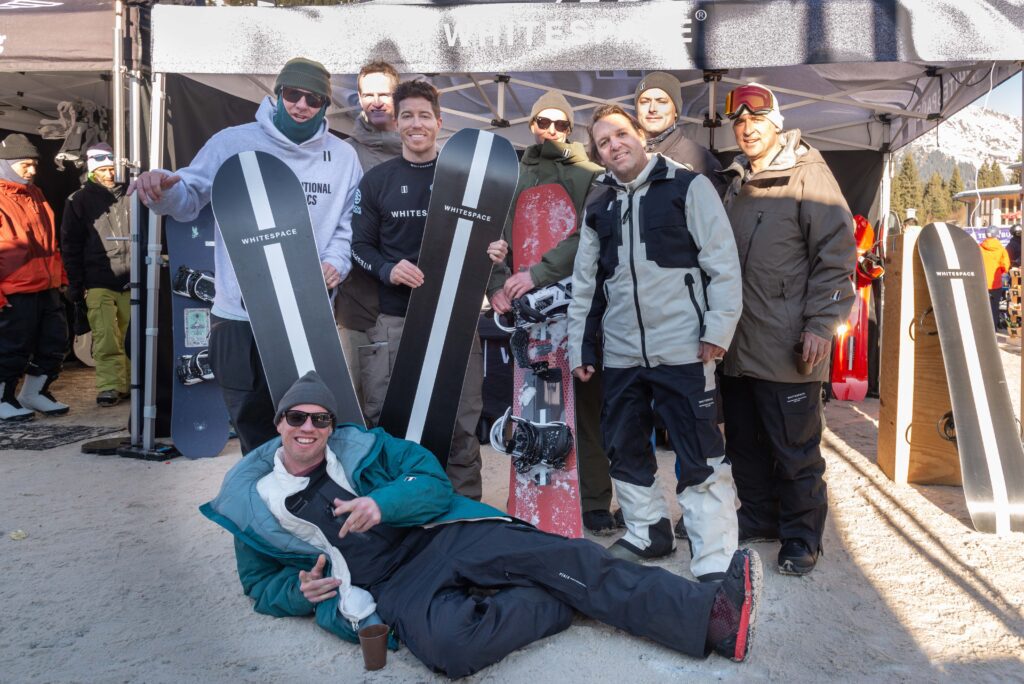
“Every time I look at a competition, or something happening in our industry,” White said, “I think about what’s not happening.”
It’s a deceptively simple habit, and one he has relied on repeatedly, from trick selection to media strategy. While others focused on what was being done, White trained himself to look for the absence. The opening no one else had noticed yet.
That mindset carried directly into product design. After years of riding for established brands, White found himself running into the same frustration season after season: base graphics that felt either overworked or instantly forgettable.
“I’d come up with this really cool top graphic,” he said, “and then I’d get stuck on the base. I hated it. What do we do for the base?”
When he started working on his own boards, the solution wasn’t to add more, it was to strip things back.
“I just wanted something recognizable,” he said. “So when my coach was filming me from the bottom of the pipe, he knew it was me every time.”
The now-signature stripe began as a functional choice, a way to be instantly identifiable in motion. Over time, it became something else entirely. A visual constant. A design language. An identity.
It was calculated, but not in the traditional sense of branding for branding’s sake. The calculation was about clarity.
“I didn’t want to do what everyone else was doing, I wanted something that you could spot right away on the mountain and know what it was.”
WHITESPACE as a company followed that same logic. It didn’t launch with a massive team or corporate backing. In its earliest stages, it was built by White alongside his brother, Jesse White. Designing, testing, refining, and troubleshooting everything themselves, from manufacturing changes to the complexities of Olympic equipment approval.
“It wasn’t some huge corporate-backed thing,” White said. “For a long time, it was just us trying to figure it out.”
That process was far from smooth. There were manufacturing shifts, early mistakes, and the usual growing pains of starting a snowboard brand in an already pressured market. But for White, the slow pace was intentional.
“I’ve worked with brands since I was seven years old,” he said. “I learned their marketing, their timelines, product development, all of it. So when I decided to do my own thing, it wasn’t rushed. It was about doing something different, and doing it right.”
In that sense, WHITESPACE isn’t just a name. It’s a reflection of how White has always operated identifying gaps, resisting noise, and trusting that simplicity, when it’s grounded in purpose, can be more powerful than excess.
That same thinking (clarity over noise, purpose over excess) extends to how White sees the role of shops.
For all the talk of leagues, luxury, and global visibility, Shaun White remains unequivocal on this point.
“Shops are everything,” he said. “You can talk to someone, feel the board, understand the flex. That human interaction matters.”
A snowboard, he emphasized, isn’t a seasonal fashion purchase. It’s a commitment.
“You’re saying, ‘I’m going to ride this board for the next couple of years,’” White said. “That’s trust.”
In an industry increasingly shaped by online retail and fast turnover, that distinction matters. Boards aren’t impulse buys. They’re decisions made with advice, touch, and confidence, the kind of experience only shops can offer.
White is also clear-eyed about what that means for his own brand. WHITESPACE, he knows, won’t survive on his name alone.
“It has to deliver,” he said. “We had to earn credibility.”
That credibility, in his view, doesn’t come from marketing or image, but from performance, from boards that work, and from shop employees who are willing to stand behind them.
It’s a reminder that even as snowboarding pushes toward larger structures and broader audiences, its foundation still rests on something simple: trust, built one conversation at a time.
Snow League is where Shaun White’s thinking becomes most debated and most difficult to ignore.
During his competitive years, snowboarding’s seasons never truly connected. Dew Tour stops. US Opens. FIS events. X Games. All important in their own way, yet none definitive. The calendar was crowded, fragmented, and often contradictory.
“I had a season where I won everything I entered,” Shaun White recalled. “I was so proud, so excited. And then at the end of the season, the interviewer says, ‘Amazing accomplishment, congratulations, but how does it feel to not be the World Champion?’”
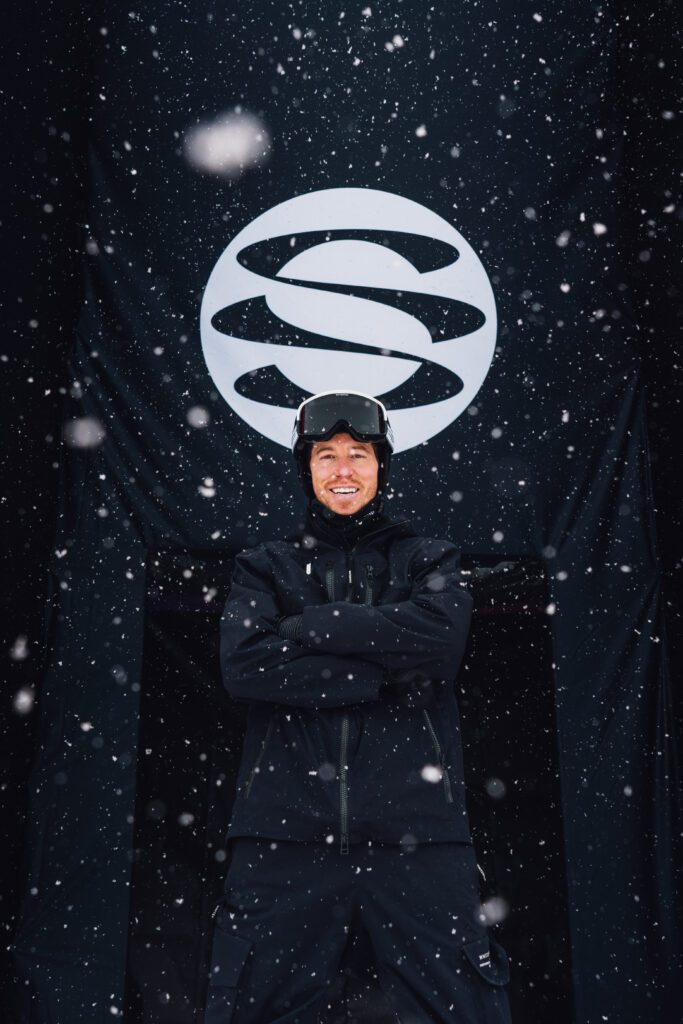
He laughed at first. Then realized she was right.
“That painted a very clear picture of what was wrong,” he said.
In most traditional sports, seasons have a clear beginning and a clear end. Points accumulate toward something coherent. There is a narrative arc, and ultimately, a crowned champion. Snowboarding, by contrast, has long relied on a patchwork of independent events, many of them brand-driven, to define success.
“When marketing dollars get tight,” White said, “events disappear. And that’s not the brand’s fault, they’re trying to survive.”
The consequence, over time, has been instability. Careers hinging on single contests. Seasons judged by one result. Athletes winning everything except the event that happens to matter most in the public eye.
Snow League’s ambition is not to replace what already exists, but to introduce something snowboarding has historically lacked: a coherent season, a clearly defined champion, and a structure that allows athletes to build careers rather than chase moments.
“We’re not reinventing the wheel,” White said. “This already exists in other sports. We’re just pulling from that and doing it in our own unique way.”
That logic extends beyond format into visibility, and into the often uncomfortable conversation about mainstream relevance.
White rejects the idea that snowboarding isn’t already mainstream.
“I feel like people say that a lot,” he said. “But look around. Chloe Kim is on billboards everywhere. Eileen Gu is one of the highest-paid female athletes in the world, and she’s a freestyle skier.”
Snowboarding, in his view, has the audience. What it hasn’t done consistently is capture it outside of Olympic cycles.
“Every four years, the spotlight swings around to winter sports,” White said. “And then it goes away again. The question is, what happens in between?”
Snow League is his attempt to answer that, not by changing the sport itself, but by presenting it in a way that audiences already understand. Clear stakes. Continuity. Storylines that build from event to event.
“People love to watch these sports,” he said. “You don’t even have to understand every technical detail. Watching someone fly out of a 22-foot pipe and land a triple… It’s just amazing to watch.”
Prize money sits at the center of that vision, not as an incentive, but as a signal of legitimacy.
“You fly halfway around the world,” White said, “you book the hotel, the rental car, you’ve got your physio, your team, and you win the competition, and the money doesn’t even cover your expenses. That doesn’t work.”
Snow League pays all the way down. Show up, compete, leave with a paycheck. Equal pay for men and women from the start.
“That was important to us out of the gate,” White said. “We wanted to set an example.”
For White, professionalization isn’t about sanitizing snowboarding or stripping it of culture. It’s about acknowledging reality, that athletes operate within an increasingly high-pressure, high-cost environment, and that structure, when done right, can protect rather than dilute the sport.
Whether Snow League ultimately succeeds or not, its existence forces a question snowboarding has avoided for decades: what does a sustainable, athlete-first future actually look like?
This is where many snowboarders get uncomfortable.
Snow League’s partnerships including Aspen, luxury sponsors, Tiffany & Co. trophies… challenge snowboarding’s self-image. White doesn’t shy away from that tension.
“Snowboarding is already a luxury sport,” he said plainly. “Lift tickets, travel, equipment… It is what it is.”
Luxury sponsorship, in his view, isn’t about abandoning the core. It’s about funding it.
“If you win the World Championship, do something that’s never been done before, and they give you five grand and a block of wood,” he said, “that doesn’t match the magnitude.”
Luxury brands bring money. Money brings stability. Stability gives athletes careers, not just moments.
“I got an email from one of the winners,” White shared. “She told me that the money she’d normally receive through her federation probably wasn’t going to happen this year. But because of the prize money from Snow League, she was set. She didn’t have to depend on that anymore.”
For White, that message mattered more than any headline or viewership number.
“That’s when it really hit me,” he said. “This is actually affecting people’s lives.”
It was at this point in the conversation that I raised one of the concerns most frequently voiced within the snowboard industry, and one I felt couldn’t be avoided. Snow League, with its funding, visibility, and ambition, is naturally going to attract talent: athletes, event professionals, media, sponsors. The question is what that gravitational pull means for everything else.
Concerns about Snow League pulling people and resources away from other competitions are understandable. White didn’t push back defensively. Instead, he responded by zooming out.
“Look at the landscape,” Shaun White said. “A lot of those events don’t exist anymore.”
Dew Tour stops that once anchored seasons are gone. Multiple US Opens no longer run. Entire tours that once employed riders, judges, event operators, and production crews have quietly disappeared. What remains, in many regions, is a limited calendar dominated by a small number of high-profile events and federation-led competitions operating under increasingly tight constraints.
“If we didn’t show up,” White continued, “it would basically just be FIS and X Games.”
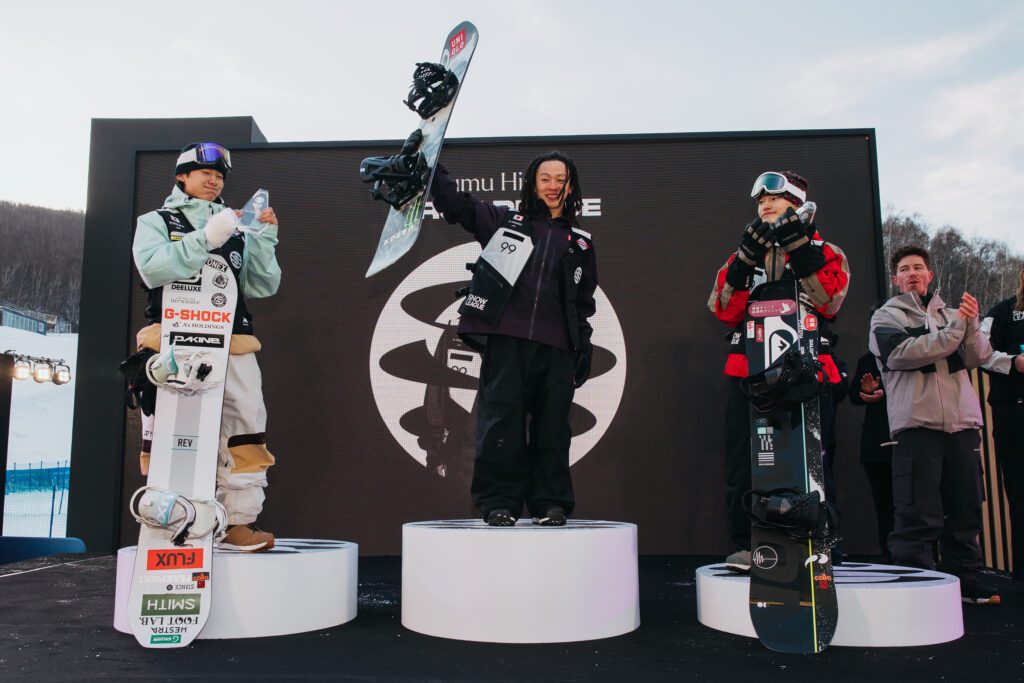
From his perspective, Snow League isn’t draining a healthy ecosystem, it’s entering a space that has already thinned out. And rather than positioning the league in opposition to what remains, he was clear that coordination has been intentional from the outset.
“We talk to X Games. We talk to the federations,” he said. “We make sure the calendar works. We’re not putting our events on their dates.”
That cooperation goes beyond scheduling. Snow League operates within the World Snowboarding Points List, meaning athletes earn internationally recognized points that still matter for Olympic qualification* and national team selection.
“You don’t want to come to an event and feel like it doesn’t count,” White said. “We wanted to make sure it actually works with what the other countries are using.”
He pointed to the league’s event in China as a clear example. The opportunity to earn top-tier points led to a strong international turnout, not because Snow League replaced existing pathways, but because it plugged into them.
There is also, White argued, a less visible side to the ecosystem that often gets overlooked: the people behind the scenes. Event operators, technical crews, many of them veterans of tours that no longer exist, are now finding work again.
“We’re creating more jobs for people that used to work on those tours,” he said. “People who don’t really have anything to do now.”
At the heart of his response was a broader critique of how competitive snowboarding has been funded for decades. The sport has largely depended on brand-driven events, a model that functions well when marketing budgets are healthy, and unravels when they aren’t.
“Brands are trying to sell products,” White said. “When marketing dollars get tight, they pull back. And that’s totally fair, that’s how brands survive.”
The problem, as he sees it, is what happens to the sport when that support disappears.
Snow League is intentionally structured as an independent competition platform, not owned by a single brand, and not tied to the same fluctuations in marketing priorities. That independence, White believes, gives it a better chance at stability.
“I’m not saying we have all the answers,” he said. “But I do think having an independent space for events gives the sport a better shot.”
It’s not a promise of harmony, nor an attempt to position Snow League as a solution to every problem. But it is an acknowledgment of responsibility to athletes, to industry professionals, and to a competitive ecosystem that has too often been left vulnerable to forces outside its control.
One of the most grounded moments of the conversation came from a question asked by Seth Neary, who raised a concern many in the industry share: the disappearance of halfpipes, particularly at grassroots levels.
White didn’t hesitate.
“There are two ways to go about it,” he said. “Either you push resorts to build smaller pipes (less cat time, less snow, more obtainable) or you create a clear career path so the demand follows.”
Jumping straight into 22-foot pipes, he acknowledged, isn’t realistic for most kids.
“If I was a kid and went straight to that,” he said, “it would’ve been terrifying.”
Snow League, he hopes, contributes to the solution, not just by showcasing elite performance, but by giving halfpipe relevance again.
Snowboarding has always resisted structure. Centralization. Money. Authority. That resistance is part of its DNA, and part of why it has remained culturally powerful for so long.
It’s also why Shaun White’s post-competitive role is so divisive. He’s no longer just riding within the system. He’s actively trying to redesign it.
What became clear over the course of this conversation is that this isn’t a departure from how White has always operated; it’s a continuation. From his competitive years to his media decisions, from board design to brand building, his instinct has consistently been the same: look for the gap. Identify what isn’t happening. Do the thing no one else is doing.
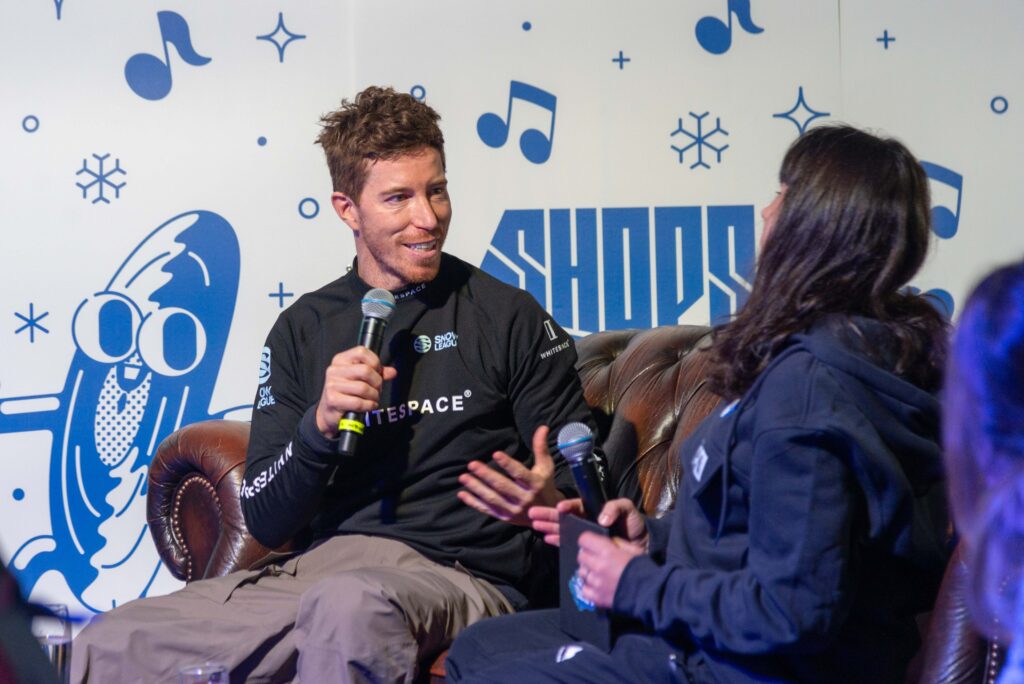
It’s the logic that once guided trick selection. The reason he chose suits over stunts in mainstream media. The philosophy behind WHITESPACE. And now, the foundation of Snow League.
When I asked him why. and why now, his answer was unusually direct.
“I honestly felt like I was the only one who could pull this off,” he said. Not out of ego, but out of proximity. He knew the athletes. He knew the mountain operators. He knew the sponsors, the federations, the event crews. He had spent decades inside every layer of the sport, watching what worked, what collapsed, and what never quite connected.
“I could kind of use my influence to pull everyone together,” he said. “It was my Braveheart moment.”
That belief, that he was uniquely positioned to step into the white space, its at the center of everything he’s doing now. It doesn’t guarantee success. Snow League may succeed or fail. WHITESPACE may continue to grow or plateau. But the questions he’s asking about sustainability, structure, value, and responsibility aren’t going away.
Ignoring them hasn’t worked.
You don’t have to agree with White’s vision to recognize that it is thoughtful, intentional, and rooted in lived experience. Even when controversial, he doesn’t lean on nostalgia or vague ideals. He defends his ideas with clarity, logic, and an understanding of both sport and business that few people in snowboarding can claim.
And whether or not you agree with his answers, this interview makes one thing clear: Shaun White didn’t stumble into this next chapter. He approached it the same way he always has: by spotting the gap, trusting his instincts, and stepping into it before anyone else was ready to.
Tidal is a biennial, on-mountain artist residency and exhibition in LAAX, Switzerland,
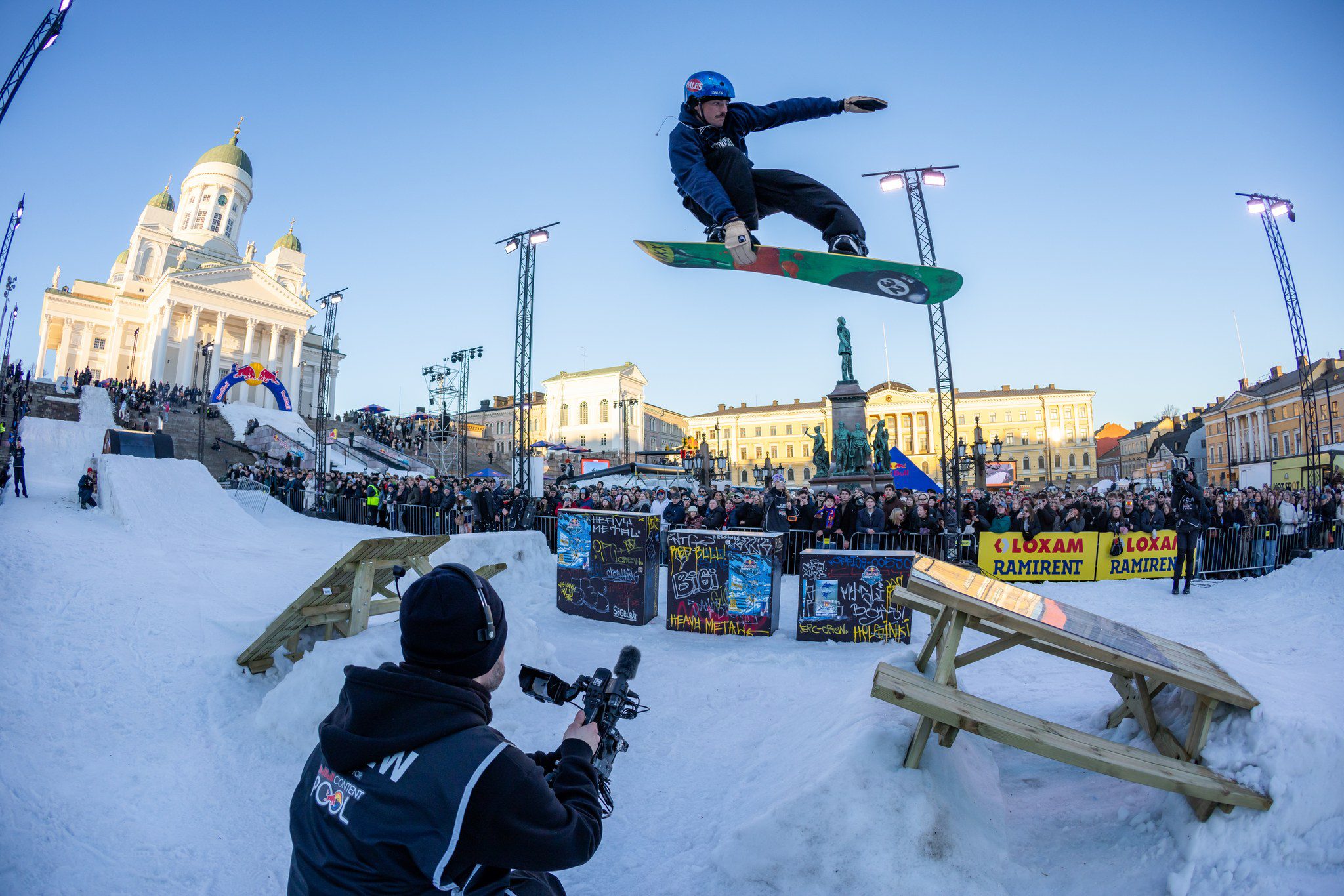
One of snowboarding’s most iconic rail jams filled a void the Finnish
INTERVIEW: MARY T. WALSH PHOTOS: ASHLEY ROSEMEYER The first day of the 2024