


Local Heroes: Max Glatzl
A new series celebrating the people behind the scenes who keep snowboard



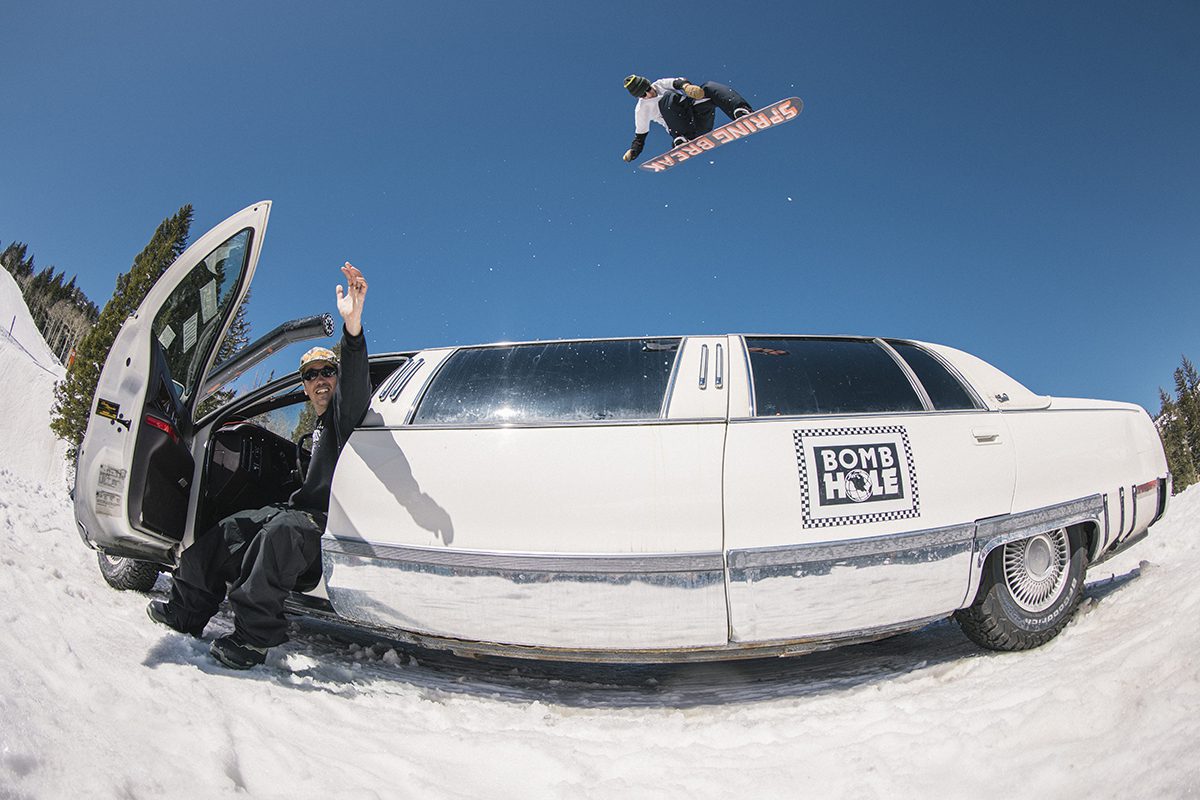
I remember when the first The Bomb Hole episode dropped. It was an interview with Justin Bennee, recorded in Chris Grenier’s garage, unpacking the highs and lows of pro snowboarding, drug addiction, Nike, death, hitting rock bottom, and rediscovering himself – a brutally honest deep dive that pulled you in from the first minute. This was what snowboarding had been missing: a platform that celebrated everything that we love about snowboarding and snowboarders: dumb jokes, nostalgic trick talk, and most importantly, those raw conversations that usually stay off record. The magic ingredient? Chris Grenier and his team’s exceptional ability to make every guest feel at ease.
With more than a dozen video parts under his belt, including the ender in Videograss’ Mayday and gold from X Games Real Snow 2015, Chris Grenier’s perspective runs deep within snowboarding. But once he steps behind the mic, the conversations cut even deeper.
We sat down with Chris to talk about his path, the podcast, and the impact it’s had. Dive in, as the interviewer becomes the interviewed.
Hey Chris, hope you’re good! Thanks again for taking the time to sit down with me. How’s your summer shaping up?
It’s going great. My wife, Britt, and I had a baby in October. I’m really thankful for our son. I’ve been enjoying being a dad, spending time with my wife; it’s really fun starting a family. Then, I find time to skateboard and ride dirt bikes whenever I can.
It must be weird being on the other side of the interview for once. How does it feel to be the one answering questions this time around?
It is weird, you have to think way more, haha.
Do you ever catch yourself ‘interviewing’ people in real life now, out of habit?
I don’t find myself interviewing people, but I do love a great conversation. I had an amazing chat with a stranger at baggage claim at the airport the other day. We were just making small talk, and then he hit me with “What do you think happens when you die?”. We ended up having this long chat where we both had totally different perspectives – it was awesome.
Let’s rewind a bit before we dig into the present day. What spurred the idea of “You know what, I’m starting a podcast”? Would you mind taking us through the process of how The Bomb Hole podcast came to fruition in the first place?
I think, like most people, it seemed like a fun thing to do. I noticed snowboarding didn’t quite have a solid podcast, so we just went for it.
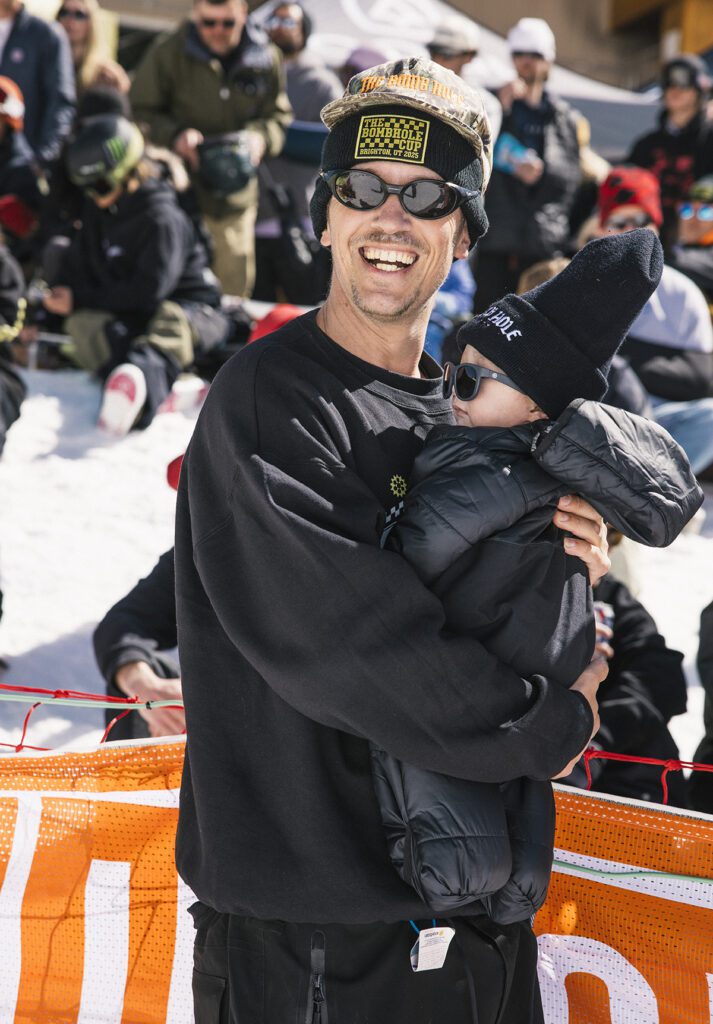
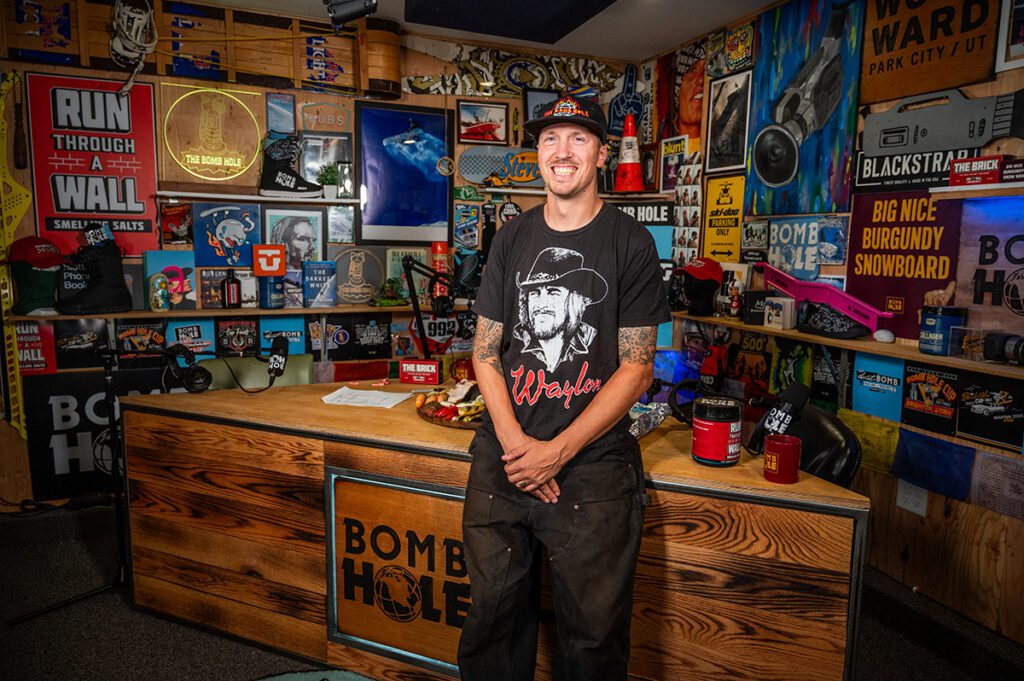
Can you walk us through the early days of The Bomb Hole: what the vibe was, who was involved, and what you hoped it would become?
The early days were really exciting. Basically, I would be on trips with E Stone, and he would be so funny in the van. He made us all laugh so hard, and I would tell him we should start a podcast. At the time, it was peak COVID. Everyone was quarantining, and I had plenty of time on my hands. I just went for it.
I borrowed a few cameras, set up the lights we used to film snowboarding, ordered the audio equipment and started recording. We recorded four episodes before we released any. It used to take me about 12- 15 hours to edit each show. Thinking back, it was really a fun time. Buds was magic in the studio; he was absolutely hilarious, and I am so thankful for the time we got to spend together. We started it with no expectations other than we were gonna record 25 episodes and see if we still want to do it after that.
The Bomb Hole has become a staple of its own within snowboarding, and something of a weekly treat that lets us dive into interesting stories and conversations. What’s the deeper meaning for you? What do you think it’s done for snowboarding culture as a whole?
Thanks for the kind words. The deeper part of the conversation came from my journey to get sober. In my first few years of sobriety, I did the AA program and attended the meetings. In those rooms, I watched many people get so vulnerable and real. It really helped me find peace in my struggles. It’s comforting knowing others have similar feelings and struggles as we do, especially those we look up to. As for what it’s done for the culture, that is for the listeners of the show to comment on; I just try to focus on doing the best we can, recording podcasts.
You’ve talked to legends, rookies, and those who’ve walked away. Is there a recurring theme you’ve picked up on that speaks to what snowboarding really means to people?
I would pick three themes that stick out. One, a sense of community: we all just want to feel like we belong, we want to feel part of something. The snowboard community is where many of us have found that. Second, it has also given many of us a sense of purpose: a reason to try to be the best version of ourselves so that we can do these silly tricks on our snowboard. The last one would be a freedom of self-expression: a creative outlet where we can really express ourselves.
Some of your most powerful episodes touch on mental health, injury, identity, and life beyond the board. Was that always the intention, or did it evolve naturally?
Yeah, there has always been an intention around that. It is important for me to make the guests feel comfortable, not judged, but safe, so that they can express themselves authentically. The deeper conversations are truly an honor to be a part of. I am really thankful for all the guests who have come and spoken into that microphone; it’s really about them, not me.
What’s been the most surprising or humbling response you’ve received from a guest after one of those deeper episodes?
The most powerful message we got was from a listener who was planning on taking his own life. That night, he was watching the Lizard King podcast. He went out, planning on committing suicide later that night. When he came back, YouTube had autopopulated Desiree Melancon’s episode, where she discussed her own experience around suicide. He heard what she said and decided not to do it. That was really touching to hear.
You’re up to more than 250 episodes now across the different categories you’re running. That’s a lot, so a massive congrats on that! Would you mind listing the different segments within the podcast and what inspired them?
We do our regular podcast, The Bomb Hole, which is a biographical podcast based around a guest. Then, we have our other show, Group Chat. That is more of a round table conversation about all things current in snowboarding, much looser and lighter.
How do you manage to keep every episode feeling fresh and stay excited for each new conversation?
I’m just genuinely interested in all the people we book as guests, so it makes it easy. We also have a killer team of people behind the scenes: I get all the credit, but really it’s a big group effort.
Is there anyone you still dream of getting on the show?
There is a long list of people, but Shaun Palmer is up there.
You’ve also got another passion outside of snowboarding: motocross. How did that come into the picture, and what does it give you?
Motocross is really fun. I enjoy the challenge of trying to improve. I love the exercise, the flow state you get into, and working on the bike. I also love racing; it’s all a blast. I’ve always thought they were cool since I was a kid.
What’s the common thread between these communities, snowboarding and motocross, and what have they both taught you about yourself?
Snowboarding, I always put a lot of pressure on myself, for myself. Moto is a little purer: I don’t get paid to do it; I pay a lot of money to do it. I really don’t put any pressure on myself and can find simple joy in it. All I know is that when I’m done riding a motorcycle or snowboarding, I am overfilled with joy, really excited, and happier than I was before I started. It’s pretty simple: it’s about finding things that bring you joy.
What’s next for The Bomb Hole? Any plans to shake things up, go beyond podcasting, or even step away from the mic for a bit?
We are just trying to focus on doing good shows and having really fun events. We have some exciting new developments coming up, including a new website and live shows. But the main focus is trying to find joy in what we do and spread the joy of snowboarding and its culture to others.
What legacy do you hope the podcast leaves behind? For you, for the culture, for the next generation?
I don’t think about legacy. We are all gonna die, and nobody is going to remember us, especially not in 200 years. I don’t mean that in a negative way, more in a way of trying to be present where my feet are planted at any given moment. For me, the goal is to try to get out of my own way so I can see the beauty in life and be a bright version of myself. If I do that, I can have a positive impact on my small inner circle of friends, family, and the listeners of our show.
A new series celebrating the people behind the scenes who keep snowboard
Tidal is a biennial, on-mountain artist residency and exhibition in LAAX, Switzerland,
One of snowboarding’s most iconic rail jams filled a void the Finnish